A Small Evening Reset Can Replace a Full Shower
You do not need to reproduce a bathroom at the campsite to feel noticeably better before bed. A little suitable water, a clean cloth, dry clothing, and a predictable place for used supplies can remove much of the dust and stickiness that makes an otherwise enjoyable evening uncomfortable. The challenge is consistency: keeping handwashing available, separating clean items from dirty ones, and finishing the routine before everyone becomes tired. Staying clean without a shower is therefore less about finding a miraculous wipe and more about arranging a few useful habits. Vehicle campers can build a compact wash station, while hikers can carry a smaller version of the same idea. Start with the parts of the day that leave you uncomfortable and make those easier to reset, without wasting water or leaving soap and rubbish around the site.
A: Make handwashing available before food handling and bathroom visits create the first need.
A: Yes. Targeted washing, appropriate drying, and fresh clothes can provide a useful reset.
A: Keep personal cloths separate and distinguish them from kitchen cleaning tools.
A: When soap and water are unavailable, CDC recommends at least 60 percent alcohol.
A: Pack used wipes out; the label does not remove the disposal responsibility.
A: It protects a clean dry change from dusty clothing and damp equipment.
A: Pour a manageable portion into a separate wash basin or use a controlled pour. Keep the used cloth out of the clean reservoir and maintain a clear distinction between clean supply and collected wash water.
A: Do not assume an exemption; follow the land manager's toiletries rules.
A: Keep them separate from clean garments, then reopen and care for them promptly at home.
A: Keep the supplies that solved a recurring problem and remove unnecessary clutter.
Give Hygiene Its Own Small, Accessible Kit
Gather personal washing supplies in a container you can reach without unpacking the sleeping area. Include suitable water access, a little soap, a clean washcloth, a drying towel, oral-care items, and a way to contain used supplies. Keep quantities realistic for the trip and retain any product identification needed for safe use. A crowded toiletry bag can make simple tasks feel harder than they are. Familiar supplies arranged in a clear order usually work better than an assortment of unfamiliar camping products.
Choose a time for the reset that fits the actual evening. Immediately after a dusty walk may be convenient while there is daylight and enough warmth to change comfortably. On another trip, a short wash just before sleep may work better. Avoid turning it into a fixed elaborate ceremony that everyone resents. The useful constant is having clean supplies and fresh clothes ready when needed. If children are tired, prepare their things first and keep the sequence familiar. Adults can model returning worn clothes and used cloths to the right place. An understandable routine can become ordinary camp life instead of one more task competing with dinner and bedtime.
Cold or wet weather may call for a smaller wash in a more sheltered appropriate location, with dry clothing ready for an immediate change. Do not expose someone unnecessarily just to complete the routine exactly as planned. Adapt the amount of washing to the conditions while maintaining essential hand hygiene. Keep the towel and replacement layers protected from rain, and avoid filling the sleeping area with wet equipment. When the weather makes personal washing awkward, established campground facilities can be a useful part of the trip rather than an admission that the kit failed. The goal is comfort and a practical level of cleanliness, not proving that every need can be met by the smallest possible bag.
Keep a short restocking habit after every outing. Replace consumed soap, check wipe packets for dryness, inspect the water container, and return clean cloths to the kit. Doing that while unpacking is easier than reconstructing the entire supply list before the next departure. A ready kit makes good habits much easier to repeat.
Keep Handwashing Ready Throughout the Day
Hand hygiene deserves priority even when a full body wash is optional. The National Park Service’s backcountry health guidance emphasizes washing after bathroom use and before food handling or eating. Place the supplies where those transitions happen, while keeping the setup distinct from food preparation surfaces and waste-handling equipment. A convenient station is more likely to be used by everyone. Set it up when you arrive, before the first snack or toilet visit creates a need.
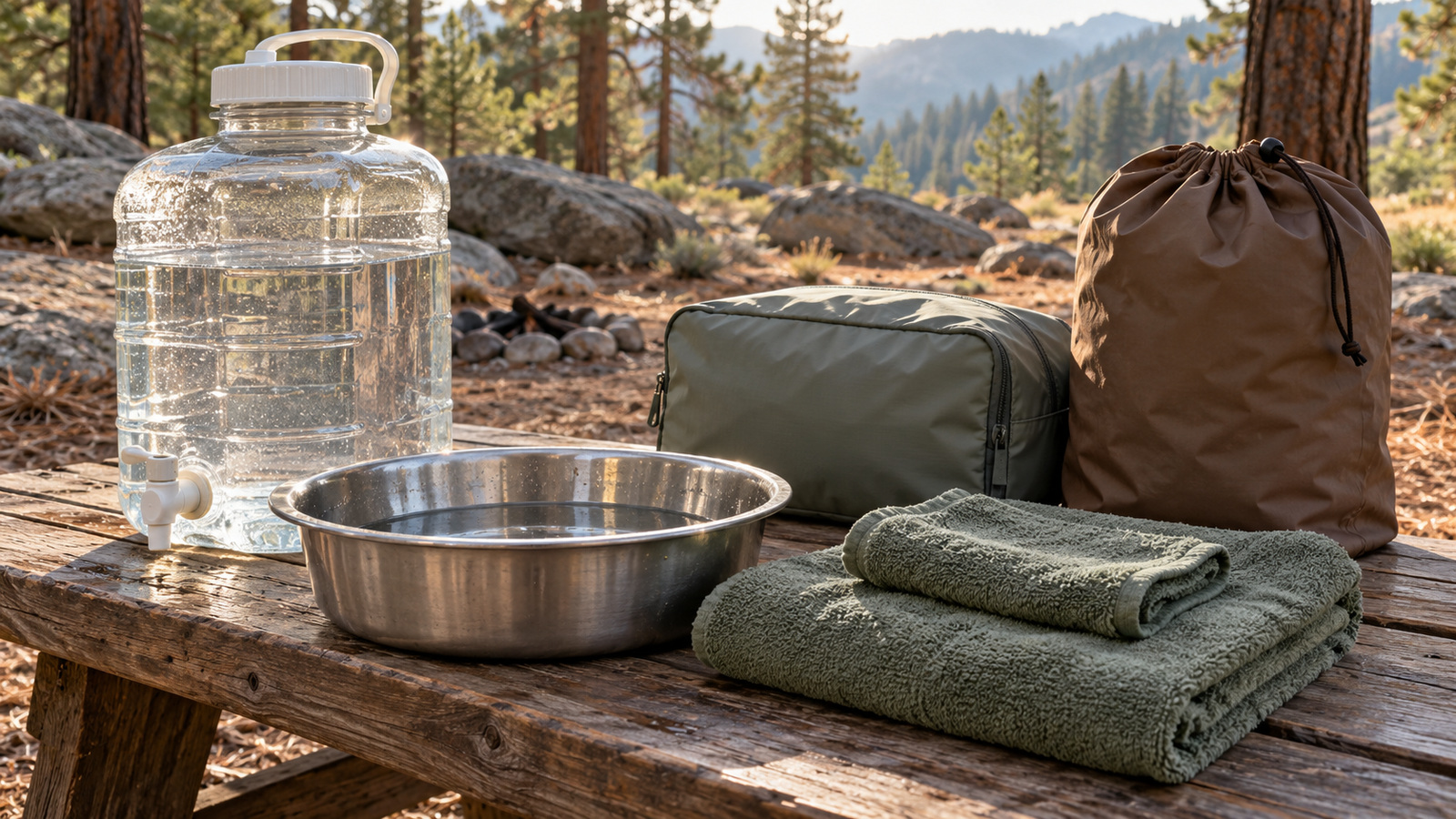
A jug with a controllable spigot can make a vehicle-camping station easier to share than a large open container. Check that users can turn the flow on and off without struggling, and provide a suitable drying method. Reserve enough water to keep this routine working for the whole stay. Consider children and anyone who needs help reaching the outlet. The best arrangement allows a complete wash without balancing the jug or leaving the tap running unnecessarily.
When soap and water are unavailable, follow CDC sanitizer guidance: use a product with at least 60 percent alcohol. Sanitizer does not work as well on visibly dirty or greasy hands and does not replace every function of washing. Follow its label and supervise children as appropriate. Keep it stored safely and accessible for suitable situations, while maintaining a plan for proper handwashing whenever possible. Treat it as one useful tool within the routine.
Use a Cloth Wash to Target the Discomfort
A small cloth wash can be enough to reset after an ordinary camping day. Arrange privacy, prepare the towel and fresh clothes, and wash where local rules allow. Use products appropriate for your skin and their labeled purpose rather than improvising with kitchen cleaners or concentrated substances. Work with a manageable amount of water and avoid dipping a soiled cloth into the clean supply. A separate small basin or controlled pour helps keep the remaining water useful.
Focus on the areas that feel sweaty or dusty, using a clean portion of cloth and fresh water as needed. Keep personal cloths separate among campers and distinguish body-washing supplies from dishwashing tools. Rinse and dry as the product instructions require before putting on clean layers. The routine does not need elaborate accessories, but it benefits from deliberate separation. You should finish feeling more comfortable without wondering which towel was used to clean the cooking table.
Put Clean Clothing Where It Stays Clean
A fresh layer loses its appeal when it has been stored beside muddy footwear or a damp towel. Pack sleeping clothes and spare underwear in a dedicated clean compartment or pouch. Change after the evening wash, keeping the fresh set off dusty benches and the ground. Decide where the day clothes will go before undressing so they do not land on bedding. This small sequence reduces the amount of dirt carried into the tent and makes the next evening easier to repeat.
Dryness is part of comfort, especially when weather turns cool. Give damp garments an appropriate chance to dry, but do not assume they will dry overnight in humid conditions. Keep a dependable dry change protected rather than using every spare item during the day. Choose clothing suited to the climate and your activities. An extra layer helps most when it remains available in the condition you need.
For families, assign recognizable storage places rather than mixing everyone’s clean and worn clothes together. Children can help return daytime clothing to its bag and fetch a fresh set when the routine is simple. Avoid making cleanliness depend on remembering a complicated labeling system after dark. A consistent pouch or compartment for each person’s bedtime clothes can be enough. The aim is easy decisions, especially when people are tired and the tent feels crowded.
Let Wipes Solve Specific Gaps
Wipes can be useful when water is limited or a small cleanup is more practical than a basin wash. Choose a product intended for the body area and use described on its label, especially for sensitive skin. Keep a dedicated rubbish bag ready before opening the packet, and pack every used wipe out according to local requirements. Do not bury or burn wipes, including products described as biodegradable. Count them as consumables with a disposal obligation rather than as a way to make the cleanup disappear.
Handle Teeth, Hair, and Personal Needs Deliberately
Keep the familiar oral-care routine manageable by storing a toothbrush where it can stay clean and dry appropriately. Use a modest amount of toothpaste and follow local directions for wastewater and residue disposal. Avoid brushing directly over a stream, lake edge, or campsite tap used by other people. Arrange a place to put the brush while washing your hands. Tiny conveniences make daily tasks easier to maintain without scattering toiletries around the tent.
Hair care can remain simple for a short trip. Brushing, tying hair back, and using a suitable head covering during dusty activities may reduce the urge for a full wash. If using a dry shampoo or other product, follow the instructions and consider residue, scent, and storage requirements. It does not replace all functions of washing. Choose a routine you already tolerate rather than experimenting with several new products while away from ordinary washing facilities.
Keep Natural Water Out of the Washing Routine
A nearby lake can make a campsite feel convenient, but it is not a sink. Leave No Trace washing guidance recommends carrying water at least 200 feet away from natural water sources and using minimal soap. Even biodegradable soap should stay out of the water itself. Check local instructions for wastewater disposal, since some destinations require collection or use of designated facilities. Plan the washing place before filling the basin so there is no temptation to empty it wherever you happen to stand.
Developed campgrounds may provide particular sinks or disposal points, and not every tap or washroom fixture is intended for every task. Ask the host where body-washing water belongs and whether there are restrictions during dry periods. Keep runoff away from shared paths and neighboring sites. Avoid repeatedly saturating one patch of ground. Thoughtful placement reduces mud, nuisance, and the pressure to abandon an otherwise useful routine.
Consider the container journey as well as the disposal spot. Carry the clean supply securely, keep the used-water container identifiable, and avoid returning dirty water to a drinking vessel. Use equipment within its intended purpose and clean it appropriately afterward. A small amount of organization prevents accidental mixing between personal washing, kitchen work, and drinking. The routine should remain understandable to another camper who helps pack up.
Store Toiletries With the Destination’s Wildlife Rules in Mind
Personal-care products can attract wildlife just as food can. The National Park Service guidance for Katahdin Woods and Waters, for example, includes soap, toothpaste, sunscreen, and other scented items in its storage advice. Check the requirements for your actual destination rather than assuming the same arrangement applies everywhere. Follow prescribed storage methods for toiletries, used wipes, and other relevant items. A product described as unscented does not automatically exempt it from a land manager’s rules.
Finish With Dry Gear and a Simpler Next Morning
During the trip, keep used damp washcloths and towels separate from protected clean clothing. Give reusable items an appropriate chance to dry where conditions and site rules allow, securing them against wind. Drying does not replace the cleaning their care instructions require. If the items must travel damp, contain them separately for the journey and reopen them promptly at home for proper washing and complete drying. This prevents yesterday’s used cloth from quietly becoming tomorrow’s supposedly fresh supply.
Before settling down, leave the next essential wash easy to begin. Check the handwashing reserve, put the clean personal cloths where their users can identify them, and keep the drying method reachable. Deal with collected wash water according to the destination’s rules instead of leaving an unidentified basin for someone else to move. Protect the clean sleeping clothes from that final cleanup. A clear end-of-evening arrangement makes the morning simpler without adding another full washing session.
Use the trip to identify the one step that repeatedly failed. If people postponed washing until they were cold and tired, move the small cloth wash earlier while retaining handwashing at the times it is needed. If clean clothes became damp, improve their protected storage before buying more toiletries. Replenish consumed supplies while unpacking and return cleaned fabrics only when ready for storage. Keep the useful routine compact enough to repeat; the aim is a comfortable camp evening and an understandable kit, rather than a growing collection of products.