Build a Shower Around the Water You Can Carry
A good rinse after a dusty hike can change the mood of an entire camping evening, but the showerhead is only one small part of making it happen. Someone has to collect suitable water, carry the filled reservoir, find an appropriate washing place, arrange privacy, and manage the water left behind. Those tasks explain why different campers reach different conclusions about the best camping shower. A light gravity bag can be enough for a brief solo rinse, while a ground-standing pump system may make family washing easier. Heated equipment adds another layer of fuel, power, and setup requirements. Choose the arrangement that fits your water supply and campsite routine first, then compare spray quality, packed size, and comfort. The most satisfying shower is one you can fill, use, empty, and dry without turning a simple cleanup into the day’s biggest project.
A: A ground-standing pressure system can deliver water through a hose without overhead suspension.
A: No. Verify the shelter's explicit suspension and load instructions.
A: No. Sunlight, weather, and starting water temperature change the outcome.
A: It reveals your actual consumption and whether the reservoir suits the group.
A: No. Wash away from natural water and follow local wastewater rules.
A: It can simplify pouring, emptying, and access for approved cleaning.
A: Only if the specific product includes that function; water delivery and heating are separate features.
A: Treat them as conditional figures and examine flow settings and your own pause-and-rinse routine.
A: Include any required support, enclosure, containers, power equipment, and approved accessories.
A: After it is cleaned and fully dried according to its manufacturer's instructions.
Begin With a Complete Water Journey
Work backward from the wash you want. Decide whether the goal is a quick rinse, washing hair, helping children clean up, or sharing several short showers. Estimate demand by rehearsing at home with a measured supply instead of assuming that a reservoir’s advertised minutes match your habits. Different nozzles and pauses create different water use. The useful capacity is the amount you can carry and replenish while preserving enough water for drinking, food preparation, and essential handwashing.
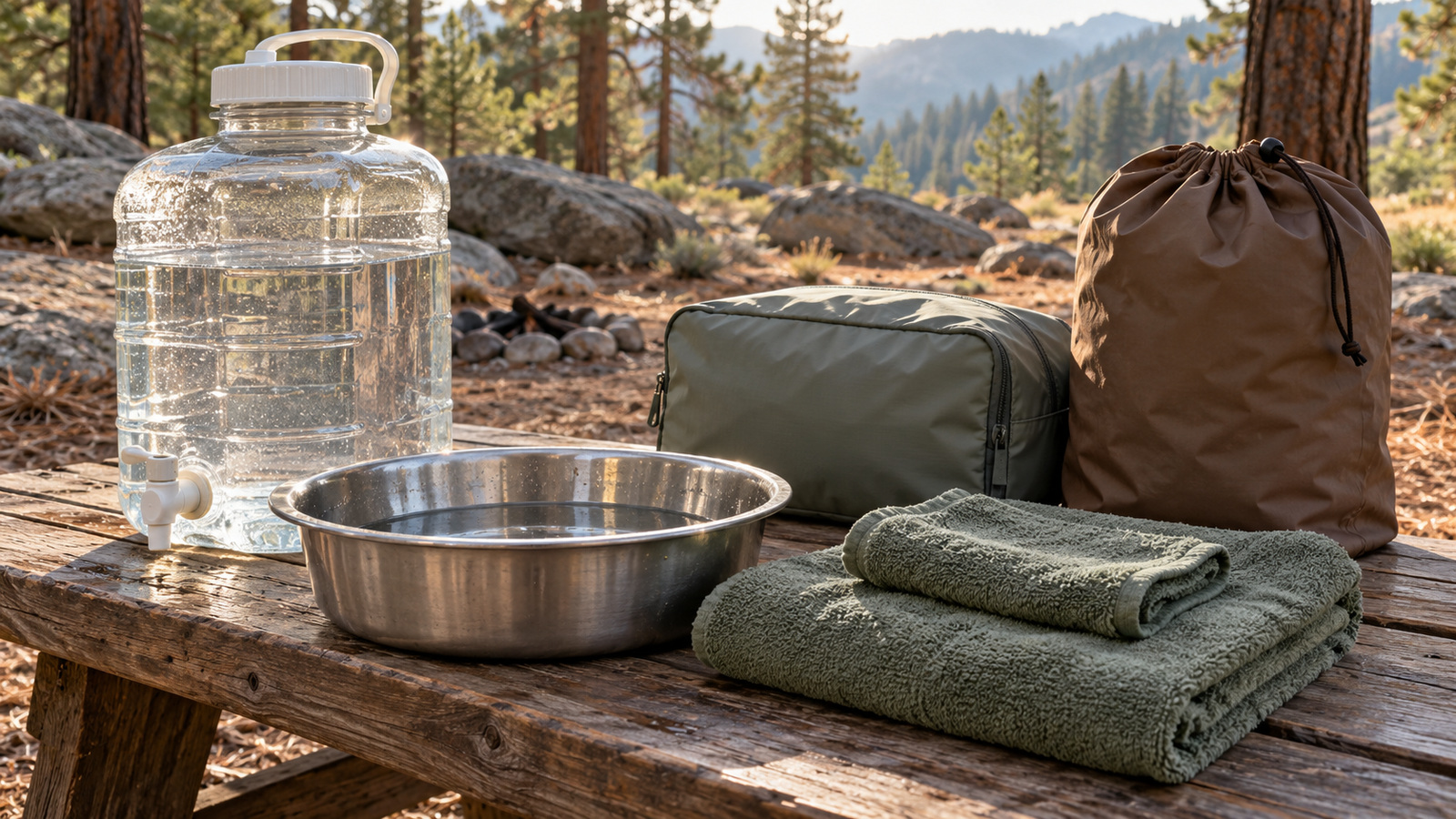
A reservoir that seems compact when empty can be awkward when full. Consider its handle, the distance from the tap or vehicle, and whether the person carrying it can comfortably lift the actual load. Look for a filling opening that works with your containers. A narrow opening can be frustrating beneath a shallow campground tap, while a large opening may make pouring easier. Include the refill journey in the comparison rather than evaluating only a neatly displayed product.
Separate washing water from your drinking supply according to the containers’ approved uses and your water plan. Do not assume a shower reservoir or nozzle is designed to filter untreated water. Know where suitable water will come from before reaching a remote campsite. Where local conditions restrict water collection or use, adapt the routine accordingly. A camping shower should fit the resources available at the destination, including days when a planned refill point is closed.
Gravity Showers Trade Simplicity for Hanging Logistics
A gravity bag avoids pumps and electrical parts, making it attractive for campers who value a small packed kit. Its performance depends on suitable positioning and the product’s design, so think through where the filled bag can hang without damaging vegetation or creating a hazard. Check the manufacturer’s suspension instructions and the land manager’s rules before relying on trees. An empty bag is easy to lift; a full one requires more deliberate handling. Lowering it for refills can become part of every wash.
The Sea to Summit Pocket Shower provides a current reference for this category. Its manufacturer describes a compact ten-liter design with a twist-operated showerhead and hanging cord. That combination suits campers who can provide an appropriate support and prefer a simple reservoir over a pump. Treat it as a design example rather than a guarantee of a particular shower duration. Your flow setting, pauses, filling level, and water temperature all influence the experience.
Ground-Standing Pressure Systems Solve a Different Problem
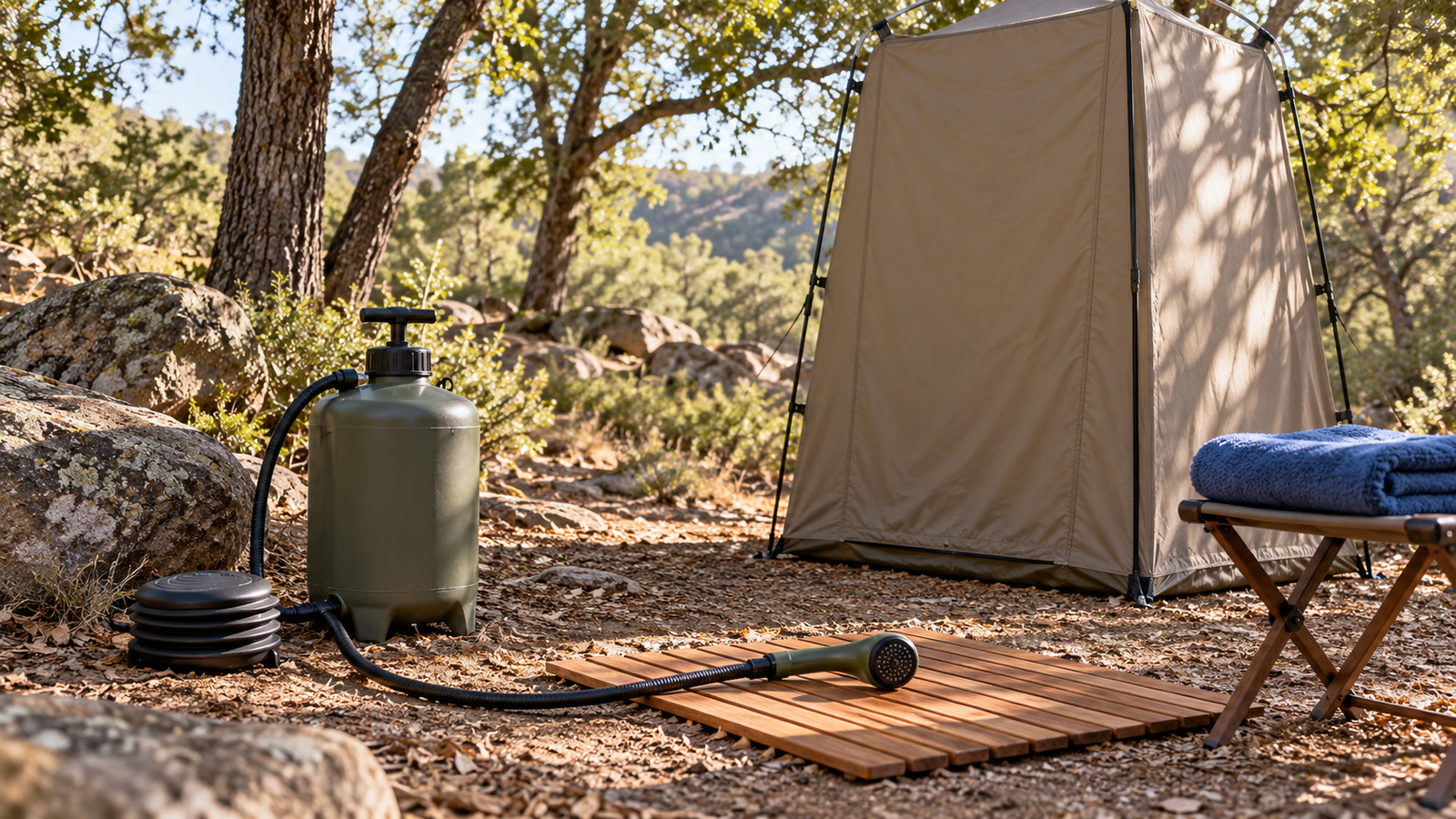
A pressure shower lets the reservoir remain on the ground, removing the need to hoist a filled bag overhead. The NEMO Helio, for example, uses a foot pump and a hose-mounted nozzle. This arrangement can suit vehicle campers who want control over spraying and who will also rinse muddy footwear or sandy gear. Compare hose reach, trigger operation, and how easily you can restore pressure while using it. These manufacturer-based references illustrate useful categories rather than claiming that either product has been field-tested for this article.
Powered and Heated Showers Require a Larger Setup
An electric pump can make water delivery convenient, particularly where the pickup sits in a separate container. Check the required power source, permitted water temperature, hose connections, and any restrictions on immersion. A battery-powered pump still needs a dependable charging routine and protection appropriate to its documented rating. Identify how the equipment switches off quickly. Avoid improvising connections simply because a fitting or cable appears compatible with something already in the camping kit.
Water heating introduces more responsibility than water delivery alone. Follow the exact appliance instructions for fuel, ventilation, clearances, weather exposure, and operation. Combustion equipment belongs only in the outdoor locations permitted by its manufacturer; a privacy enclosure does not automatically provide safe ventilation. Do not treat a heater as interchangeable with a simple bag of sun-warmed water. If the full approved arrangement exceeds your available space or attention, a simpler unheated rinse may fit the trip better.
Evaluate heating as a complete ownership decision. Include fuel or electrical demand, the supported water source, connection hardware, and the effort of drying and packing everything afterward. More comfort can justify that complexity for frequent stationary camping, but it is less compelling when you move sites each morning. A warm wash is pleasant only if the routine remains manageable. Make the equipment earn its place through a recurring use rather than an appealing demonstration.
Control Temperature and Share the Water
A dark reservoir left in sunlight may warm its contents, but weather, exposure, starting temperature, and the bag’s design all affect the result. Solar warming is an opportunity rather than a reliable promise of hot water at a particular hour. Check the water before anyone starts washing and follow the reservoir’s permitted filling temperatures. Mixing or handling hot water requires care and suitable containers. For children or anyone needing assistance, an attentive adult should control the process rather than relying on how the outside of the bag feels.
Make the temperature check part of getting the system ready, while the intended user is still dry and dressed. Prepare a way to stop the flow immediately and assess the delivered water before directing it onto someone. If the supply is unsuitable, resolve that before beginning rather than asking a person already washing to wait exposed. Do not add water hotter than the equipment permits as a shortcut. A simple unheated rinse can be the better choice when there is no manageable approved way to obtain comfortable water.
For a group, agree on a washing sequence before the first person uses the entire supply. A brief wetting rinse, a pause while washing, and a final rinse can be easier to share than leaving the spray running continuously. Rehearse the controls with the person who will use them, including anyone who needs assistance. Keep enough water aside for essential handwashing rather than assigning the full reservoir to showers. Measure one representative wash so the group plan rests on actual use instead of the most optimistic advertised duration.
Treat a refill as another preparation step, not an automatic continuation of the first shower. Its water source and conditions may differ, and the next user still needs a suitable supply and a controllable spray. Keep a towel and dry clothing ready before that person begins. If the available water will not support everyone, shorten the wash routine or use legitimate facilities rather than taking from the drinking reserve. This makes comfort and sharing decisions before anyone is left wet, cold, or without enough rinse water.
Choose a Washing Site Before Pitching Privacy
Privacy is easier to arrange once you know where washing is allowed. Ask the campground host about designated facilities, wastewater collection, and local restrictions. A level area with an appropriate disposal plan is more useful than a scenic spot beside a stream. Keep the shower away from routes used by other campers and avoid creating a muddy depression. Think about where a person can stand, turn, and reach clothing without stepping into runoff or touching dusty equipment.
Leave No Trace guidance on washing calls for carrying water at least 200 feet away from natural water sources and minimizing soap. Biodegradable labeling does not make soap appropriate for direct release into a lake or creek. Follow designated disposal rules where provided, and confirm whether collecting shower water is required. Those general principles do not override destination-specific instructions. Arrange the washing location and wastewater handling together, before setting up the enclosure.
Make Privacy Comfortable Without Blocking Safety
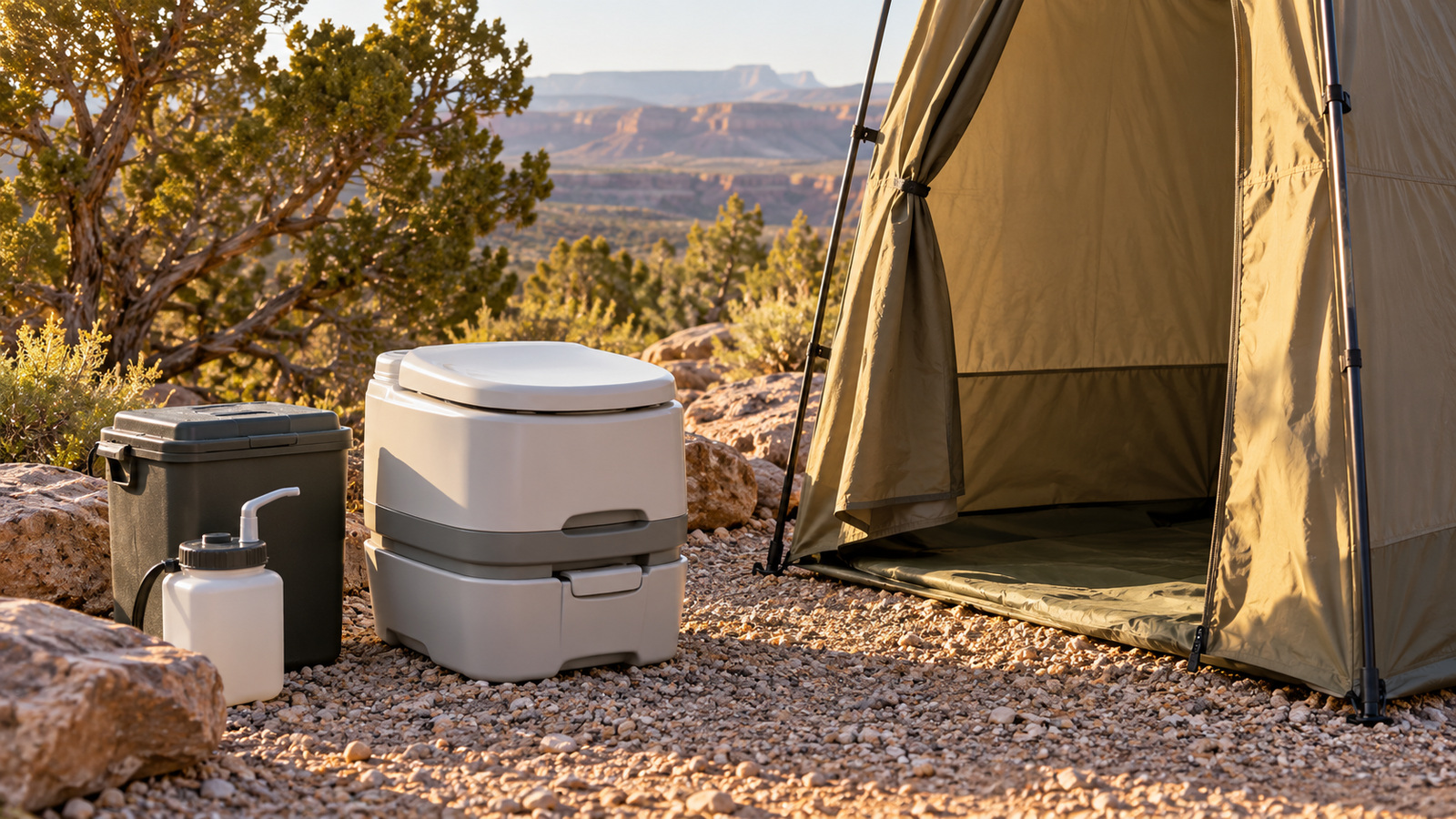
A privacy shelter should offer enough room for the intended user and any required assistance. Consider entry height, ventilation, clothing storage, and the way the enclosure anchors on your typical campsite surface. Keep clean clothes and a towel within easy reach but clear of the spray. A dry place for shoes can make the transition back to camp much simpler. Try the entire sequence at home rather than discovering that the door opens against a water hose or storage shelf.
Enclosures add wind exposure and guyline hazards, so follow their anchoring instructions and weather limits. Inspect overhead conditions and avoid unsuitable sites beneath damaged branches. A tent marketed for privacy is not automatically rated to carry a suspended shower reservoir. Confirm any load-bearing feature explicitly before using it. Keep the water system independent where the shelter’s instructions require that arrangement, and dismantle the setup when conditions exceed its limits.
Assistance needs deserve specific consideration. Someone who can walk comfortably may still struggle with a slippery mat, a high threshold, or balancing while reaching a nozzle. Choose stable footing and a suitable setup for the actual person rather than assuming campsite improvisation will solve access problems. Test nozzle controls and clothing placement before the trip. A shorter, well-supported wash can be more comfortable than an ambitious shower arrangement that requires awkward movement.
Compare Value Through Cleaning and Drying
Every shower has a second job after the last rinse: getting ready for storage. Look for access that makes emptying and drying practical, and follow the manufacturer’s cleaning instructions for the reservoir, hose, and nozzle. Hidden moisture can linger in folds and fittings, so plan drying time after returning home. Check whether small replacement parts are available for the specific model. A system that is easy to maintain may offer better long-term value than one with extra spraying features you rarely use.
Rehearse One Complete Wash Before Traveling
Fill the reservoir to a manageable level and practice filling, carrying, positioning, washing, and packing under suitable home conditions. Measure the water you actually use and check how easily the flow stops while you lather. Notice whether the nozzle reaches where needed and whether refilling disrupts privacy. Record missing items while you can still change the kit. This rehearsal turns a capacity figure into a realistic routine.
Choose the simplest shower that delivers the wash you want within the destination’s rules. A gravity bag, foot-pump reservoir, or supported powered system can each be a good answer for a different camper. Keep drinking water, appropriate disposal, safe placement, and maintenance central to the decision. When those pieces fit, the shower becomes an easy comfort at the end of a dusty day. That practical fit matters more than reproducing a household bathroom outdoors.
Build the total cost around what is actually included. A low advertised price may omit the support, privacy shelter, charging source, or containers required by your setup. Compare complete packages with the same expected use and avoid counting accessories twice. Think about storage space in the vehicle and at home. Ownership becomes easier when the kit packs predictably and its components have a dedicated place.