
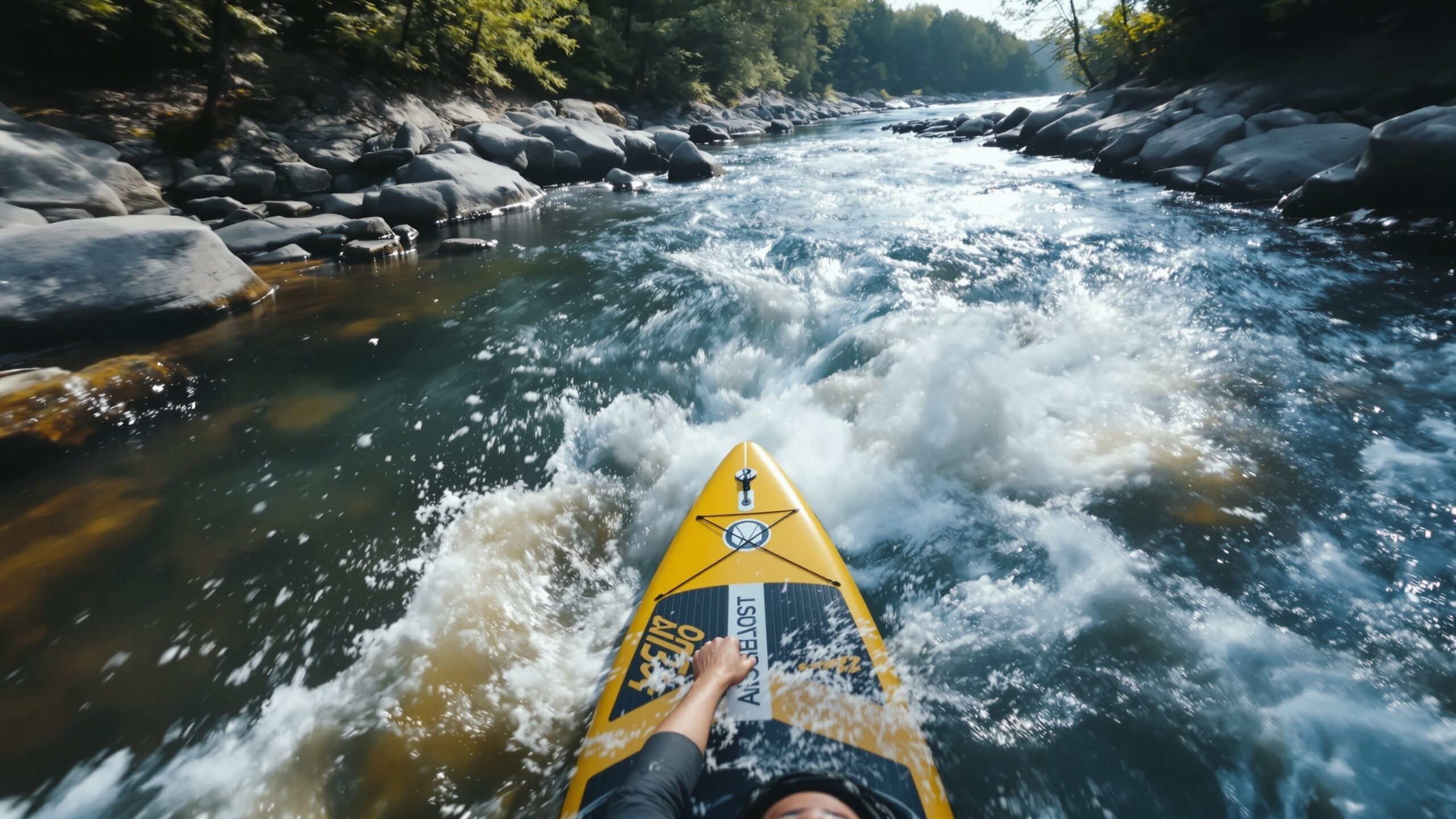
Rafting and river gear bring paddleboarding into faster water, where moving currents, shifting channels, and technical lines turn every trip into an active adventure. Rivers demand equipment that’s tough, reliable, and designed for control—gear that helps you stay stable through riffles, maneuver confidently around obstacles, and react quickly as conditions change. From river-ready boards and reinforced fins to throw ropes, helmets, river leashes, and protective footwear, the right setup transforms flowing water from intimidating to exhilarating. Durability matters here: abrasion-resistant materials, secure attachment points, and streamlined designs all play a role when rocks, branches, and changing depths come into play. River gear isn’t just about performance—it’s about safety, awareness, and preparedness in an environment that never stays still. On Gear Streets, our Rafting & River Gear section explores essential equipment, smart upgrades, and practical tips for navigating rivers with confidence. Whether you’re floating mellow stretches, running light rapids, or building skills for more technical routes, having the right river-focused gear lets you embrace the current, read the water, and enjoy the ride every mile downstream.
A: For whitewater, yes—rocks and sudden flips happen fast, even on “easy” rapids.
A: A properly fitted PFD—always worn, not stashed.
A: Dress for water temperature; use quick-dry layers and add neoprene/wetsuit/drysuit when water is cold.
A: Stay calm, float on your back with feet up/downstream, and swim to shore or the boat when safe.
A: Swiftwater rescue—throw the rope to a swimmer from a stable position; practice before you need it.
A: Many are—durability depends on material, construction, and proper inflation; still carry a patch kit.
A: Use cam straps and rig low/tight; loose items become hazards and are easily lost during flips.
A: Strainers (logs/branches), strong hydraulics/holes, and cold water—plus any rapid you can’t clearly read.
A: Compare current flow to guidebook/outfitter recommendations, and choose conservative levels for your skill.
A: On easy sections with the right skills and safety plan, yes—but for bigger water, a trained guide is worth it.