Put Useful Light Where Your Hands Are Working
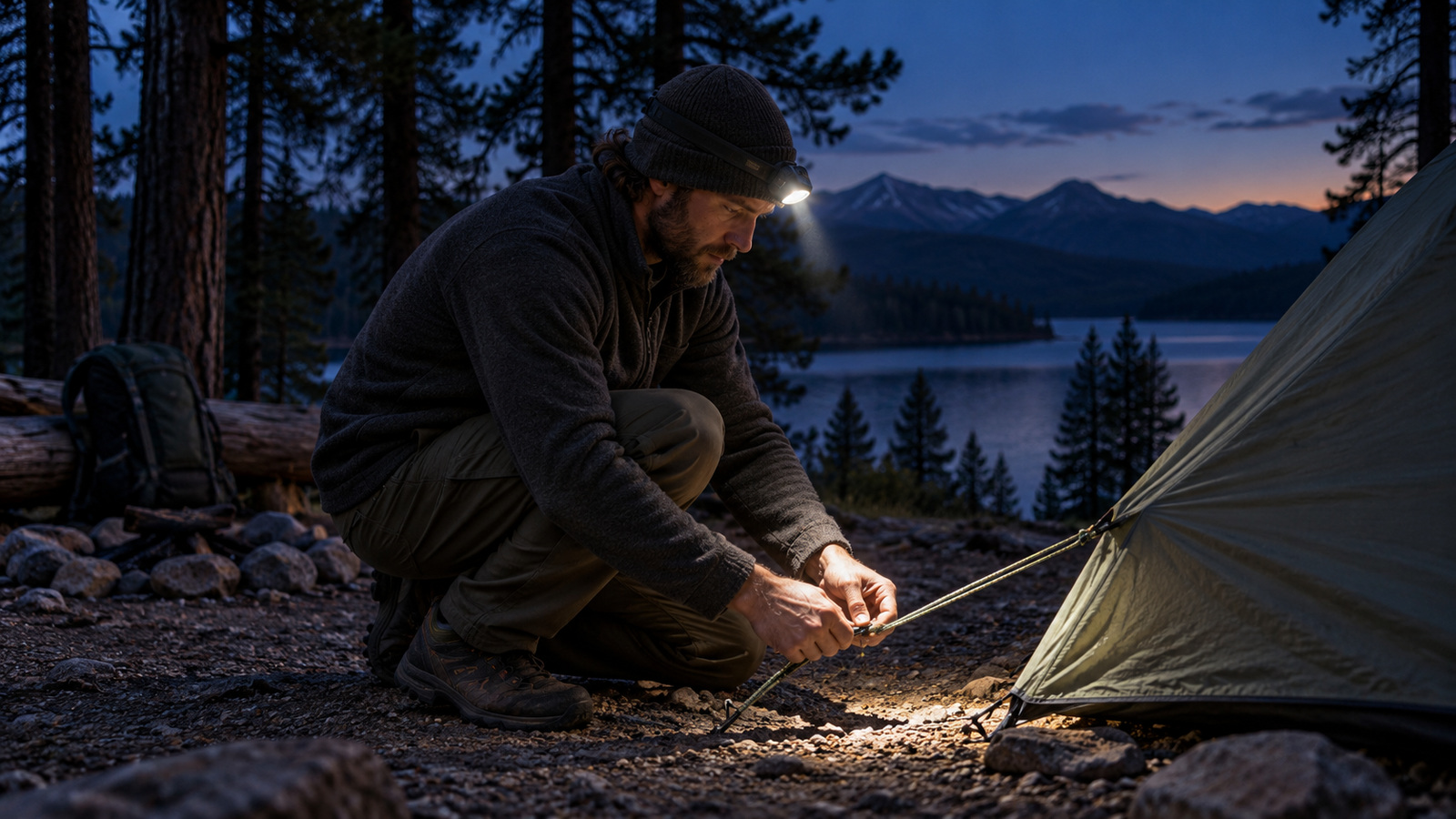
The moment a tent buckle slips between your fingers after sunset, a headlamp earns its space in the camping kit. You can keep both hands on the job, look directly at a knot or zipper, and move around without balancing a flashlight under your chin. Yet the most powerful lamp on a shopping page can still be uncomfortable at dinner or awkward to operate from a sleeping bag. The best camping headlamp suits the ordinary tasks you actually perform: preparing food, finding a washroom, settling children, reading, and checking the ground near your feet. Comfort, a useful low setting, and understandable controls deserve as much attention as maximum brightness. A good choice becomes part of your evening routine, providing enough light without demanding constant adjustment or shining into everyone else’s eyes.
A: A harsh concentrated beam can reflect from nearby surfaces; broad lower-output light may suit close work better.
A: It should hold position through normal movement without uncomfortable pressure.
A: Possibly, but each wearer should try the adjustment and housing shape.
A: No. Keep any beam away from companions' eyes.
A: Verify the supplied battery, connector, cable, and realistic charging opportunities.
A: No. Closely named versions may use different battery arrangements.
A: Accidental activation can drain the battery inside luggage.
A: Stretch, trapped grit, and incorrect reassembly can change stability and forehead comfort. Follow the washable components instructions and verify the familiar fit before putting the lamp back in the kit.
A: It helps light nearby hands and gear without forcing an awkward neck position.
A: A short rehearsal exposes glare, pressure, confusing controls, and missing accessories.
Think in Tasks Rather Than Maximum Lumens
Start with the places your eyes need to work. Sorting utensils at a picnic table calls for broad nearby illumination, while following a campground path requires enough reach to see the next section of ground. Reading in a tent needs less light again. A headlamp that handles those changes smoothly is more useful than one with an impressive maximum mode and an uncomfortable gap between its lower settings. Compare the beam and controls alongside the published output.
Maximum lumens describe light output under specified conditions, not how pleasant a campsite feels or how clearly every object appears. Beam distribution determines whether light spreads evenly across your hands or concentrates into a bright central spot. A concentrated beam can help with distance but can feel harsh when reflected from a pale bowl or tent wall. Look for demonstrations of the actual beam pattern and, when practical, try the lamp indoors before committing to a trip.
Fit the Headband Before Studying Extra Features
A camping lamp may spend several hours against your forehead, so a few uncomfortable details can outweigh a long feature list. Adjust the strap with the lamp installed and move your head through ordinary tasks: looking down, bending over, and turning toward a companion. The housing should remain stable without requiring a painfully tight band. Check the feel against bare skin and over the hat you expect to wear, and consider whether the strap adjusts easily without repeatedly pulling your hair.
Weight distribution matters as much as the total figure. A small front housing often suits relaxed campsite use, while a design with a separate battery compartment may distribute a heavier system differently. Neither arrangement guarantees comfort for every wearer. Pay attention to pressure from hinges, buckles, and the back of the housing. If several people will share a lamp, make sure each can fit it without a complicated sequence of strap changes.
Tilting the light is another comfort feature with practical consequences. You should be able to aim the beam at your hands while keeping your neck in a relaxed position. Check whether the hinge holds its angle when you walk or lean over a table. A lamp that repeatedly droops can be frustrating even when the strap feels secure. Try the complete movement rather than judging fit from a still photograph of someone wearing it.
Two Current References Show Different Strengths
The Petzl ACTIK CORE is a useful starting point for campers who want a rechargeable lamp with an alternative battery option. Petzl describes wide and mixed beams, red lighting, a tilting plate, and compatibility with its CORE battery or three standard batteries. The Black Diamond Spot 400 offers another reference with dimming, brightness memory, a digital lock, and support for either three AAA batteries or the separately sold BD 1500 pack. These are research-based shortlist examples, rather than a hands-on ranking; check the exact generation and included battery before buying.
Give Low Light a Proper Trial
The setting you use most may be near the bottom of the range. A comfortable low mode makes it easier to find a sock, check a sleeping child, or read without turning the whole tent into a glowing lantern. Test whether the lamp starts at a remembered brightness or returns to a default that surprises everyone. Also check how easily you can reach a low setting from off. Cycling through a blast of bright light before reaching a gentle mode can undermine its usefulness.
Red lighting can be helpful for some close tasks and for reducing glare toward companions, but it does not replace considerate aiming. Different materials and colors may be harder to distinguish under red illumination, and some people simply prefer very dim white light. Try it with the objects you actually handle. Keep the beam pointed away from faces regardless of color, especially when talking across a table or turning inside a shared tent.
Match the Battery Arrangement to Your Camping Habits
Rechargeable power suits campers who can reliably top up equipment before leaving and who already carry suitable charging hardware. It reduces the recurring chore of buying disposable cells, but the cable and charging opportunity remain part of the system. Confirm the actual port and whether the rechargeable battery is included. A familiar product-family name can cover versions with different power arrangements. Read the listing for the exact lamp in your basket rather than assuming every variant behaves alike.
Replaceable cells can simplify longer trips when charging is limited, provided you bring the correct type and store spares appropriately. Follow the manufacturer’s permitted battery chemistry and replacement instructions. Do not mix cells casually or install substitutes because they fit physically. A lamp with an approved rechargeable pack and standard-cell alternative can offer flexibility, but that flexibility only helps when you understand which accessories are required and how to change power sources.
Plan your reserve around ordinary use and the consequences of losing light. A campground walk near facilities differs from a remote approach after dark. Keep a dependable backup accessible and make sure each person can find their own lamp without opening every bag. Charging a lamp fully does not remove the value of that plan. The point is a manageable routine that still works when someone forgets to switch a light off during dinner.
Read Runtime Claims Alongside Brightness Behavior
Read the performance table for the battery you intend to use and the setting you expect to select. Maximum output, a balanced walking mode, and a very low tent mode can have very different endurance. Some lamps reduce output during discharge, so a runtime endpoint does not promise unchanged starting brightness. Decide which job must remain comfortably lit, then judge the table against that job rather than against the largest hours figure.
Build the evening from separate periods instead of assigning one brightness to the entire trip. Tent setup may need a brighter beam for a short time, cooking may need a broad moderate setting, and reading may use a gentle low mode. Keep those periods realistic for your own pace. If the higher setting is needed for most of the evening, a very long low-mode figure does little to answer the endurance question.
Try that sequence at home with the actual power source and observe the light on familiar objects. Watch whether ground detail or a tent fastener becomes difficult to see before the lamp goes out. Also learn how the low-battery indication behaves, so a warning is recognizable when you are occupied with another task. Record the settings and duration rather than describing the trial only as a successful evening. This gives you a repeatable comparison when changing batteries or considering another lamp.
Leave a reserve appropriate to the consequence of losing light. A late trip to a nearby washroom and an unplanned remote walk create different needs, even when the same lamp is carried. Keep a separate dependable backup accessible and use it before the main light becomes inadequate for the task. A rehearsal establishes a useful baseline, while cold, battery condition, and extra use can still change the result. Recheck the plan when those conditions differ materially from the trial.
Practice the Controls Without Looking
Camping controls should be understandable while your attention stays on a task. Practice turning the lamp on, dimming it, selecting another beam, and switching it off before you leave. Try these actions with cold hands or the gloves you normally carry, without assuming that a button easy to press at a desk will be equally obvious outdoors. A short sequence can feel simple once learned, but several modes become frustrating when a companion needs immediate light and cannot remember the order.
A lock helps prevent accidental activation in a crowded bag, but it needs practice too. Learn how to engage it and confirm the lamp is actually locked before packing. Then make sure unlocking is possible when you arrive after sunset. Store the lamp in a consistent pocket rather than beneath the sleeping gear. Reliable access often contributes more to a pleasant evening than another rarely used lighting mode.
Choose Protection for the Conditions You Expect
Read the documented water rating and care instructions instead of interpreting an outdoor appearance as unlimited weather protection. Ratings differ among models, and the state of covers, seals, and compartments affects how equipment should be handled. Close battery and charging openings as instructed. After exposure to moisture or dirt, follow the manufacturer’s cleaning and drying guidance before storage. A wet lamp buried in a sealed gear pouch is harder to inspect and maintain than one given a proper drying opportunity.
Cold-weather use adds another reason to check the manual. Battery performance and permitted charging conditions can differ from mild-weather behavior, so plan around the stated limits for the actual power source. Keep replacement and charging tasks away from situations where small parts can disappear into snow or gravel. If winter camping is a regular activity, evaluate the controls with your winter gloves and hat. Seasonal practicality should be established before the trip rather than discovered at the first dark, cold setup.
Inspect the headband and hinge between trips as well as the electronics. Stretch, grit, and accumulated sweat can change how the lamp feels and holds position. Clean washable components only as directed and check that everything is correctly reassembled. A straightforward inspection catches a slipping strap or cracked hinge while replacing a part is still easy. Maintenance should restore a familiar fit, not turn into experimental repair at camp.
Buy for the Evening You Want to Have
Compare the full purchase rather than the headline lamp price. Include any rechargeable pack, charging cable, spare cells, and carrying pouch you actually need. A modest lamp with a comfortable beam can represent better value for campsite chores than a more powerful specialist design. Conversely, paying for a convenient power arrangement may be worthwhile if you camp often. Identify the recurring benefit before assigning value to an upgrade.
Finally, rehearse one ordinary evening at home: unpack the lamp, cook or organize gear under its beam, lower the output for close work, and pack it again with the lock engaged. Notice pressure, glare, confusing controls, and forgotten accessories. These are small observations, but they reveal whether the equipment fits your habits. Choose the headlamp that makes those tasks feel easy and predictable. Its best feature may be that, once darkness arrives, you barely need to think about it.