Buy Light You Will Enjoy Sitting Beside
A camping lantern spends much of its useful life near faces, plates, hands, and tent fabric. That makes pleasant light distribution at least as important as the biggest lumen number on the box. A powerful lamp that shines straight into everybody’s eyes can make dinner less comfortable, while a modest frosted lantern in the right position can make a whole table feel usable. The best camping lanterns for brightness, battery life, and value match the spaces you occupy after sunset. Begin with how many people share the light, what they need to see, and how long the evening lasts. Then compare low settings, practical runtime, controls, hanging options, and power supply before deciding how much maximum output deserves your money.
A: No. Diffusion, placement, dimming, and glare determine how useful the output feels.
A: Only when the manufacturer's table explicitly pairs them; they are commonly different modes.
A: They can serve separate occupied areas without harsh central glare.
A: It spreads the source's light and can soften direct bright points.
A: A personal headlamp usually handles mobile hands-free tasks more conveniently.
A: Not necessarily; output can decline before the published runtime ends.
A: It prevents an unexpected bright flash or confusing sequence around sleeping campers.
A: A permitted secure support can free surface space otherwise occupied by the lamp. Confirm the support suits the lantern weight and position it where it will not glare directly into seated faces.
A: It helps when compatible spares fit the trip better than a charging routine.
A: Use low comfortable output, aim it at occupied tasks, and turn unused lamps off.
Divide Camp Into Lighting Jobs
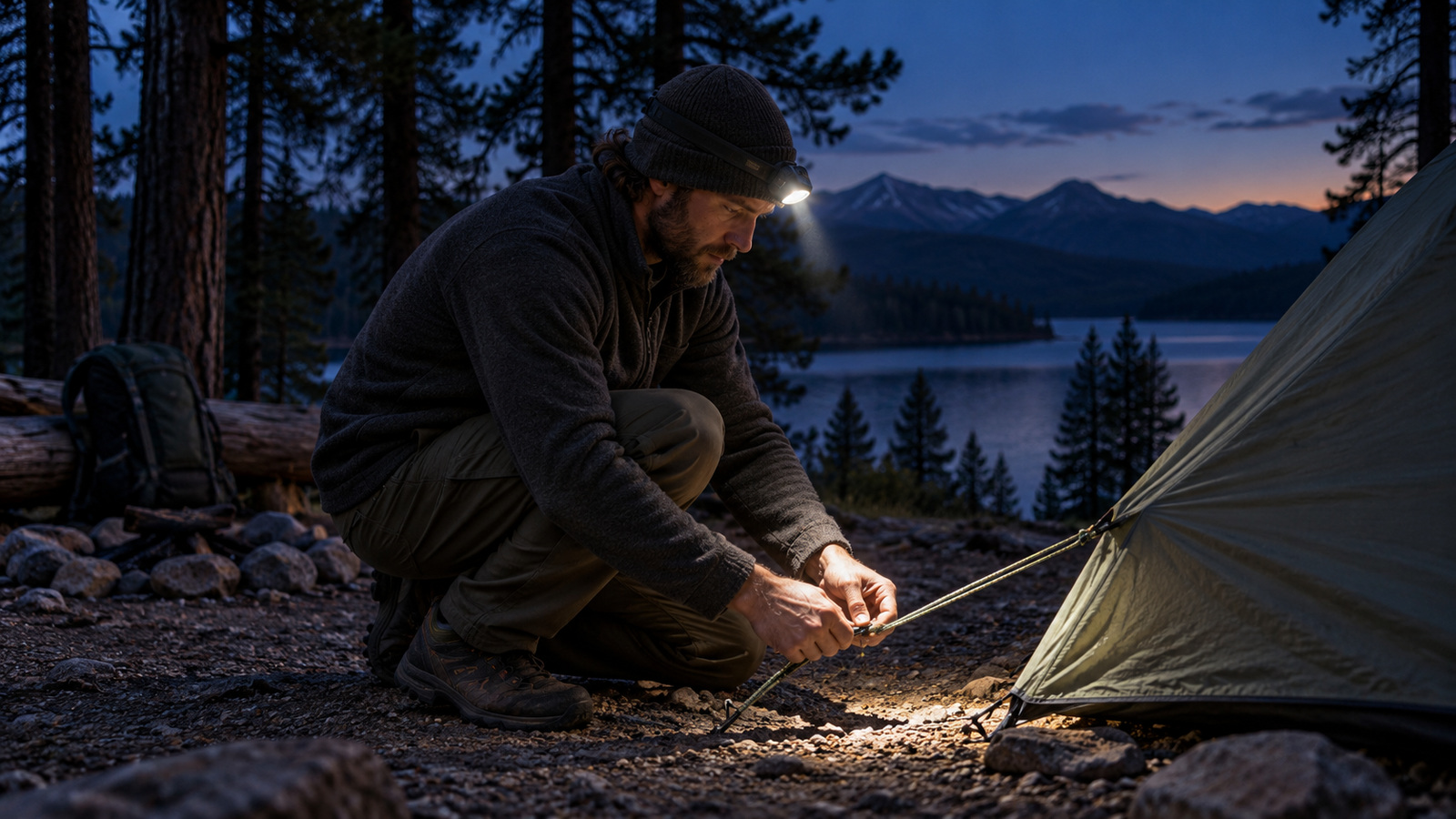
A picnic table, a tent interior, and a walk to the facilities need different lighting arrangements. A lantern works well for shared nearby space because it spreads light broadly, while a headlamp keeps a personal task visible wherever the user looks. Expecting one large lantern to handle every job can create glare in one place and leave another unnecessarily dark. Map the normal evening before choosing a product. For a couple, a small table lantern plus personal lights may be the most comfortable complete system. A larger group may benefit from separate kitchen and seating lights rather than one harsh central source. This approach also avoids interrupting dinner whenever somebody carries the shared light away. Buy for the zones people actually use rather than the entire theoretical campsite footprint.
Understand Lumens Without Letting Them Decide
Lumens describe total visible light output, not how evenly it reaches a table or how comfortable the lamp feels at eye level. Diffusion, shade design, mounting height, and the directions illuminated all change its usefulness. Compare products in the intended mode rather than assuming a larger number wins. A well-positioned lower-output lantern can be the better reading or conversation light even when a brighter model has a legitimate role in meal preparation.
Think about the amount of contrast around the lamp. A very bright source against a dark background can feel harsher than a moderate light aimed at the task. Reducing output may make it easier to look up from a plate without squinting. Try placement and dimming before deciding that the only solution is a different product.
Examine the Globe and Distribution
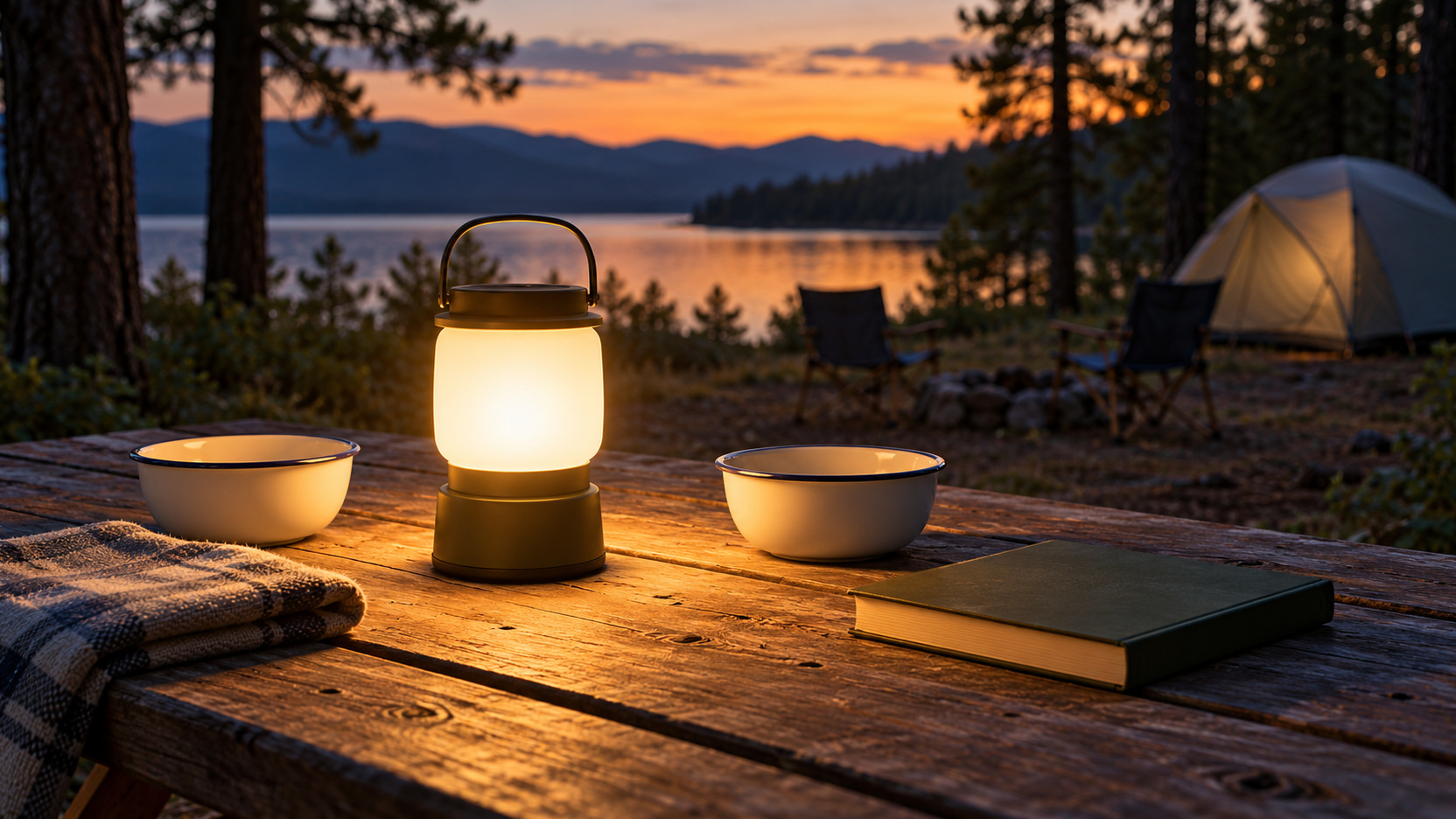
A frosted globe spreads light differently from exposed bright LED points. Look for an even glow without a glaring hotspot in the direction campers face. A shade or directional mode can keep more of the light on the table and less in neighboring sites. Photographs are only a starting point because camera exposure can disguise glare and exaggerate the apparent brightness of the surrounding scene.
Think about the occupied position: a lantern placed directly between two faces may be irritating even if its diffuser is good. Raising it securely above eye level or moving it slightly aside can improve the experience. Keep mounting methods within the product’s instructions and avoid hanging heavy lamps from tent components that are not intended to support them.
Read color options as useful controls rather than a collection contest. Warm white often suits relaxed evening use, while other white settings may help with particular tasks. Colored effects are optional entertainment. Prioritize a clean route back to an ordinary dim white mode so a playful feature does not make routine operation frustrating in the dark.
Make Low Light a Major Buying Criterion
The setting used after dishes are done may be much lower than the one used to prepare them. A lantern with a genuinely useful dim range can remain pleasant through conversation, bedtime organization, and a brief overnight wakeup. Check whether brightness adjustment is smooth enough to find a comfortable level. A lamp that jumps from dazzling to nearly invisible may be less useful than its impressive maximum suggests.
Also learn what happens at startup. Some controls remember the last setting, while others begin at a particular level or cycle through modes. Practice before the trip so you can turn the lamp on without unexpectedly illuminating a sleeping tent. Clear, predictable controls are a form of comfort that rarely appears in the largest print on the package.
Compare Runtime at the Same Brightness
A lantern’s longest published runtime usually belongs to a low-output mode, while its maximum lumen claim belongs to a different setting. Do not combine the two into an imaginary all-night high-power performance. Read the mode-by-mode table and any stated testing conditions. Where output declines during discharge, hours of remaining glow and hours of useful working light may be different planning figures.
Know What a Runtime Standard Measures
Manufacturers do not always describe runtime in the same way. Petzl’s explanation of ANSI/PLATO FL1 measurement describes a runtime threshold based on output falling to a fraction of its starting level. That is useful context for reading lighting claims, although each lantern’s own published method still needs checking. A test endpoint is not a promise that the light remains equally bright until it stops.
For your plan, estimate how many hours you need at dinner brightness and how many at a low social setting. Include mornings or cloudy cooking sessions if relevant. Then leave margin for cold conditions, aging batteries, and accidental extra use rather than sizing to the last advertised minute. A small independent personal light is a sensible backup if the shared lantern runs out.
The best rehearsal is an ordinary evening using the actual settings you enjoy. Observe whether the light remains satisfactory, not just whether it still turns on. Recharge or replace batteries according to the manual afterward, and revise the plan if the result falls short. This produces a more useful personal estimate than borrowing another camper’s unusually dim usage pattern.
Consider a Compact Replaceable-Power Option
The Black Diamond Moji is a useful reference for small shared-space lighting. Its current specification lists a frosted globe and support for AAA cells or the compatible BD 1500 rechargeable battery. That power flexibility can appeal to campers who want a modest table or tent light without committing every trip to a built-in charging routine. Confirm the exact model and included battery arrangement.
This category works best when the lighting job is local rather than an entire family kitchen. Compare the packed weight including the chosen batteries and spares, and check replacement requirements in the instructions. A compact lamp may offer excellent value beside a meal while being the wrong tool for a broad preparation area. Matching the job prevents both disappointment and unnecessary overbuying.
Consider a Larger Rechargeable Table Lantern
The BioLite AlpenGlow 500 is a larger rechargeable reference with white-light choices and adjustable output. Its published high and low runtime figures differ substantially, illustrating why mode selection matters more than a single battery-life headline. This category suits shared table use when you have a reliable charging routine and enough room for the larger body. Check the current port type and charging instructions rather than assuming every new-looking lantern uses the same cable.
Check how the larger body behaves on the table you actually use. Cups, serving dishes, and sleeves all compete for that space, and a central lamp can become something people continually move. A suitable hanging location may free the surface when the lamp and support permit it. Judge the layout as a group meal rather than a photograph of an otherwise empty table.
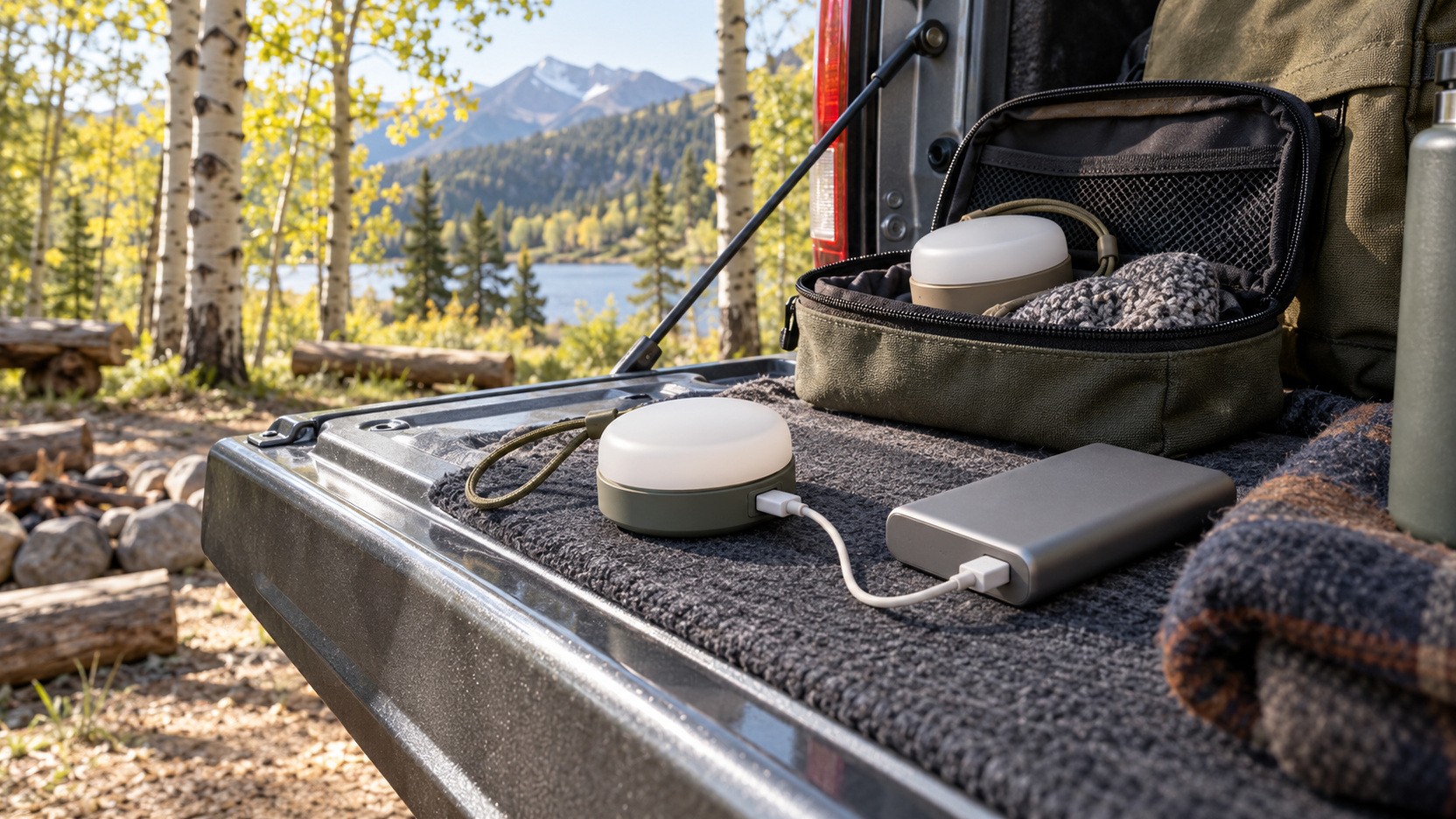
Do not buy a larger model purely to charge phones. If lighting is the primary need, using its battery as the camp charging hub can undermine the endurance that justified the size. A separate power bank may make the overall system clearer. Compare the full cost and weight before treating an output socket as decisive value.
Choose Power Supply Around Resupply
Replaceable cells are convenient when appropriate spares are easy to carry and obtain. Built-in rechargeable batteries can simplify repeated weekend use when charging is already part of your departure routine. Neither approach is automatically superior. The better choice is the one you can keep supplied without extra travel, incompatible chargers, or discarded cells accumulating in the camp kitchen.
A lantern that can charge another device shares its battery with that device. If you use the output port for a phone, do not expect the same remaining lighting runtime as an untouched battery. Reserve navigation and communication charging separately when possible. A combined feature can be useful, but its energy does not become free because the product has another socket.
Value the Base, Handle, and Weather Details
A wide stable base matters on a busy table, especially when elbows, cups, and food move around it. A secure hanging loop creates another placement option, but the support must suit the lamp’s weight and intended use. Folding handles and legs should remain straightforward after dust and repeated packing. A lamp that tips easily may need more attention than its attractive shape suggests. Read the actual water-resistance rating and care guidance. Splash resistance does not imply that a lantern can sit in pooled water or be charged while wet. Protect ports as directed and allow equipment to dry before storage. Tent condensation, spilled drinks, and rain are different situations, so a vague outdoor label is not enough to decide how the lamp should be treated. Transport lockout is another practical detail. A button pressed by luggage can empty the battery before the first evening, and unusual control sequences can be difficult to remember. Practice locking, unlocking, and returning to a useful brightness with the lamp in hand. Prefer controls that the whole group can understand over a long menu of rarely used modes.
Spend on Useful Coverage Before Extra Features
Compare the complete lighting kit at current prices, including batteries, charger, cable, and personal backup lights when needed. A lower-cost compact lantern may be the strongest value for a small tent, while a larger diffuser earns its price at a busy table. Decorative color effects and phone charging should follow the main lighting task in the decision. If the basic beam and dimming feel wrong, additional modes will rarely fix them.
For a group, consider whether two modest lamps solve the actual layout better than one premium high-output unit. Separate placement can reduce glare and keep the food area usable while others relax. Make that decision from the campsite arrangement and the people sharing it. The goal is an easy evening, not maximum brightness everywhere at once.
Respect the Darkness Around Camp
Use the lowest comfortable setting, direct light toward your activity, and switch unused lamps off. Keep bright sources out of neighboring tents and avoid leaving a lantern shining across paths once everyone has settled down. Personal headlamps handle short walks without flooding the whole campsite. A good lantern earns its place by helping people see what they need while allowing the rest of the night to remain dark. When light quality, runtime, power supply, and placement all fit, value becomes much easier to recognize than a large number on a box. Ask the other people at the table how the light feels before turning it higher. Somebody facing the globe may experience the same setting very differently from the cook looking down at a cutting surface. A small repositioning can improve comfort for the whole group without spending money or consuming more battery energy.