Choose a Propane Fire Pit Around the Evening You Want
Some camping evenings leave just enough time to sit down after dinner before everybody heads to bed. A propane fire pit can fit that short window without a woodpile, smoky clothing, or a bed of coals to manage, provided the campsite permits its use. The convenience is real, but it travels with a cylinder, hose, regulator, and a set of operating requirements that deserve as much attention as the bowl. The best portable propane fire pits for campsite comfort balance a pleasant flame with manageable fuel logistics, sensible packing, and clear controls. Rather than chasing the largest advertised heat number, compare the complete system against your vehicle, your usual group, and the amount of evening time you actually spend outdoors.
A: Not automatically; ask about the recreational appliance specifically.
A: It describes an energy-input rate, not a guaranteed amount of warmth reaching each chair.
A: Do not assume so; separate appliance weight from the full fuel and transport load.
A: Use only the media approved for the burner system.
A: No. Media and hardware remain hot and require complete cooling before packing.
A: Use only supported hose, regulator, and connection arrangements.
A: Operate only within the manufacturer's stable approved settings and procedures.
A: Use outdoors only in locations satisfying every specified clearance and local rule.
A: An optional evening flame should not consume fuel assumed available for essential meals.
A: It helps contain the completely cold appliance and media during repeated transport.
Get Explicit Permission for a Recreational Gas Flame
Propane is sometimes treated differently from wood during restrictions, but it is never a universal exemption. Land managers may allow a gas cooking stove while prohibiting a recreational fire bowl. Read the destination’s current notice and ordinary campsite rules, then ask specifically about a propane fire pit when the wording is unclear. A seller’s statement about fire bans cannot authorize use at your site.
The National Park Service’s fire-safety guidance is a useful starting point for fire awareness, but local instructions still decide the trip. Check the final destination rather than a neighboring county or another campground in the region. Permissions can change between booking and arrival, so make the fire an optional comfort rather than the foundation of the evening’s plans.
Identify Your Portable Fire Bowl Category
Compact open bowls usually prioritize a simple flame and relatively straightforward packing. Larger bowls can create a broader visual centerpiece but demand more floor space, rock weight, and protective transport. Folding or unusually shaped designs may improve one part of storage while adding mechanisms or awkward components. Look at the full dimensions and supported fuel arrangement rather than assuming the word portable means easy to carry.
Compare how each bowl contains its media when carried. A fitted lid may help keep the rock bed together, but its fastening system and the loaded weight still matter. Try to picture the return trip after every other piece of camp has been packed. A compact diameter is less useful if the unit cannot remain upright and secure in the available space.
Give the fire pit a clear purpose in the equipment list. If its role is a brief social flame, ease of setup and storage deserve more emphasis than cooking-oriented accessories. If food preparation is intended, check that the manufacturer explicitly supports it. A recreational flame does not automatically make an appliance suitable for holding pots, grates, or roasting equipment.
Use a Specific Model as a Reference
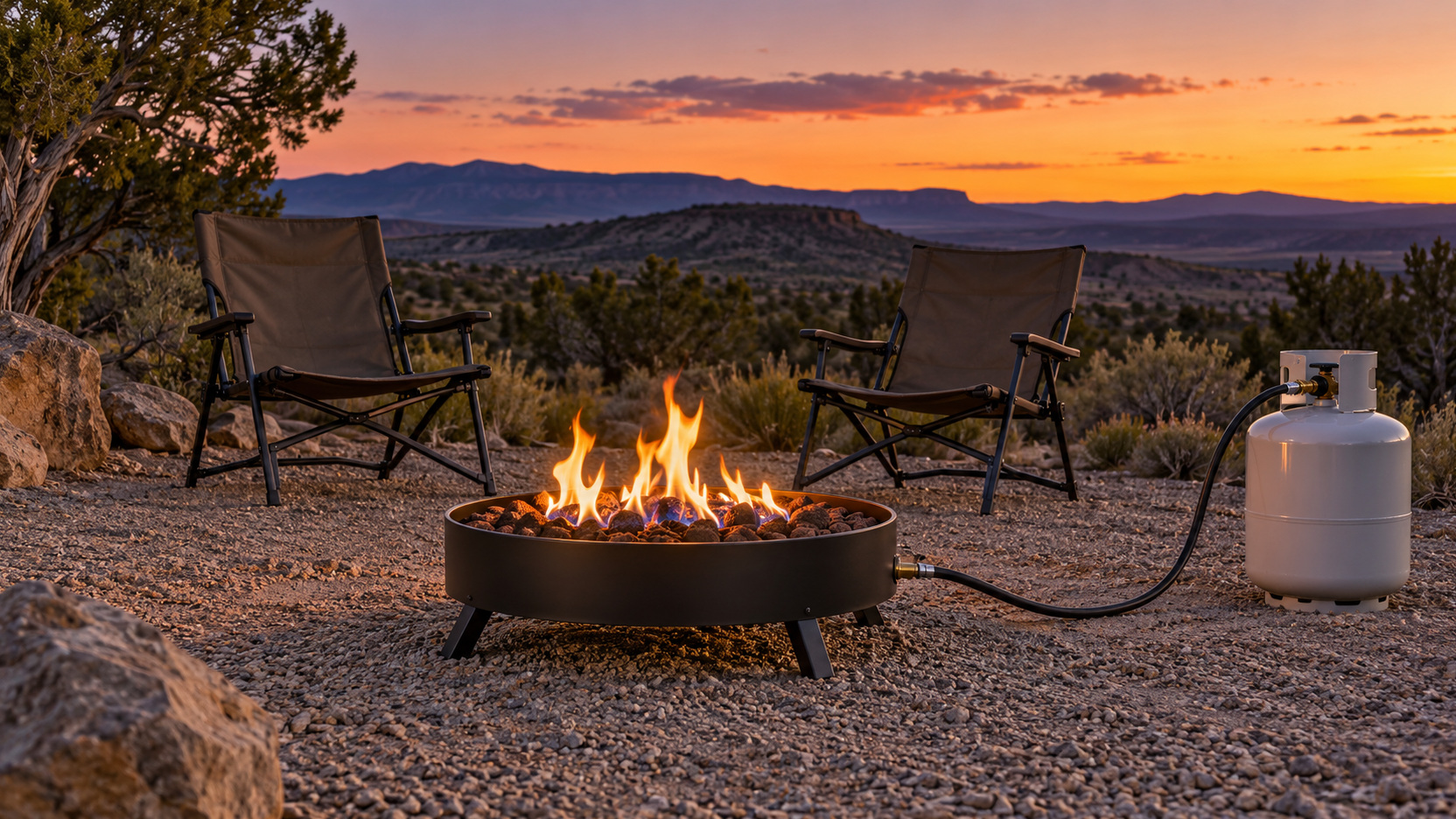
The Outland Living Deluxe model 893 offers a concrete reference for the conventional camping-bowl format. Its current specification lists a 19-inch diameter, 11-inch height, and 23-pound weight with rocks. It is configured for a 20-pound propane cylinder and includes a hose and regulator. Those details help establish the true scale before you compare alternatives. That is a useful candidate for vehicle campers who want a familiar low bowl and a defined carrying arrangement. It is less persuasive for somebody who must carry everything far from the parking area or has no appropriate way to transport a cylinder. Treat this as a specification-based shortlist example rather than a claim of hands-on superiority. Verify the current manual, regional model, included parts, and available replacement components before purchase. Other shortlisted products should pass the same comparison: complete ready-to-use weight, supported cylinder size, hose routing, operating clearances, controls, and transport method. A small difference in bowl diameter may matter less than a lid that secures the cold rock bed properly. The best value is the arrangement you can repeatedly use and pack correctly without inventing workarounds.
Read Heat Output as Fuel Input
A BTU-per-hour rating describes a rate of energy input, not a promise that each camper receives a fixed amount of warmth. Wind, bowl shape, flame setting, seating distance, and the open air all affect the experience. A larger maximum rating can consume fuel faster without solving an exposed campsite. Choose a flame that works comfortably within the instructions and manage personal warmth with suitable clothing.
A lower setting may suit conversation and fuel conservation, but use only settings that maintain correct operation according to the manual. Avoid turning a control to an unstable position simply to stretch the cylinder. Also distinguish a published maximum from normal use: the number is a capability limit, not a prediction of every evening’s consumption or comfort.
Budget Propane by Planned Use
Estimate how many evenings you expect to use the bowl and roughly how long each session will last. Actual fuel consumption depends on the appliance, flame setting, and operating conditions, so a single advertised runtime is not a dependable trip guarantee. Start with the manufacturer’s guidance and refine the plan after permitted use with your actual setup. Keep sufficient fuel for essential cooking separately accounted for if the same supply serves both purposes.
Use a consistent way to check the remaining supply before leaving home, following the cylinder supplier’s guidance. Do not rely on a flame that looked healthy last weekend as evidence of another full trip. Record your actual session lengths while learning the appliance. A simple record of your own use is more relevant than a stranger’s runtime with an unknown flame setting.
Decide in advance what happens if the fuel runs low. Turning off the optional fire and using warm layers is straightforward; discovering that dinner shares the depleted supply is more disruptive. Avoid making a secondary cylinder purchase until transport and storage for it are properly resolved. More fuel can solve endurance while creating an unwanted space problem.
Give the Cylinder a Real Place in the Vehicle
A propane system includes a pressurized fuel container, not just an attractive bowl. Follow the cylinder supplier’s and appliance manufacturer’s instructions for upright transport, valve protection, securing, ventilation, and storage. Do not treat a full cylinder as another loose item that can roll behind luggage. Plan the route and unloading routine so fuel is not left in an unsuitable vehicle environment.
Check the supported cylinder type and connection before purchasing accessories. A convenient-looking adapter can introduce a combination the manufacturer has not approved. Likewise, changing hose length or regulators is not a casual way to improve campsite layout. Use specified equipment, inspect it as directed, and arrange the site around the supported system. Keep the cylinder accessible enough that the instructed shutdown can happen without reaching across flame or moving hot equipment. Lay out this relationship cold at home. If the only arrangement places the fuel container in a walking route or crowds other gear, the setup needs more space or a different campsite plan.
Inspect the Hose and Connection Routine
A long hose can separate the bowl from the cylinder, yet it also creates a trip and damage risk if routed carelessly. Follow the required distances and keep the hose away from heat, sharp edges, vehicle movement, and ordinary foot traffic. Inspect the condition of the assembly before use. A damaged or suspect part belongs out of service until handled through the appropriate replacement process. Use the manual’s connection, leak-check, and ignition sequence every time, including after reconnecting a cylinder. Never check for leaks with a flame. Stop if there is an unexpected gas smell, abnormal operation, or any condition the instructions identify as unsafe. The convenience of quick ignition depends on a consistent routine rather than skipping the steps between carrying and lighting.
Keep the Rock Bed Within Its Instructions
The decorative media is part of the designed burner arrangement. Use the approved material, quantity, and placement, and do not add stones collected around camp. Incorrect media or placement can affect the burner, while trapped moisture can create additional problems. Read the care and drying requirements before storing or restarting the appliance, and inspect the burner area as the manufacturer directs.
Check how the media travels in the supplied kit. Loose rocks can shift after a bumpy drive, so inspect the arrangement before lighting rather than assuming it remains as packed. Keep debris and unrelated gear out of the bowl while it is stored. These small checks protect the operating setup without requiring extra accessories.
If a component is missing, pause use until an approved replacement is available. A visually similar part is not necessarily equivalent in a fuel-burning appliance. Keep the model number and parts information with the instructions so replacement inquiries are straightforward. This makes maintenance a predictable task rather than an improvised campsite repair.
Plan an Open, Uncluttered Operating Area
Use the fire pit outdoors with the specified side, overhead, and ground clearances. A tent, vehicle, canopy, or screened shelter is not automatically an acceptable place for a gas flame. Do not rely on fabric height alone to judge clearance. The product’s manual and local rules determine the operating area, and carbon monoxide is one reason combustion equipment does not belong in enclosed camping spaces.
Arrange chairs so people can enter and leave without stepping over the hose or brushing the bowl. Children and pets need attentive supervision and a clearly maintained boundary. A low appliance may be easy for adults to see from a chair while remaining directly in a child’s walking path. Good layout improves comfort before any fuel is burned.
Compare Controls Before Decorative Features
Look for controls you can understand and operate in the intended lighting conditions. Manual ignition and built-in ignition create different steps, but either requires the correct procedure and a reliable way to follow it. Read the instructions before deciding that an extra switch makes a system simpler. Clear operation matters more than an impressive-looking flame photograph.
A lid and carry kit can be genuinely useful for a completely cold bowl, yet transport accessories should fit securely and stay distinct from operating components. Check whether rocks remain contained during the return journey. A setup that scatters media through the vehicle loses much of its convenience, even if the initial lighting process is quick.
Also consider replacement support for the regulator, hose, burner components, and carry parts. Outdoor equipment lives through dust, vibration, and storage, so serviceability belongs in the price comparison. Choose a complete supported system over one that needs improvised repairs to keep traveling.
Shut Down Early Enough for a Calm Departure
Turning off a flame is faster than waiting for a wood fire to burn down, but the bowl, media, and surrounding hardware remain hot. Follow the specified shutdown sequence and allow everything to cool completely before covering or carrying it. Do not put a hot lid or bowl against luggage because the flame has disappeared. Cooling time should be part of the evening schedule.
At home, clean and dry the unit as directed, protect the hose, and store the fuel container according to its instructions. A short inspection after the trip helps catch damaged parts before the next departure. Keep the manual with the gear so somebody else can follow the same process without relying on memory.
Choose Convenience You Can Sustain
A conventional compact bowl is a sensible starting point for vehicle campers who have suitable cylinder transport and want a short, controllable recreational flame. Choose a larger model only when the group, available space, and fuel plan support the extra equipment. Give packing, approved media, hose layout, and shutdown equal weight with heat output. A propane fire pit provides its best comfort when it is optional, permitted, straightforward to operate, and easy to return home cold. That combination leaves more of the evening for sitting together and less of the trip organized around maintaining the fire.