A Portable Fire Pit Has to Fit the Whole Weekend
A fire pit can be easy to carry across a showroom and surprisingly awkward to take camping. The cylinder needs a secure place in the vehicle, its accessories need their own space, and somebody must manage fuel, extinguishing, and a completely cold return trip. Choosing well means looking beyond the picture of tall flames. A couple arriving at a gravel campground after dinner has different needs from a group that wants to cook over coals all afternoon. The best portable fire pits for camping earn their space by matching those real evenings, the locations that permit them, and the work their owners are willing to do. Start with the campsite and the journey, then compare heat, packed bulk, cleanup, and total cost as parts of one purchase.
A: No. Startup conditions, fuel moisture, airflow, and operation affect visible smoke.
A: Only when the destination specifically permits that arrangement.
A: No. Diameter, handles, storage openings, and accessory volume can dominate transport.
A: Buy it when supported live-fire meals are a recurring purpose, and rehearse its use first.
A: They can be; check permitted fuel dimensions against locally available bundles.
A: No. Follow the system's instructions for each required protective component.
A: The appliance must return cleanly and safely after a full shutdown and complete cooling.
A: No. Assess its condition using the manufacturer's care guidance and inspect structural components.
A: No. Exposure, clearances, permissions, and sensible clothing still govern the evening.
A: A manageable complete system with simple setup may offer better value than a large accessory collection.
Confirm That a Portable Fire Is Welcome
A permanent campground ring does not automatically authorize a second fire beside it. Read the destination’s current restrictions and its ordinary campground rules before shopping. Some locations require every wood fire to stay inside an installed ring, while others impose seasonal restrictions that change with conditions. Ask the managing office specifically about a portable wood-burning fire pit if the written policy leaves any doubt.
Rules distinguish appliances differently, so permission for a cooking stove should never be treated as permission for a recreational fire. The National Park Service’s Rocky Mountain fire regulations illustrate how designated locations and fuel rules work together. Check the actual destination again close to departure, and have an enjoyable evening planned even when flames are unavailable. That can make a smaller lighting or seating upgrade more useful than an expensive fire appliance.
Pick a Design Before Picking a Brand
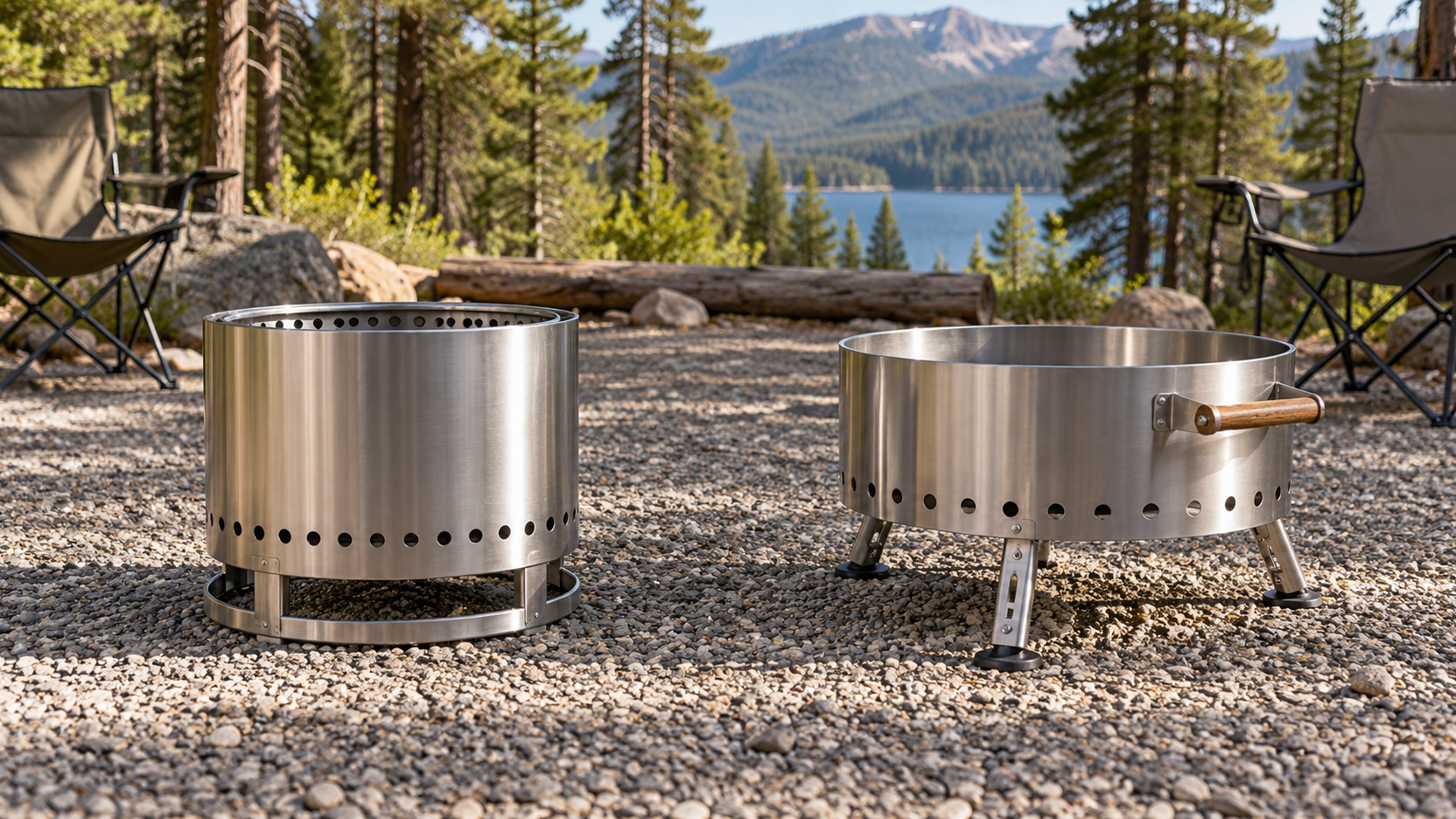
Rigid double-wall pits, folding metal fireboxes, and supported mesh platforms solve different packing problems. A rigid cylinder offers a contained shape and few assembly steps but keeps essentially the same volume in the vehicle. Folding panels trade assembly and loose components for a flatter package. Mesh systems can pack compactly, yet their support frame, ember management, and ground protection still require careful evaluation against the complete instructions.
Use Weight and Volume Together
A listed carrying weight tells only part of the transport story. Measure the storage opening, the space under the cargo cover, and the route from the parked vehicle to the legal fire location. A wide light cylinder can be harder to manage than a heavier narrow bag. Handles and carrying cases affect the experience, especially when the path includes steps or loose gravel.
Make a full transport list that includes the stand, any manufacturer-approved shield, protective cover, gloves, fire tools, and fuel. Some accessories nest; others must travel separately. Check that the arrangement stays secure without putting dirty components against bedding or food containers. Packing the empty system at home reveals problems that a published specification cannot show.
Do not buy a pit whose practical carrying limit depends on moving it while warm. Departure mornings rarely accommodate a casual assumption about cooling time. Build the packing plan around a fully extinguished, completely cold appliance and cold ash handled according to site rules. If that schedule is unrealistic, skip the final morning fire rather than trying to hurry its aftermath.
Understand What Smokeless Really Promises
Double-wall systems route air through the appliance to encourage more complete combustion once operating conditions are right. That can reduce visible smoke compared with a poorly burning open fire, but it cannot guarantee smoke-free startup, wet-fuel performance, or freedom from changing wind. Tall logs, overloaded chambers, and obstructed vents can interfere with the intended burn. Evaluate the design as an aid to a properly managed fire, never as a substitute for appropriate fuel and attentive operation.
The word smokeless also says little about sparks, hot surfaces, or legal permission. A low-smoke flame is still a fire with meaningful clearances and supervision requirements. Consider how nearby campers experience the smell and drifting exhaust, and keep chairs out of the plume rather than expecting the product name to solve campsite etiquette.
Choose Small Cylinders for Frequent Travel
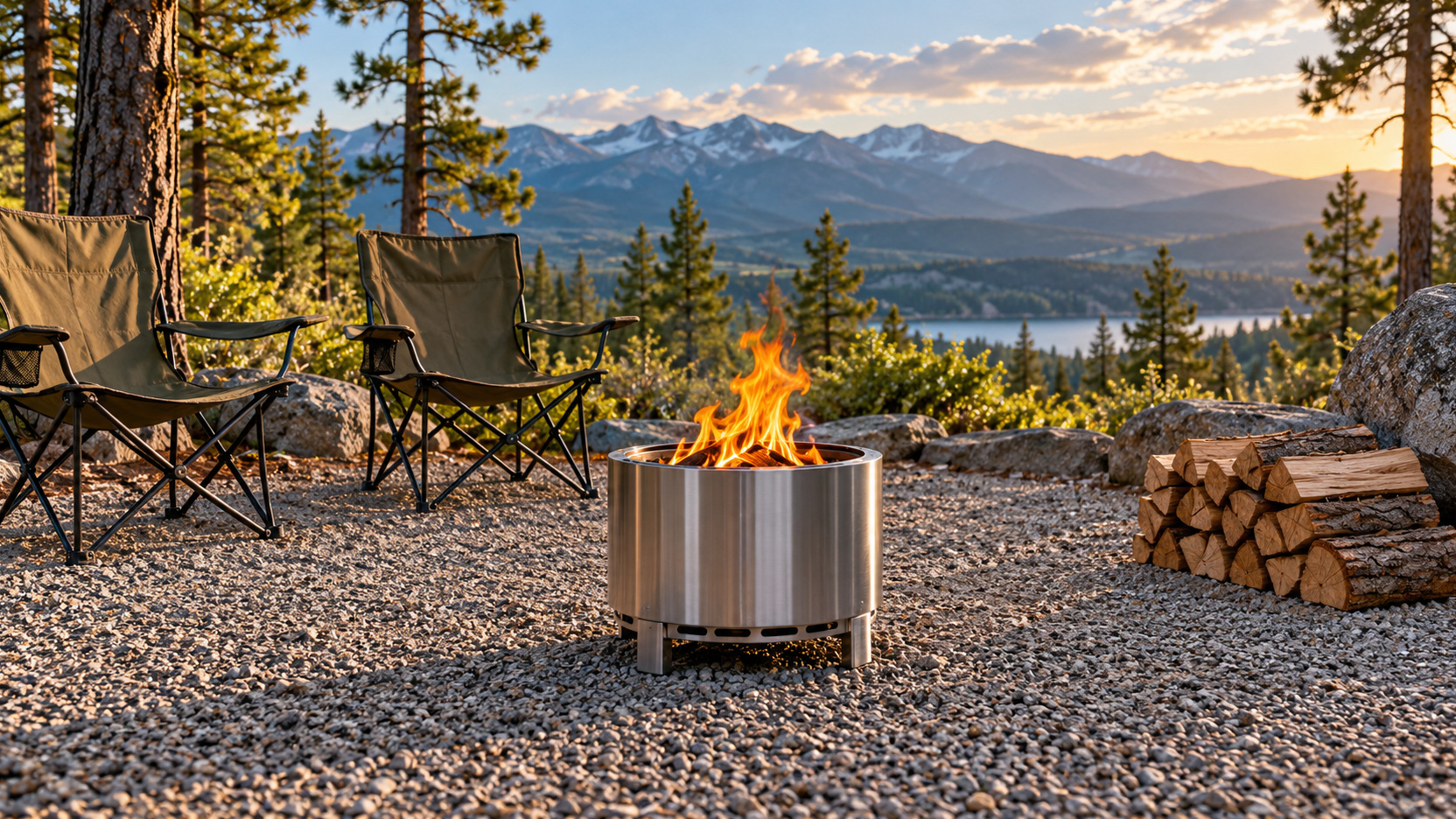
For couples who value a quick setup and can accept the fixed packed shape, a smaller rigid pit is a sensible starting point. Solo Stove’s current help center identifies Ranger as its smaller classic camping-oriented option, with Bonfire occupying a larger gathering role. The useful comparison is the actual unit and its accessories, rather than an assumption that a bigger fire is automatically more enjoyable. Check the exact generation before ordering because similarly named listings can differ. A cylinder can also become an awkward container for the rest of the packing: filling its interior with unrelated items may seem efficient, but check that transport practice against the instructions and keep everything clean. Do not assume an available cavity is intended storage. Think about unloading in rain, when several loose pieces and a crowded tailgate can make an otherwise simple design inconvenient.
Consider a Cooking-Oriented Portable Pit
Cooking changes the purchase. A bowl intended mainly for atmosphere may need a separate approved cooking system, while a model designed around an adjustable grill can make meal preparation a central function. Check the available grate area, how food moves away from direct flame, and the work required to handle hot components. The gear should support the meals you really want to make rather than an imagined outdoor banquet.
The Breeo Y Series is a useful reference for this direction: its adjustable legs and compatible cooking accessories emphasize more than a simple ground-level bowl. That does not make it the lightest or least bulky answer for every camper. Include the grill system, transport bag, and cleaning work when comparing it with a simpler pit.
Practice meal timing in a permitted location before relying on a new setup for the group’s only dinner. Flames, coals, and cooking height are different tools, and the appliance instructions determine which arrangements are supported. Keep an independent meal option available. An appealing fire feature should not turn a late arrival or unexpected restriction into a missed meal.
Judge Warmth From the Seating Position
A dramatic flame photograph cannot establish how warm your knees will feel from a chair. Sidewall height, fire size, breeze, seating distance, and any approved heat accessory all influence comfort. Heat rises, so a deep cylinder may create a different sitting experience from a broad open bed of coals. Look at the actual arrangement around the unit, including safe distances, instead of buying solely for flame height.
For cool evenings, good clothing and an insulated seat remain dependable parts of the plan. A fire pit should add atmosphere and some local warmth rather than carry responsibility for keeping everybody comfortable. If the group has to crowd the appliance to enjoy it, reconsider the setup. More fuel is not a sensible answer to an unsuitable chair arrangement or an exposed windy site.
Protect the Surface Beneath the Fire
Legs and stands create distance from the ground, but that distance is not universal permission to burn on grass, a deck, or a picnic table. Use only surfaces and protective components allowed by both the manufacturer and the land manager. Read the required side and overhead clearances as well as the base requirements. An ember-catching layer, where specified, serves a different purpose from a heat barrier, and neither should be improvised from an ordinary camping mat. Inspect the selected patch of ground in daylight, including roots, dry debris, and the route people take between chairs and the kitchen. A clear circle can become crowded once bags, shoes, and a cooler arrive. Establish where those items belong before lighting, then keep the same boundary throughout the evening.
Make Fuel Part of the Buying Decision
Small fireboxes can require shorter logs than the bundles sold near camp. Check permitted fuel dimensions before deciding how convenient a compact unit will be. Buy appropriate local firewood where required and follow restrictions on transporting it between areas. A pit that accepts the fuel you can obtain without extra cutting may offer better practical value than a slightly smaller model.
Store wood dry and away from the appliance’s required clearances. Separate kindling, suitable starters, and larger pieces so tending the fire does not become a search through the vehicle. Use only approved fuel; treated lumber, garbage, and unknown manufactured materials do not belong in the fire. Fuel discipline improves the evening without requiring an additional accessory purchase.
Price the Complete Ownership Routine
Compare complete kits rather than headline appliance prices. A lower-priced pit may need a carrying case and required protective components before its first camping trip. A more expensive bundle may include items you will never use. Write down the specific pieces necessary for your locations and preferred activity, then compare those totals.
Also consider how much of the holiday you want to spend managing the fire. Folding equipment may need soot-covered panels handled individually, while removable ash components can simplify cold cleanup. Neither design eliminates residue. A dedicated washable transport arrangement helps keep the returning load organized, but it should never be used to contain hot equipment.
Read warranty exclusions and replacement-part availability for the exact product. Stainless steel can discolor with heat, and appearance changes do not necessarily mean a structural problem. Conversely, damaged supports or loose parts deserve attention before another burn. Serviceable equipment that remains convenient after several dirty trips often represents better value than a larger feature list.
Rehearse the First Evening Before Traveling
Unpack the appliance at home while everything is clean and cold. Identify the correct orientation of each removable part, locate the instructions, and test the carrying arrangement with its full accessory load. Explain the setup to another adult who may help at camp. This simple rehearsal catches missing pieces and awkward lifting before they become after-dark problems. Put the instructions where they remain readable without setting a phone beside hot steel. If a removable ring has a correct operating orientation, learn it before the first burn. Small setup details are easiest to understand when there is no audience waiting for a fire and no pressure to finish dinner.
On the trip, choose the permitted location first and establish the required clear space before adding fuel. Keep extinguishing supplies ready and assign an attentive adult to supervise the fire throughout its use. Follow the appliance and campground instructions for shutdown, including how ash must be managed. Packing the equipment should be the final cold step, not the method used to end the fire.
Buy for the Trips That Actually Repeat
The best choice for a small car and short evenings is usually different from the best choice for a truck carrying a shared cooking station. Favor the compact rigid category when fast setup and simple handling outweigh fixed bulk. Explore folding designs when storage shape dominates, and cooking-focused systems when live-fire meals are a recurring pleasure. Compare any shortlisted models against legal use, complete weight, comfortable seating, fuel supply, and cold cleanup. A portable fire pit earns its place when the whole routine fits naturally into the weekend and still leaves room for the people, gear, and quiet time you went camping to enjoy. After the first few trips, evaluate what actually happened: how often it was permitted, how long you sat beside it, and which accessories stayed packed. Those observations are a sounder guide to the next purchase than a staged photograph. You may discover that the right upgrade is a better carrying solution, fewer cooking components, or simply choosing campsites that support the evenings you prefer.