Choose the Cleanup Route Before Choosing the Seat
A portable camping toilet is easiest to appreciate when the campground bathroom is a long walk away, a child wakes during the night, or a remote campsite has no facilities at all. The seat can make those moments more comfortable, but it also creates a responsibility that lasts beyond the trip: containing, transporting, and disposing of waste correctly. The best choice therefore begins with the destination’s rules and an approved disposal route. Only then does it make sense to compare folding frames, bag systems, buckets, and flushing holding tanks. For families traveling by vehicle, comfort and familiar operation can be valuable, provided the equipment remains practical to carry and clean. Think through the whole journey from setup to final emptying. A toilet that fits that journey will be more useful than one chosen from appearance or advertised capacity alone.
A: No. It needs compatible collection, transport, and approved disposal arrangements.
A: It can become heavier and harder to carry when filled.
A: No. Confirm both local rules and the specific product's disposal instructions.
A: Check suitable seating, stable access, supervision, and the complete handwashing routine.
A: Do not assume so; follow the toilet and liner manufacturer's compatibility requirements.
A: No. The toilet still needs a suitable level and stable base.
A: The listed 365 uses piston-pump flushing, while the 565E uses battery-powered flushing.
A: Only use approved cleaning products; incompatible chemicals can damage equipment or react with additives.
A: Evaluate its total supplies, cleanup, transport, and disposal cost for your actual trips.
A: After waste reaches an approved destination and reusable equipment is cleaned and stored correctly.
Let the Destination Define Acceptable Waste Handling
Check the current rules for the exact place you plan to camp before purchasing a system. Different land managers and campgrounds may require particular waste containment or pack-out methods, and a general camping guide cannot replace those instructions. Ask how collected waste must be removed and where it may be disposed of. If the answer is unclear, contact the managing agency or host. Buying first and asking later can leave you with equipment that does not satisfy the destination’s requirements.
The National Park Service explanation of waste disposal describes packing out human waste with an appropriate collection system as one method of protecting outdoor places. That does not mean every bag or disposal location is suitable everywhere. Verify the product instructions alongside local requirements, including treatment of toilet paper and hygiene products. Never assume a vault toilet, roadside bin, or campground dumpster accepts the contents of your particular portable system.
Write down the disposal answer in a form that matches what you will carry: the accepted waste type, the named facility, its access conditions, and any fee or appointment requirement. Ask about your specific bag system or portable holding tank rather than asking only whether the campground has toilets. A facility may exist without accepting material brought from another system. If the first route is unavailable, establish an accepted alternative before departure. This is a purchase requirement, not a task to leave until the waste container is full.
Match Containment to the Users and the Journey
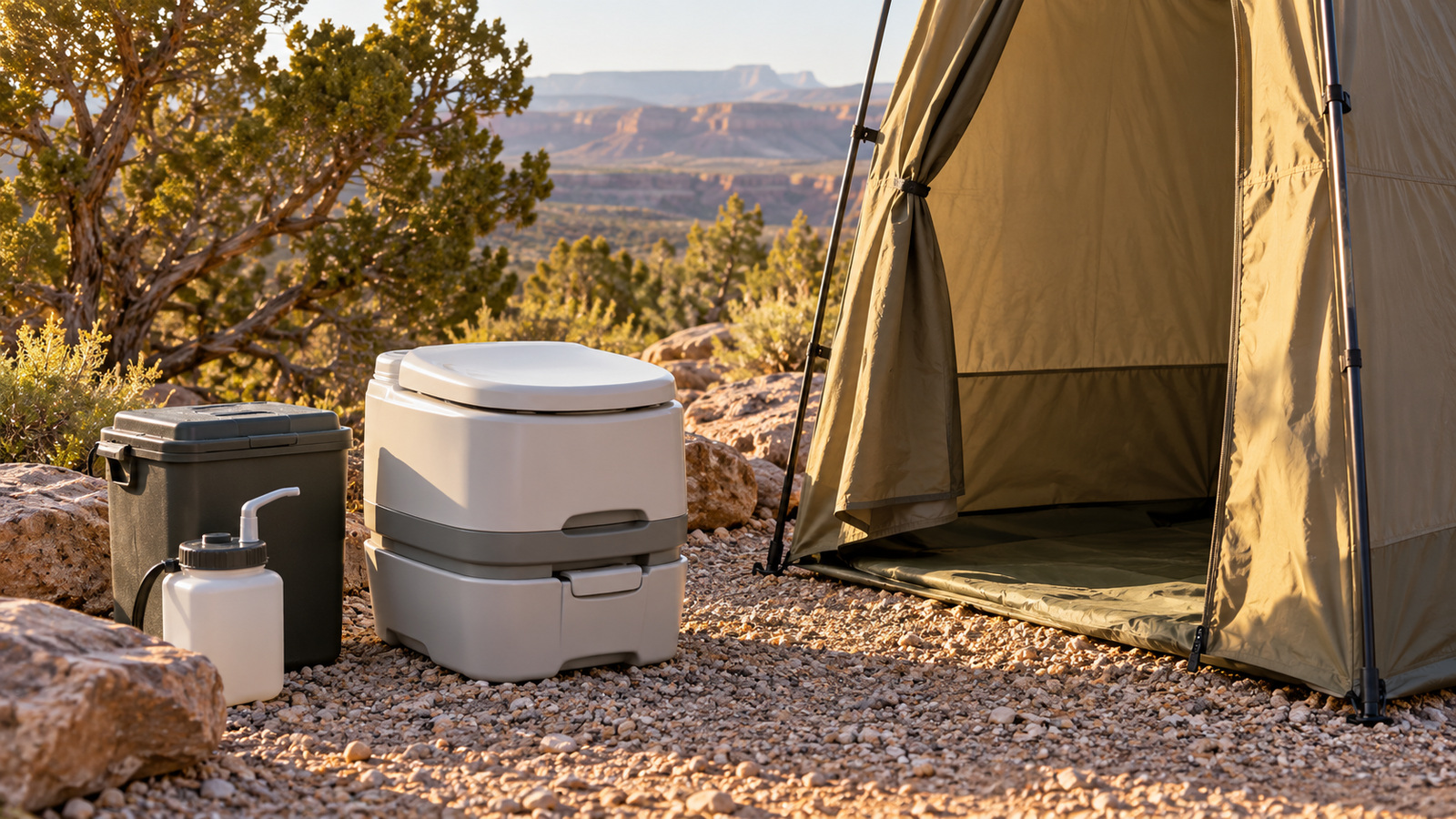
A folding seat, a bucket-based arrangement, and a flushing holding tank solve different parts of the same routine. The seat provides support; the compatible collection materials or tank contain the waste; transport and approved disposal complete the system. Compare what is actually supplied before comparing prices. A pictured frame with a liner may need additional compatible consumables and secondary containment, while a flushing model brings tanks and closures that must be handled correctly. Neither becomes complete simply because it looks familiar.
Follow one user’s journey while the equipment is clean: approach, manage clothing, use the seat, operate the collection or flush mechanism, close the system as instructed, and wash hands. Then try the servicing steps with unused supplies or an empty clean tank. Notice where another adult would need to help a child and whether that person can reach the required parts. This reveals a practical difference that nominal capacity misses. A system comfortable to sit on can still be awkward for the people who must change its liner or release its tank.
Give the used system a defined transport position before it is first filled. Follow the manufacturer’s orientation, closure, restraint, and any hold-down requirements for the intended journey. A carry bag is not automatically a leakproof outer container or a vehicle restraint. Keep cleanup supplies reachable without lifting the toilet out of the way. Check the route from the privacy area to the vehicle too, especially if the full container must be carried by the same person who manages the rest of camp.
Set a clear servicing responsibility that matches the actual collection method. The person handling disposal needs the instructions and should not discover after arrival that someone assumed household plumbing or ordinary rubbish disposal would be available. Explain permitted contents to all users before the first use and make the correct supplies recognizable. If the group cannot manage the required handling comfortably, choose a destination with permanent facilities. Familiar seating is useful, but a workable containment and servicing routine is what makes the purchase practical.
Bag-Based Toilets Favor Simple Packing and Clear Consumables
A bag-based arrangement can be appealing for occasional trips because the seat may fold compactly and there is no flush-water tank to fill. The recurring work shifts to selecting compatible collection supplies, changing them correctly, and storing used bags in appropriate secondary containment. Follow the exact product instructions for use and capacity. Plan enough supplies for the group, with a reasonable reserve for unexpected delays. A compact seat offers little benefit if the necessary bags are unavailable at the destination.
Consider the changing process before choosing a design. Check how the liner attaches, whether users can keep it correctly positioned, and how it closes afterward. Those details become more important in darkness, wind, or a small privacy shelter. Rehearse with unused materials at home so everyone understands the mechanism. Avoid discovering the closure sequence for the first time while balancing a filled collection bag beside a tent.
Used-bag storage deserves a dedicated location away from clean clothing, food, and ordinary gear. Choose suitable containment consistent with the product’s instructions and the applicable disposal rules. Keep children and animals from accessing stored waste. Do not burn waste bags or leave them at the campsite, regardless of claims about decomposition. The system is complete only when its approved disposal destination is actually reached.
Flushing Holding Tanks Offer Familiarity With Added Weight
A portable flushing toilet can feel more familiar because it has a bowl, a flush-water supply, and a separate waste tank. The Thetford portable toilet range provides useful current references: its Porta Potti 365 uses a piston-pump flush, while the 565E uses battery-powered flushing. These manufacturer descriptions illustrate operating differences rather than a hands-on product ranking. Check the exact model, seat dimensions, tank arrangement, and required supplies before comparing value.
Familiar operation does not eliminate the work of emptying a holding tank. You must be able to detach, lift, carry, empty, clean, and reassemble it as instructed. A larger tank may reduce emptying frequency while producing a heavier load when full. Consider the person who will perform that task and the distance to an approved disposal point. Capacity should fit the handling routine rather than encouraging a load you cannot move comfortably.
Try Seat Height and Stability With the Actual Users
A toilet’s dimensions matter in ways that product photos rarely show. Check seat height, opening shape, usable base space, and the manufacturer’s load rating. Some adults prefer a higher seat, while children may need an arrangement appropriate to their size and supervision needs. Avoid unstable improvised platforms to alter height. If someone requires assistance or mobility support, assess the whole setup with their actual needs in mind rather than expecting a portable seat to solve access problems by itself.
Stability depends on the ground and correct assembly as well as frame strength. Use a level, suitable surface and follow all locking and support instructions. Look for rocking, slippery footing, and restricted space around the user’s feet. A privacy enclosure can hide these problems without correcting them. Practice sitting and standing under appropriate conditions before the trip, and change the setup if users cannot move securely.
Families should also consider the practical space needed by an assisting adult. An enclosure that fits a seat may still be too tight for helping a child manage clothing. Keep supplies reachable without requiring awkward twisting or leaving the user unattended. A small light and clear access route can improve nighttime operation. Comfort comes from the complete arrangement, including the movements before and after sitting down.
Keep Handwashing Beside the Routine
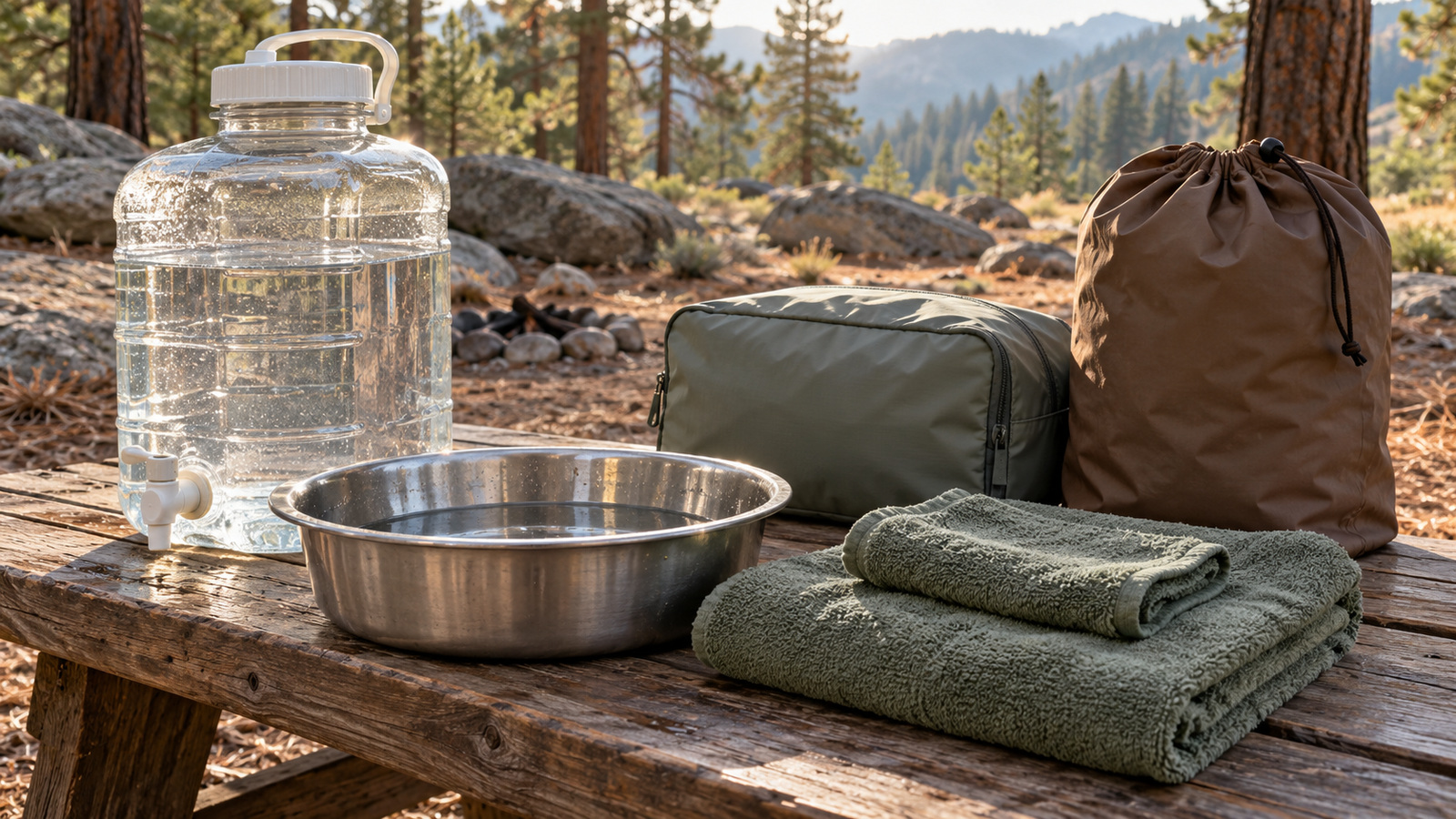
Provide suitable handwashing water, soap, and a way to dry hands within convenient reach of the toilet area. Keep that equipment distinct from food preparation and from waste-handling tools. Set the arrangement up before the toilet is first used rather than leaving everyone to search for supplies afterward. Teach children the complete sequence and supervise as needed. A familiar, accessible routine is easier to maintain than a collection of supplies scattered through several bags.
Build Privacy Around Safe, Practical Access
Choose a location that satisfies campground rules, respects neighboring campers, and provides appropriate separation from water and food areas. Ask the host about requirements rather than treating an empty-looking corner as permission. Avoid drainage channels, steep ground, and places that create a long hazardous nighttime walk. Check the route under low light. A toilet that is technically nearby can still be inconvenient if roots, guylines, and loose gear block access.
Anchor a privacy shelter according to its instructions and consider its weather limitations. Keep doors, ventilation, and storage pockets functioning as intended. The enclosure should not be used as an excuse to ignore cleanup or leave equipment unattended beyond what local rules allow. Make sure the group understands how to indicate occupancy and where supplies belong. Clear, simple habits make shared facilities more comfortable without requiring elaborate accessories.
Follow the Exact Cleaning and Storage Instructions
Cleaning methods depend on the toilet’s materials, seals, and collection system. Use only products and procedures approved for the model, and avoid casual mixing of chemicals. A powerful household cleaner can damage components or be incompatible with treatment products. Read the instructions before the first trip and keep essential information available offline. Maintenance is easier when you know which surfaces, seals, and fittings need attention after use.
For a holding-tank model, learn the release mechanism and emptying sequence while the tank is clean. Check how vents, caps, and seals should be positioned during transport and storage. Follow the instructions for any treatment additive rather than estimating a dose or borrowing advice from another product. Inspect for leaks and worn parts between trips. A toilet that closes correctly when empty still needs correct operation and appropriate handling once in service.
Bag systems require their own care. Keep unused supplies dry and protected from damage, clean the reusable frame or bucket as directed, and inspect attachment points before packing. Separate gloves and cleanup materials used for waste handling from the rest of the camping kit. Give equipment adequate drying time before storage. A dedicated storage container can keep compatible liners and instructions together, reducing the chance that the next trip begins with a missing essential part.
Compare the Cost of Every Trip, Including the Drive Home
Upfront price tells only part of the story. Include compatible bags, treatment products where required, cleaning supplies, transport containment, privacy equipment, and any applicable disposal fees. A simple seat may cost less initially while consuming more single-use supplies. A flushing model may justify its bulk for frequent family use if approved emptying is convenient. Compare complete routines for the trips you actually take rather than assuming one category always offers better value.
Before leaving, identify a primary disposal destination and a workable alternative. Confirm access hours and acceptance requirements where relevant, and avoid relying on a facility you have not checked. Plan how used equipment travels securely until disposal and cleanup are finished. This is the part of the journey that makes a toilet purchase responsible and practical. Choose the system whose final step is as clear as its first setup at camp.