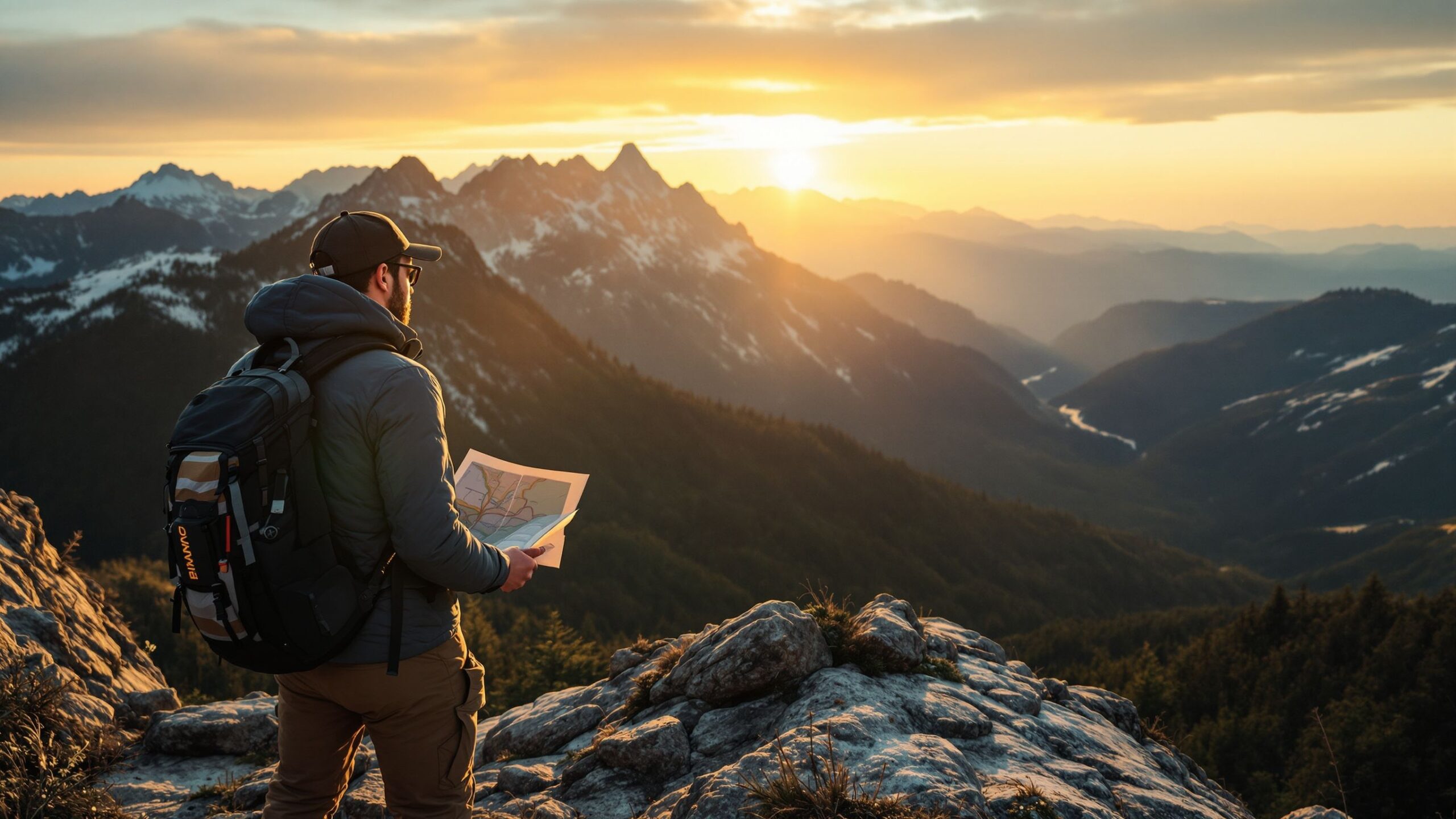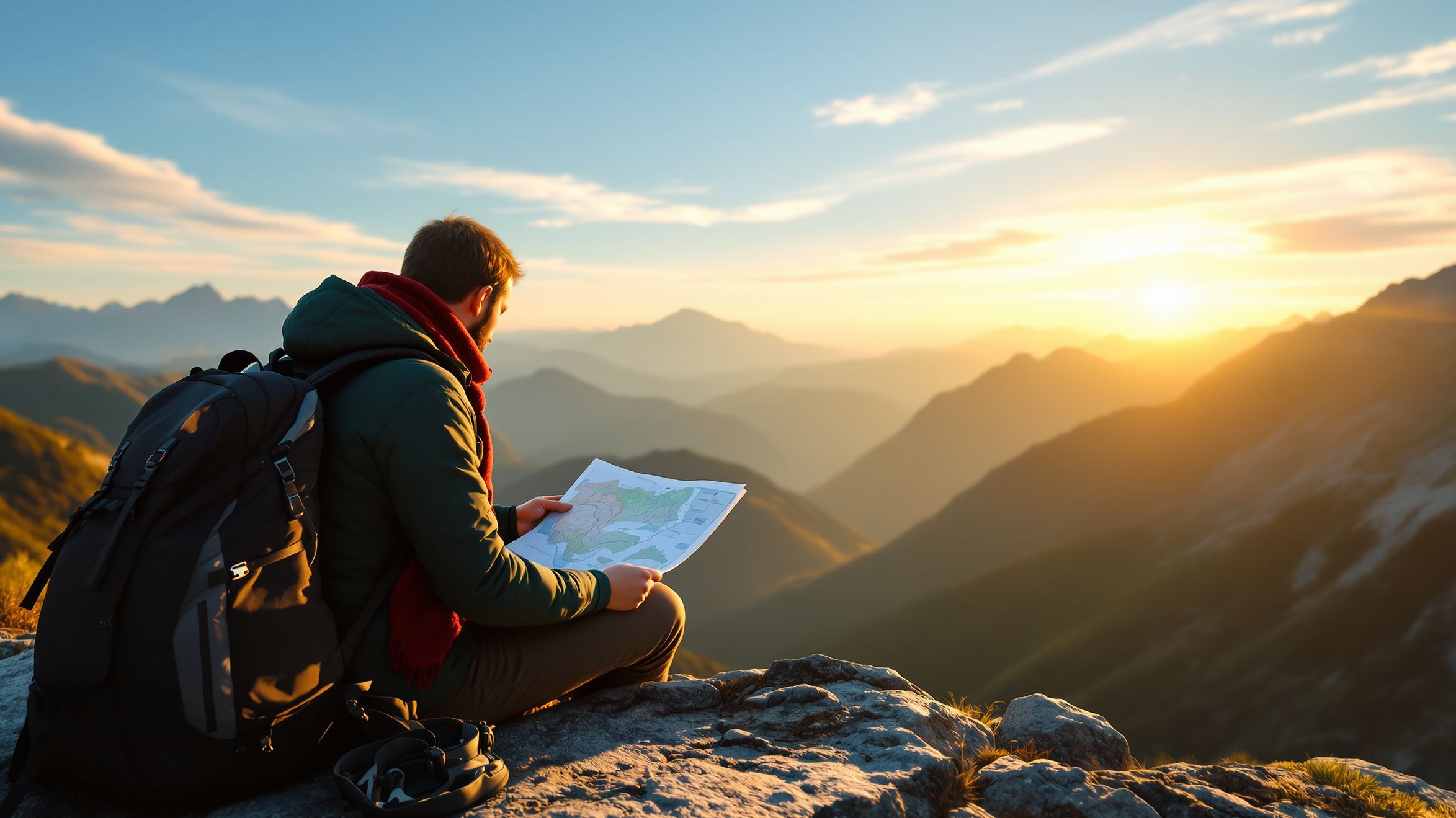
Topographic maps are one of the most powerful tools a hiker or backpacker can carry, yet they are often misunderstood or underutilized. While GPS devices and smartphone apps have made navigation more convenient, the ability to read a topographic map remains an essential skill for anyone venturing into the outdoors. A topographic map does more than show where you are—it reveals the shape of the land, the rise and fall of terrain, and the hidden features that can define your entire hiking experience. Learning how to interpret this information transforms the way you plan routes, anticipate challenges, and move confidently through wilderness landscapes.
A: It is a map that shows elevation, landforms, trails, water, roads, and natural features using contour lines and symbols.
A: They connect places with the same elevation, helping you see hills, valleys, ridges, and steep slopes.
A: Look for contour lines packed close together; the closer they are, the steeper the terrain.
A: It is the elevation difference between one contour line and the next.
A: Yes, because phones can lose battery, break, or lose signal in remote areas.
A: Match the map’s north with real north using a compass, then compare nearby landmarks to the map.
A: Scale shows how distance on the map compares to distance on the ground.
A: Look for blue lines, lakes, springs, ponds, wetlands, and drainage patterns.
A: Some maps show established campsites, but flat areas near water or trails may also be identified by reading contours.
A: Ignoring elevation gain; distance alone does not tell you how difficult a hike will feel.
Understanding What a Topographic Map Shows
At its core, a topographic map is a detailed representation of terrain. Unlike standard road maps, which focus on highways and urban features, topographic maps illustrate elevation, landforms, water systems, and vegetation. Every line and symbol carries meaning, allowing you to visualize the three-dimensional world on a two-dimensional surface. When you learn to read these maps effectively, you begin to see hills, valleys, ridges, and cliffs as if you were already standing among them.
The key to this visualization lies in contour lines, which represent elevation. These lines connect points of equal height above sea level, creating a layered effect that mimics the natural contours of the land. When viewed collectively, they form patterns that reveal the steepness and shape of the terrain. A beginner might initially see only a web of lines, but with practice, those lines become a language that describes the landscape in vivid detail.
Decoding Contour Lines and Elevation
Contour lines are the backbone of any topographic map, and understanding them is the first step toward mastering navigation. Each contour line represents a specific elevation, and the vertical distance between lines is known as the contour interval. This interval is consistent throughout the map and is usually indicated in the legend. By paying attention to this detail, you can determine how much elevation change occurs between each line.
When contour lines are spaced closely together, the terrain is steep, indicating a challenging climb or descent. When they are spaced farther apart, the slope is more gradual, suggesting easier walking conditions. This simple observation allows you to assess the difficulty of a route before you ever set foot on the trail. It also helps you identify potential hazards, such as cliffs or extremely steep slopes, which may appear as tightly packed or even overlapping lines.
Another important concept is the index contour line, which is typically thicker and labeled with its elevation. These lines serve as reference points, making it easier to estimate the elevation of surrounding areas. By counting the number of contour lines between index lines and multiplying by the contour interval, you can calculate approximate elevations across the map. This skill becomes invaluable when planning ascents, estimating travel time, and managing your energy on long hikes.
Recognizing Landforms on a Map
Once you understand contour lines, the next step is learning to recognize common landforms. Hills, valleys, ridges, and saddles each have distinct contour patterns that can be identified with practice. A hill appears as a series of closed loops, with the smallest loop representing the highest point. Valleys, on the other hand, often form V-shaped patterns that point upstream toward higher ground.
Ridges are elongated high points that extend outward, and their contour lines form U-shapes that point downhill. Saddles, which are low points between two higher elevations, resemble an hourglass pattern and often serve as natural passageways through mountainous terrain. Recognizing these features allows you to mentally reconstruct the landscape, giving you a clearer understanding of where you are and where you’re going.
This ability to interpret landforms is particularly useful when trails are faint or unmarked. By reading the map, you can anticipate what lies ahead, choose safer routes, and avoid unnecessary detours. It also enhances your overall experience, as you begin to appreciate the subtle details of the terrain that might otherwise go unnoticed.
Reading Map Symbols and Colors
Topographic maps use a standardized system of symbols and colors to represent various features. Blue typically indicates water, including rivers, lakes, and streams. Green often represents vegetation, such as forests or dense brush, while white or light colors may indicate open land. Black is used for man-made features like roads, buildings, and trails, and brown is reserved for contour lines and elevation information.
Understanding these symbols is essential for navigating effectively. For example, identifying water sources can be critical for planning a backpacking trip, especially in remote areas where access to water is limited. Recognizing trail markings and roadways helps you stay on course, while noting areas of dense vegetation can prepare you for slower travel or potential obstacles.
The map legend provides a key to these symbols, and it’s important to review it before setting out. While many symbols are consistent across maps, there can be variations depending on the publisher or region. Taking the time to familiarize yourself with these details ensures that you can interpret the map accurately and avoid confusion in the field.
Using Scale and Distance for Planning
Scale is another fundamental aspect of topographic maps, determining how much ground is represented by a given distance on the map. Common scales include 1:24,000, where one inch on the map equals 24,000 inches in reality. Understanding scale allows you to measure distances and estimate how long it will take to travel between points.
By using a ruler or simply estimating with your fingers, you can calculate the length of a trail or the distance between landmarks. Combining this information with elevation data helps you plan more effectively, as you can account for both distance and terrain difficulty. A short route with significant elevation gain may take longer than a longer, flatter path, and recognizing this difference is key to setting realistic expectations.
Time estimation becomes even more accurate when you consider your own hiking pace and experience level. Over time, you’ll develop a sense of how quickly you can cover different types of terrain, allowing you to refine your planning and avoid overexertion or unexpected delays.
Orienting the Map in the Field
Reading a map is only part of the process; you must also be able to orient it correctly in the field. This involves aligning the map with the actual landscape so that the features on the map correspond to what you see around you. A compass is typically used for this purpose, helping you determine direction and ensure that the map is properly aligned.
By identifying prominent landmarks such as peaks, rivers, or trail intersections, you can match them to their representations on the map. This process, known as terrain association, allows you to confirm your location and maintain awareness of your surroundings. It is especially useful in areas where trails are poorly marked or visibility is limited.
Practicing this skill builds confidence and reduces reliance on electronic devices, which can fail due to battery issues or signal loss. In remote wilderness areas, the ability to navigate with a map and compass is not just a convenience—it is a critical safety skill.
Planning Routes with Elevation in Mind
One of the greatest advantages of topographic maps is their ability to reveal elevation changes. This information is crucial for planning routes that are both efficient and manageable. By analyzing contour lines, you can identify the most practical paths, avoiding unnecessary climbs and choosing routes that align with your fitness level and goals.
For example, following a ridgeline may provide a more gradual ascent compared to climbing directly up a steep slope. Similarly, traversing along contour lines can help you maintain a consistent elevation, conserving energy over long distances. Understanding these strategies allows you to navigate more intelligently, making the most of your time and effort.
Elevation awareness also plays a role in safety. Steep descents can be just as challenging as climbs, particularly when carrying a heavy pack. By recognizing these features in advance, you can prepare accordingly, adjusting your pace and taking necessary precautions.
Interpreting Water Features and Terrain Challenges
Water features are a vital component of topographic maps, offering both opportunities and challenges. Rivers and streams can serve as reliable navigation aids, guiding you through unfamiliar terrain. They also provide essential resources for hydration, making them key considerations in trip planning.
However, water features can also present obstacles. Crossing a river may be difficult or dangerous, especially during periods of high flow. By studying the map, you can identify potential crossing points, such as narrow sections or areas where the terrain is less steep. This foresight allows you to plan safer routes and avoid unnecessary risks.
Terrain challenges extend beyond water, encompassing features such as cliffs, dense vegetation, and unstable ground. Topographic maps often provide clues about these conditions, enabling you to anticipate difficulties and make informed decisions. This level of preparation enhances both safety and enjoyment, allowing you to focus on the experience rather than reacting to unexpected obstacles.
Combining Map Reading with Modern Tools
While traditional map reading is invaluable, it can be complemented by modern navigation tools. GPS devices and smartphone apps provide real-time location data, making it easier to track your progress and confirm your position. However, these tools should be used as supplements rather than replacements for map skills.
By combining digital technology with traditional navigation, you gain the best of both worlds. You can use GPS to verify your location while relying on the map to understand the broader landscape. This integrated approach enhances accuracy and resilience, ensuring that you remain prepared even if technology fails.
Developing strong map-reading skills also deepens your connection to the environment. Instead of simply following a digital path, you engage with the terrain, interpreting its features and making decisions based on your understanding. This level of awareness transforms hiking from a passive activity into an immersive and rewarding experience.
Building Confidence Through Practice
Like any skill, reading a topographic map requires practice. The more time you spend studying maps and applying your knowledge in the field, the more intuitive it becomes. Start with familiar areas, using maps to reinforce what you already know about the landscape. Gradually expand to more challenging environments, building your confidence and refining your abilities.
Practicing in different conditions, such as varying weather or terrain types, further enhances your skills. Each experience adds to your understanding, helping you develop a mental library of patterns and associations. Over time, you’ll find that reading a topographic map becomes second nature, allowing you to navigate with ease and confidence.
This journey of learning is part of what makes hiking and backpacking so rewarding. It encourages curiosity, observation, and a deeper appreciation for the natural world. By mastering the art of map reading, you unlock new possibilities for exploration and adventure.
Why Topographic Maps Still Matter
In an age of advanced technology, it might be tempting to rely solely on digital navigation tools. However, topographic maps remain an essential resource for hikers and backpackers. They provide a level of detail and reliability that cannot be matched by electronic devices alone, offering a comprehensive view of the terrain that enhances both planning and execution.
More importantly, they empower you to navigate independently, reducing dependence on technology and increasing your self-reliance. This sense of autonomy is at the heart of outdoor exploration, allowing you to venture further and experience the wilderness on your own terms.
Understanding how to read a topographic map is not just a practical skill—it is a gateway to deeper exploration, greater confidence, and a richer connection to the landscapes you traverse. Whether you are embarking on a day hike or a multi-day backpacking expedition, this knowledge equips you to navigate with purpose and embrace the adventure that lies ahead.