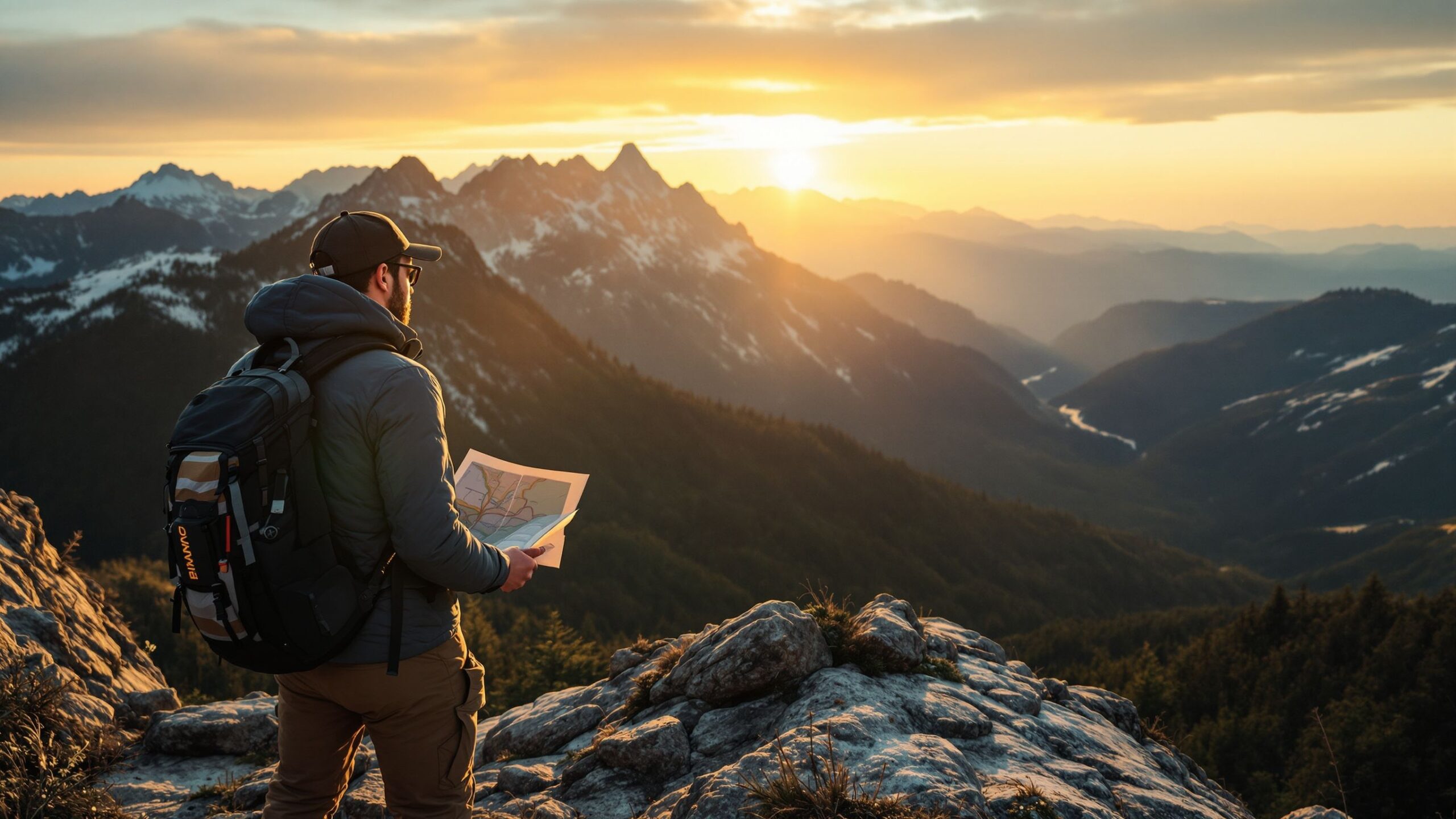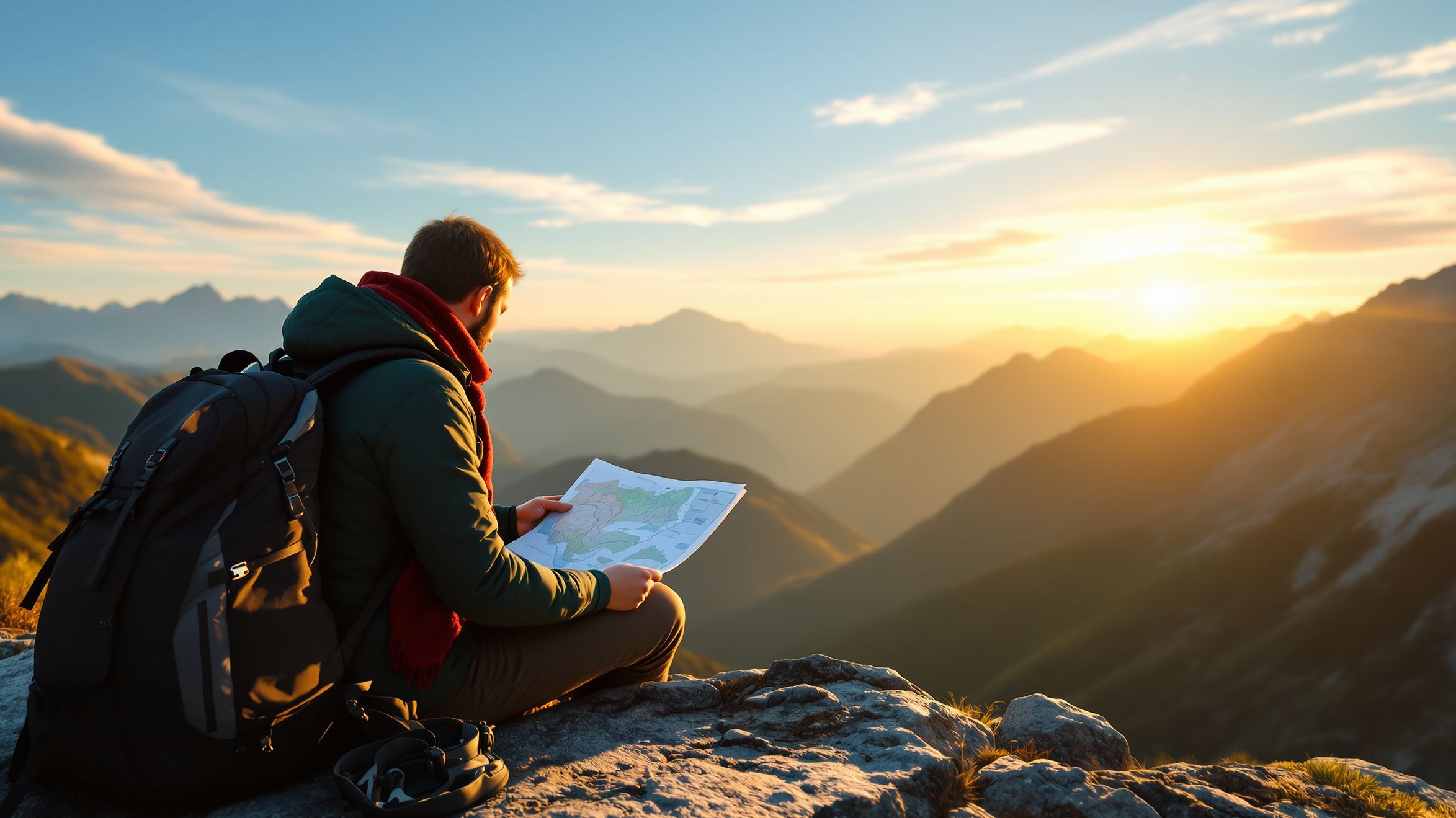
In an age dominated by digital navigation, the timeless skill of using a map and compass remains one of the most reliable ways to find your way through the wilderness. Technology can fail—batteries die, signals disappear, and devices break—but a map and compass, when used correctly, will never let you down. Learning how to navigate with these tools is not just about survival; it’s about gaining confidence, independence, and a deeper connection to the landscape around you. For beginners, map and compass navigation may seem intimidating at first. Strange symbols, contour lines, and unfamiliar techniques can feel overwhelming. But once you understand the fundamentals, these tools become intuitive and empowering. This guide will walk you through everything you need to know to get started, turning confusion into clarity and uncertainty into confidence.
A: True north is the geographic North Pole, while magnetic north is where a compass needle points.
A: Yes, adjusting for declination improves accuracy when transferring bearings between map and compass.
A: Yes, beginners can learn with practice using simple maps and basic compass techniques.
A: A bearing is a direction measured in degrees from north used to guide movement.
A: Skipping checks, misreading terrain, and moving too fast often lead to mistakes.
A: Absolutely, it works without batteries and remains one of the most reliable navigation tools.
A: Frequently, especially after changes in terrain, direction, or visibility.
A: Stop moving, assess your surroundings, and use your map and compass to reestablish position.
A: Landmarks help, but should be used alongside map and compass for accuracy.
A: Practice regularly in familiar areas and gradually challenge yourself with more complex terrain.
Why Learn Map and Compass Navigation
There’s a reason outdoor professionals, search and rescue teams, and seasoned hikers still rely on traditional navigation methods. A map and compass provide a level of reliability and control that technology simply cannot guarantee. They work in any environment, under any conditions, and require no power source.
Beyond reliability, learning these skills sharpens your awareness. You begin to notice terrain features, understand elevation changes, and think critically about your surroundings. Navigation becomes an active process rather than a passive one. Instead of following a blue dot on a screen, you engage with the environment in a meaningful way.
Perhaps most importantly, these skills offer peace of mind. Knowing that you can navigate without GPS means you are prepared for the unexpected, whether you’re deep in the backcountry or facing an emergency situation.
Understanding the Map: Your Big Picture Tool
A topographic map is your window into the landscape. It shows you not just where things are, but how the terrain is shaped. Unlike simple road maps, topographic maps include contour lines that represent elevation, allowing you to visualize hills, valleys, ridges, and slopes.
Contour lines are one of the most important features to understand. When lines are close together, the terrain is steep. When they are spaced farther apart, the terrain is more gradual. By reading these patterns, you can anticipate how difficult a route will be and plan accordingly.
Maps also include symbols that represent features such as rivers, trails, forests, and man-made structures. Learning these symbols helps you identify landmarks that can guide your navigation. Over time, you’ll develop the ability to “read” a map like a story, understanding how the landscape flows and connects.
Orientation is another key concept. A map is only useful when it is aligned with the real world. This means ensuring that the top of the map corresponds to north in your environment, which is where your compass comes into play.
The Compass: Your Directional Guide
A compass is a simple device, but it is incredibly powerful. At its core, it points toward magnetic north, providing a consistent reference for direction. Understanding how to use a compass effectively is essential for accurate navigation.
A basic compass includes a magnetic needle, a rotating bezel, and a baseplate. The needle always points north, while the bezel allows you to set and follow a specific direction, known as a bearing.
One important concept to understand is declination—the difference between true north (used on maps) and magnetic north (indicated by your compass). Depending on your location, this difference can vary, and adjusting for it ensures your navigation is accurate.
Using a compass is not just about knowing which way is north. It’s about using that information to guide your movement, maintain direction, and stay oriented even when visibility is limited.
Orienting Your Map
Before you can navigate effectively, you need to align your map with the real world. This process is called orienting the map, and it ensures that the features on the map match what you see around you.
To do this, place your compass on the map and rotate both until the compass needle aligns with the map’s north. Once aligned, the map becomes a true representation of your surroundings. Landmarks on the map will correspond directly to features in the environment, making navigation much more intuitive.
Orienting your map should become a habit. Every time you stop to check your position or plan your route, take a moment to ensure your map is properly aligned.
Taking and Following a Bearing
A bearing is the direction you plan to travel, measured in degrees. Learning how to take and follow a bearing is one of the most important skills in map and compass navigation.
To take a bearing from a map, place the edge of your compass between your current location and your destination. Rotate the bezel until it aligns with the map’s north lines. Once set, the compass shows you the direction you need to travel.
In the field, hold the compass level and rotate your body until the needle aligns with the bezel’s north indicator. The direction of travel arrow now points toward your destination. Choose a visible landmark in that direction and walk toward it. Once you reach it, repeat the process.
This technique keeps you on course even when the terrain is uneven or visibility is limited. It transforms navigation from guesswork into a precise, repeatable process.
Finding Your Location: Resection Basics
Knowing where you are is just as important as knowing where you’re going. Resection is a technique used to determine your location by identifying landmarks and using bearings to pinpoint your position on a map.
To perform a basic resection, identify two or more visible landmarks that also appear on your map. Take a bearing to each landmark and draw lines on the map along those bearings. The point where the lines intersect is your approximate location.
While this method requires practice, it is incredibly effective. It allows you to regain your bearings when you’re unsure of your position, turning uncertainty into clarity.
Terrain Association: Navigating Naturally
While bearings are useful, navigation is not always about following straight lines. Terrain association is a technique that involves using the natural features of the landscape to guide your movement.
Instead of relying solely on your compass, you use hills, valleys, rivers, and other features as reference points. By comparing what you see around you with what is shown on your map, you can confirm your location and adjust your route as needed.
This method is particularly useful in areas with distinct features, as it allows you to navigate more intuitively. It also reduces the need for constant compass use, making your movement more fluid and efficient.
Estimating Distance and Time
Understanding how far you’ve traveled is a key part of navigation. Without GPS, this requires estimation and awareness.
One common method is pace counting. By determining how many steps it takes to cover a certain distance, you can estimate how far you’ve traveled over time. This is especially useful in areas with limited landmarks.
Time estimation is another valuable tool. By tracking how long it takes to travel a known distance, you can gauge your progress and anticipate when you should reach your destination.
These techniques help you stay on track and avoid overshooting or missing key points along your route.
Navigating in Challenging Conditions
Navigation becomes more difficult in poor weather, dense forests, or low visibility. In these situations, your reliance on map and compass skills becomes even more critical.
Fog, rain, and darkness can obscure landmarks, making terrain association less effective. In these cases, following a precise bearing becomes essential. Move carefully, use shorter distances between checkpoints, and double-check your direction frequently.
In dense environments, it’s easy to drift off course. Small deviations can add up over time, so maintaining discipline and awareness is key. Regularly stop, check your position, and make adjustments as needed.
Common Beginner Mistakes
Every beginner makes mistakes, but understanding them can help you avoid common pitfalls. One of the most frequent errors is failing to account for declination, which can lead to significant navigation errors over long distances.
Another mistake is not orienting the map properly. Even a slight misalignment can cause confusion and misinterpretation of the terrain. Taking the time to align your map correctly can prevent unnecessary errors.
Rushing is another common issue. Navigation requires patience and attention to detail. Moving too quickly can lead to missed landmarks and incorrect decisions.
Finally, overconfidence can be dangerous. Even experienced navigators double-check their work. Always verify your position and direction before continuing.
Practicing Your Skills
The best way to learn map and compass navigation is through practice. Start in familiar areas where you can experiment without risk. Practice orienting your map, taking bearings, and identifying landmarks.
Gradually challenge yourself with more complex terrain and longer routes. Try navigating without relying on trails, and test your ability to find your way using only your tools and knowledge.
Practice builds confidence, and confidence leads to competence. Over time, these skills will become second nature.
The Confidence to Explore
Mastering map and compass navigation opens up a new level of freedom in the outdoors. You are no longer limited by marked trails or dependent on technology. You can explore with confidence, knowing you have the skills to find your way.
This sense of independence transforms your experience. The wilderness becomes less intimidating and more inviting. Every journey becomes an opportunity to apply your skills and deepen your understanding.
A Skill That Lasts a Lifetime
Map and compass navigation is more than a practical skill—it’s a lifelong asset. It connects you to the traditions of exploration and self-reliance, reminding you that even in a modern world, fundamental skills still matter.
With practice, patience, and the right mindset, anyone can learn to navigate with confidence. The tools are simple, but their impact is profound. When you know how to read the land and guide your path, you carry a skill that will serve you in any environment, at any time. And in a world where so much depends on technology, that kind of independence is truly invaluable.