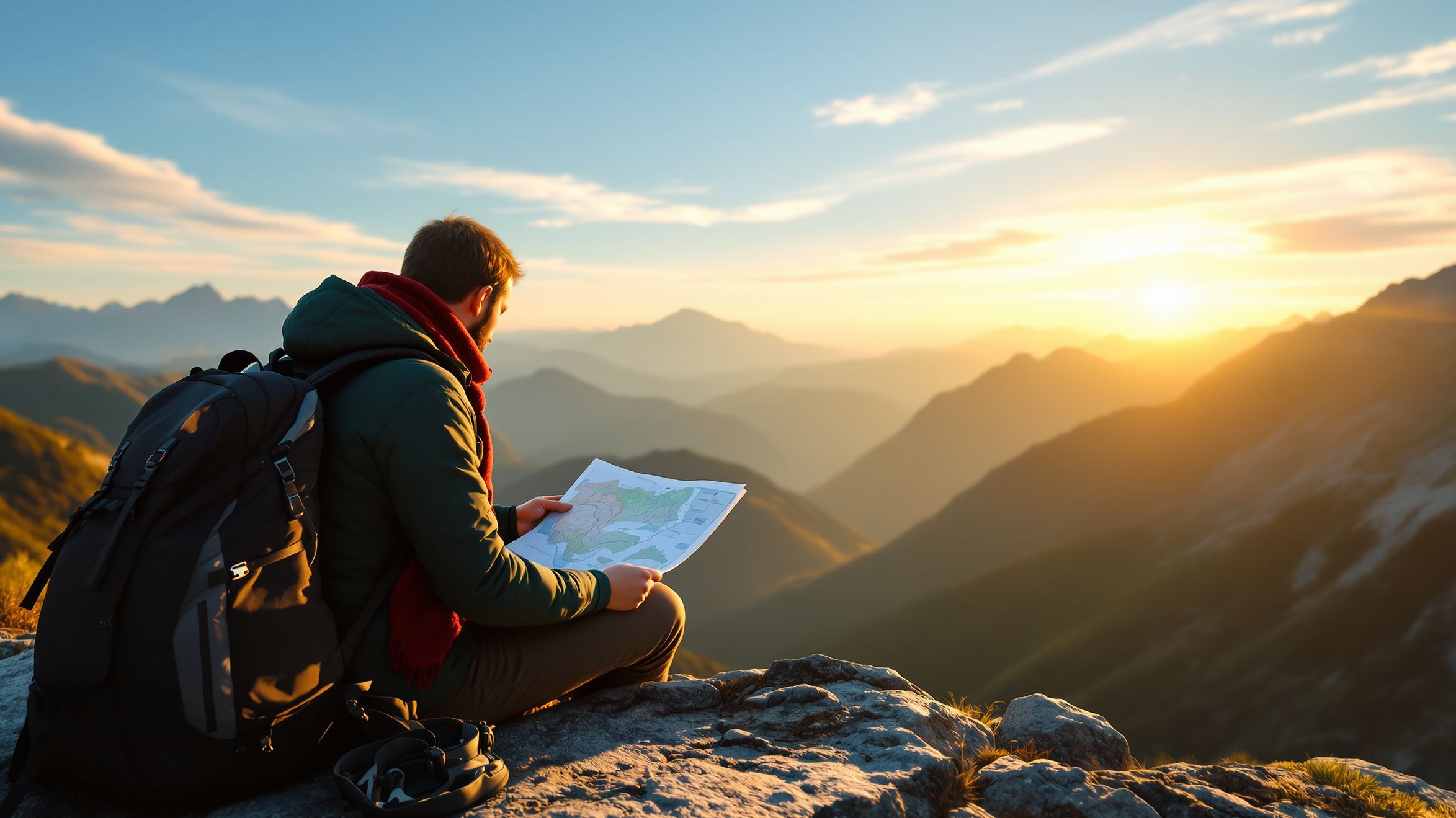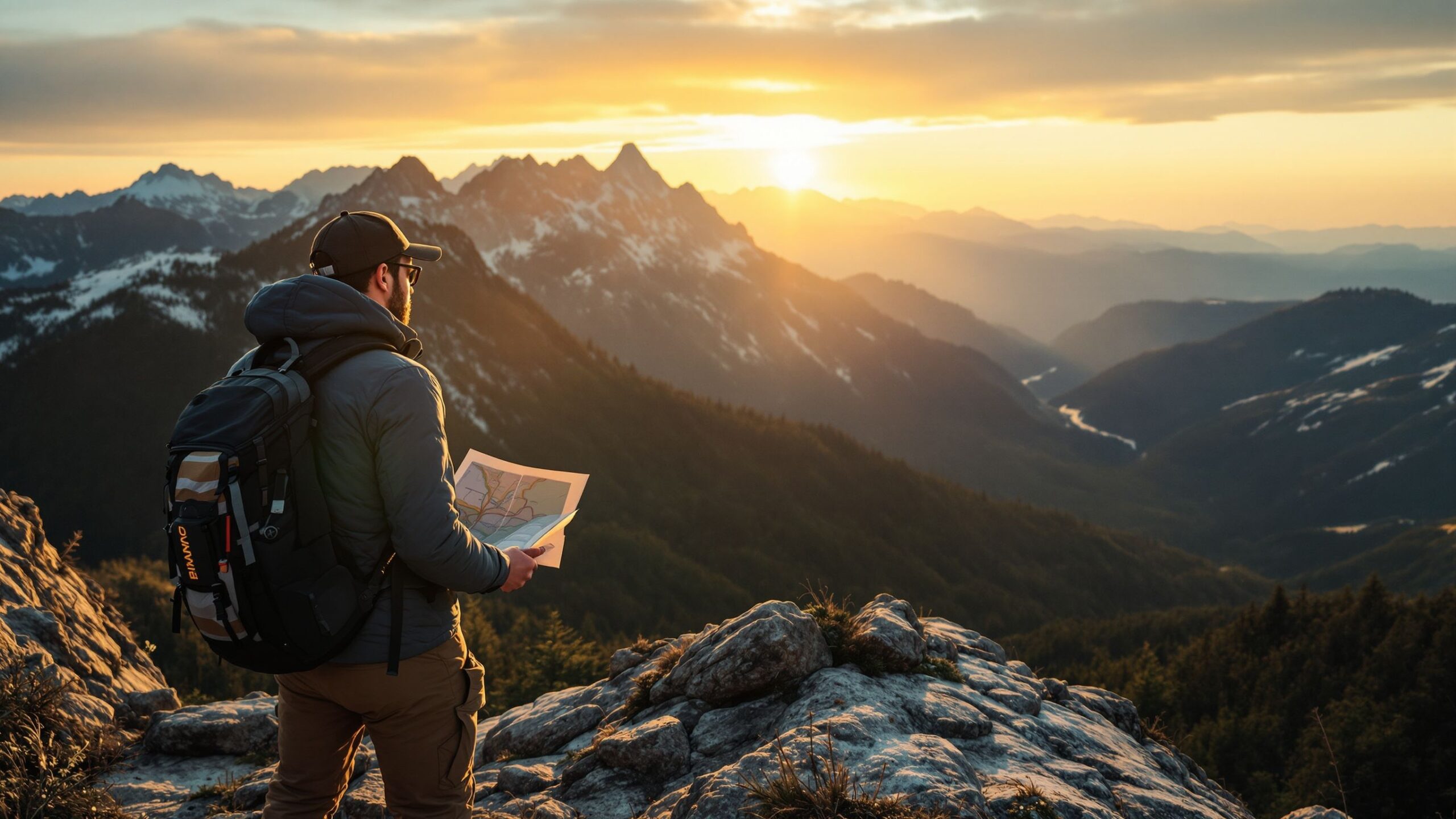
In a world where smartphones and GPS devices dominate how we move through space, the ability to navigate without technology has become a rare—and incredibly valuable—skill. When batteries die, signals drop, or devices fail, knowing how to find your way in the wilderness can mean the difference between confidence and confusion, safety and danger. True navigation is not about gadgets; it’s about awareness, observation, and understanding the natural world around you. Learning how to navigate without GPS reconnects you with centuries-old techniques used by explorers, hikers, and survivalists. It sharpens your senses, builds resilience, and transforms the wilderness from an overwhelming expanse into a readable, understandable landscape. Whether you’re hiking, camping, or preparing for emergencies, mastering these skills ensures you are never truly lost.
A: Yes, with a map, compass, terrain awareness, and practice, you can travel effectively without digital tools.
A: A paper topo map and a dependable compass are the strongest classic backup combination.
A: It can help, but it is not reliable enough on its own for safe navigation.
A: Overconfidence, distraction, poor visibility, and skipped map checks often cause small errors to grow fast.
A: Stop, stay calm, confirm your last known point, and use map and terrain clues before moving again.
A: It is the skill of matching visible land features to their map symbols and shapes.
A: Yes, basic bearing skills greatly improve accuracy when trails vanish or landmarks are limited.
A: It helps, but batteries, weather, damage, and lost signal make non-digital navigation skills essential.
A: Start on known trails with a map and compass, then compare what you see with the terrain around you.
A: Continuing to move while confused instead of stopping early to reassess direction and landmarks.
Understanding the Core Principles of Navigation
At its core, navigation is about knowing three things at all times: where you are, where you’re going, and how to get there. Without GPS, these questions are answered through a combination of tools, environmental awareness, and mental mapping.
The first principle is orientation. You must understand your position relative to your surroundings. This involves recognizing landmarks, terrain features, and directional cues. The second principle is direction. Knowing which way is north, south, east, and west allows you to maintain a consistent heading. The third principle is distance. Estimating how far you’ve traveled helps you track progress and avoid overshooting your destination.
When these three elements work together, navigation becomes less about guesswork and more about informed movement.
The Map: Your Foundation for Navigation
A topographic map is one of the most powerful tools you can carry into the wilderness. Unlike a GPS device, it never runs out of battery and provides a detailed overview of the terrain. Learning to read a map is essential for understanding elevation changes, water sources, trails, and natural features.
Contour lines on a map represent elevation. Closely spaced lines indicate steep terrain, while widely spaced lines suggest gradual slopes. By studying these patterns, you can visualize the landscape before you even step into it. This allows you to anticipate challenges, choose efficient routes, and avoid dangerous areas.
Equally important is understanding map orientation. A map must be aligned with the real world to be useful. This means ensuring that the map’s north matches actual north, which is where a compass becomes invaluable.
The Compass: Your Directional Anchor
A compass is a simple yet incredibly reliable navigation tool. It provides consistent directional guidance, allowing you to maintain a steady course even when landmarks are not visible. Learning how to use a compass effectively is one of the most important skills in wilderness navigation.
To begin, you must understand the difference between true north and magnetic north. A compass points to magnetic north, which can differ slightly from true north depending on your location. This difference, known as declination, must be accounted for when navigating with a map.
Using a compass involves setting a bearing, which is the direction you intend to travel. By aligning the compass with your map and adjusting for declination, you can determine the exact direction to follow. Once you have your bearing, you can use visual markers in the distance to stay on course.
A compass does not tell you where you are—it tells you where you are going. Combined with a map, it becomes a powerful navigation system.
Natural Navigation: Reading the Environment
Even without a map or compass, the natural world provides countless clues for navigation. Learning to read these signs can help you maintain direction and stay oriented.
The sun is one of the most reliable indicators of direction. It rises in the east and sets in the west, providing a general sense of orientation throughout the day. At midday, the sun is typically positioned toward the south in the Northern Hemisphere, offering another reference point.
Shadows can also be used for navigation. By placing a stick in the ground and marking the tip of its shadow, you can track the movement of the sun and determine east-west lines over time.
Vegetation and terrain can offer subtle hints as well. In some regions, moss tends to grow more heavily on the north side of trees, though this is not always reliable. Wind patterns, snow melt, and water flow can also provide directional clues when interpreted carefully.
Natural navigation requires observation and experience. The more time you spend in the wilderness, the more intuitive these signs become.
Landmarks and Terrain Association
One of the most effective navigation techniques is terrain association, which involves matching what you see in the environment with what you see on your map. Instead of relying solely on bearings, you use recognizable features such as hills, rivers, valleys, and rock formations to guide your movement.
Landmarks act as reference points that confirm your location and progress. By moving from one identifiable feature to another, you create a mental map of your journey. This approach reduces the risk of becoming disoriented and allows you to make adjustments as needed.
Terrain association is particularly useful in areas with distinct features, such as mountains or forests with clear boundaries. It encourages active engagement with your surroundings, turning navigation into a dynamic and intuitive process.
Dead Reckoning and Pace Counting
In situations where landmarks are limited, dead reckoning becomes a valuable technique. This method involves traveling in a straight line along a specific bearing while estimating distance traveled.
Pace counting is a common way to measure distance. By counting the number of steps it takes to cover a known distance, you can estimate how far you’ve traveled over time. This helps you determine when to change direction or look for specific features.
Dead reckoning requires discipline and focus, as small errors can accumulate over long distances. However, when combined with other techniques, it becomes a reliable way to navigate through featureless terrain.
Navigating at Night
Navigation becomes more challenging after dark, but it is still possible with the right knowledge. The night sky offers valuable guidance, particularly through the use of stars.
In the Northern Hemisphere, the North Star, also known as Polaris, remains nearly fixed in the sky and indicates true north. By locating Polaris, you can establish your orientation even in complete darkness.
Other constellations can also assist with navigation, though they require more familiarity. Moon phases and position can provide additional clues, but they are less consistent than stars.
Carrying a reliable light source is essential for nighttime navigation. A headlamp allows you to read maps and maintain visibility while keeping your hands free.
Avoiding Common Navigation Mistakes
Even experienced navigators can make mistakes, but many of these errors are preventable. One of the most common issues is failing to stay aware of your surroundings. It’s easy to become focused on a destination and ignore subtle changes in terrain or direction.
Another mistake is over-reliance on a single method. Navigation should always involve multiple techniques working together. If one method fails, others can provide backup.
Fatigue and stress can also impact decision-making. Taking regular breaks, staying hydrated, and maintaining a clear mindset are essential for effective navigation.
Perhaps the most important rule is to stop moving if you become lost. Continuing in the wrong direction can make the situation worse. Instead, pause, assess your surroundings, and use your tools to regain orientation.
Building Confidence Through Practice
Navigation is a skill that improves with practice. Reading about techniques is valuable, but real understanding comes from applying them in the field. Start in familiar environments and gradually challenge yourself with more complex terrain.
Practice using a map and compass together, even when you have access to GPS. Try navigating short distances without relying on technology, and pay attention to how the landscape changes around you.
Over time, you will develop a sense of direction that goes beyond tools. You’ll begin to recognize patterns, anticipate terrain, and move with greater confidence.
The Psychological Edge of Knowing Your Way
There is a profound sense of empowerment that comes from knowing you can navigate without GPS. It transforms the wilderness from something intimidating into something approachable. Instead of feeling lost, you feel in control.
This confidence extends beyond outdoor adventures. It builds resilience, problem-solving skills, and a deeper connection to the natural world. You begin to trust your instincts and rely on your abilities rather than external devices.
In survival situations, this mindset can be just as important as any tool you carry.
Never Truly Lost
The idea of being lost in the wilderness is often rooted in fear, but navigation is a skill that can be learned, practiced, and mastered. With the right knowledge and preparation, you can move through unfamiliar terrain with clarity and purpose. Learning how to navigate without GPS is not about rejecting technology—it’s about ensuring you are never dependent on it. It’s about having the confidence to adapt when conditions change and the ability to find your way no matter what. When you understand the land, the sky, and the tools at your disposal, you are never truly lost. You are simply finding your way.