Build a Cookware Set Around the Food You Like to Make
A camping cookware set earns its place when the right vessel is easy to find, the handles feel dependable, and everything packs away without a struggle. The largest box of matching pieces is not necessarily the most useful kitchen. One group needs a generous pot for shared pasta, another wants a broad pan for breakfast, and a third mostly heats water before returning to the trail. Practical cookware picks begin with those differences. Consider the food you prepare, the stove you own, the number of people eating, and the water available for cleaning. From there, it becomes easier to choose materials and sizes that work together. A thoughtful small set can support better outdoor meals than a crowded collection of pieces that look complete but rarely leave their storage bag. It should also be easy for another camper to understand, so a different cook can find a lid, lift a pot correctly, and put the kitchen away without needing a demonstration at every meal.
A: Usually not; the count may include lids, cups, plates, handles, and accessories.
A: Allow comfortable stirring and cooking space instead of treating brimful volume as usable capacity.
A: No. Compatible existing cookware can be a sensible foundation.
A: Their permitted dimensions and handles can occupy more space than the burner layout allows.
A: Use only combinations supported by the relevant cookware instructions.
A: Hard edges and moving components can abrade its interior unless protected appropriately.
A: That works when the approved fit and your cooking sequence do not require both covered at once.
A: The most-used pan or gripper may sit beneath several less-used pieces. Try the breakfast unpacking order and accept a slightly larger package if it gives clearer daily access.
A: Prioritize a few suitable vessels and remove accessories that duplicate existing equipment.
A: Add one when an observed cooking limitation justifies its size and cleanup demands.
Write a Menu Before Counting Pieces
Start with several meals you genuinely enjoy and identify the cookware each requires. A pot for boiling water, a saucepan for a shared dish, and a frying pan may cover the entire trip. Two nearly identical small pots can be less helpful than one appropriately sized vessel. Write down which dishes must cook at the same time and which can wait. This turns a vague shopping list into a short set of practical requirements.
Check whether your existing home cookware already meets some of those needs. Vehicle camping does not automatically require every item to fold, nest, or carry an outdoor label. A familiar pan may work well if it is compatible with the stove and manageable to transport. Save specialized purchases for a clear limitation such as excessive bulk, awkward handles, or insufficient capacity. Building around useful equipment you already understand can make the whole cooking routine more predictable.
Understand What a Set’s Piece Count Includes
Manufacturers may count lids, cups, plates, grippers, and storage accessories as individual pieces. A large number on the packaging does not establish how many cooking vessels you receive. List the actual pots and pans, then consider the included eating pieces separately. If you already have dinnerware, duplicated cups may add volume without improving meals. Judge each component by the job it will do rather than assuming the set becomes better as the advertised count rises.
Choose Pot Capacity With Stirring Room
A pot filled almost to its rim is difficult to stir and awkward to carry. Select usable cooking capacity with room for ingredients to move and liquids to bubble without constant intervention. Consider the meal’s final volume rather than the volume of dry ingredients alone. Pasta, rice, and one-pot dinners can occupy much more space once prepared. A suitable larger pot can simplify a shared meal, provided the stove supports its dimensions and loaded weight.
Do not automatically buy the biggest vessel your group might conceivably use. A large pot can dominate the stove, take longer to handle and clean, and leave no space for another dish. Think about your normal party size and whether occasional guests could be served through a different cooking sequence. The right capacity should make routine meals comfortable without turning every weekend into expedition catering. Compare the actual measurements with the burner layout before committing.
Lids affect usefulness as much as nominal capacity. Check whether a lid fits securely, whether its handle can be managed as instructed, and whether any straining feature suits the intended task. A lid shared between two vessels can reduce packed bulk, but only if your cooking sequence does not need both covered simultaneously. Make these choices with a cold kitchen trial. Discovering a conflicting lid arrangement at home is easier than solving it over dinner.
Match the Pan to Breakfast and Burner Space
For many vehicle campers, the frying pan is the most frequently used piece. Its cooking surface needs enough room to work without crowding, and the base must sit properly on the permitted stove supports. A wide rim does not necessarily mean an equally wide flat cooking area. Compare the pan’s usable bottom and handle clearance with the meals you expect to prepare. Check that a neighboring pot can still be used within both products’ instructions.
Handle position is especially noticeable on a crowded camp stove. A long fixed handle may require more packing room but remain easy to grasp, while a folding arrangement can save space if its lock feels secure. Keep handles positioned as directed and out of ordinary traffic. Test the lifting movement with the pan cold and appropriately loaded before cooking. A lightweight pan offers little convenience if its handle makes every transfer awkward.
Read Materials as Cooking Tradeoffs
Material choice affects weight, heat distribution, cleaning, and the care you will need to provide. The REI cookware overview describes common options including aluminum, stainless steel, titanium, cast iron, and nonstick finishes. Use such comparisons to narrow the field, then inspect the actual construction and care instructions of the piece you are considering. A material name alone does not describe base thickness, coatings, or the behavior of a particular pan. Your cooking method should guide which compromises matter.
Use Coatings Within Their Care Requirements
A nonstick surface can make some foods easier to release and reduce scraping during cleanup. It also brings restrictions about utensils, heating, cleaning, and packing contact that need to be followed. Choose compatible tools and avoid treating the finish as if it were an uncoated steel surface. Read the instructions before the first meal rather than relying on experience with a different coating. Convenient cooking should not depend on habits that shorten the life of the equipment.
Protect coated pieces when nesting the set. A handle, lid edge, or another pot rubbing against the interior can cause damage during transport. Use separators or storage methods approved for the cookware, and keep everything clean before repacking. Do not leave a damp cloth trapped inside for long-term storage. The goal is a compact package that also protects the surfaces you expect to use repeatedly.
Make Nesting Work With the Entire Kitchen
A neatly nested cookset is useful only if the arrangement suits your packing and daily access. Check where the gripper, handles, lids, and eating pieces belong in the stack. If breakfast requires taking apart every layer, decide whether that inconvenience matters on your usual trips. Some campers prefer a slightly larger container with immediate access to the most-used pan. Others value the smallest possible package because their vehicle storage is tightly constrained.
Keep fuel and other nonfood components separate unless the equipment instructions explicitly permit a particular storage arrangement. A pot is not automatically a general-purpose container for everything small in the camp kitchen. Think about cleanliness, abrasion, and whether items can move around during transport. A clean protective sleeve may help with a permitted nesting arrangement, but it should not hide damage or moisture. Pack deliberately enough that unloading the kit does not scatter loose parts.
Storage should also account for the trip home. Damp cookware, food residues, and rushed packing can defeat a system that looked perfect in the driveway. Choose a cleaning and drying routine that lets you return each item to the stack in suitable condition. If that is impractical at departure, contain the used equipment separately and clean it promptly afterward. Easy packing includes a sensible plan for used gear rather than only pristine gear.
Keep Handles and Grippers Easy to Identify
A detachable gripper can reduce packed volume, but it becomes an essential loose part. Store it consistently and confirm that it works with each intended vessel. Read any limitations about lifting, clamping position, or use with hot cookware. A matching appearance does not establish compatibility between different sets. If multiple people cook, make sure everyone understands the approved handle arrangement before the first hot pot needs moving.
Plan Cleaning Before Adding More Equipment
Outdoor cookware choices should reflect your washing facilities. Deep narrow vessels, intricate folding handles, and removable components can introduce extra surfaces that need attention. Select meals and tools that remain manageable with the water and disposal arrangements at your destination. Scrape and contain food waste appropriately before washing, and follow local rules for wastewater. Do not assume that a larger collection of pans will make cleanup easier simply because it allows more dishes to cook at once.
Let cookware cool and clean it according to the manufacturer’s instructions. Abrasive tools, aggressive products, or sudden temperature changes may be unsuitable for a particular material or finish. Dry accessible hinges and handle connections as well as the cooking surface. Check lids and grippers before closing the bag so no damp component is forgotten at the bottom. Consistent care helps the set remain pleasant to use from one trip to the next.
Two Practical Cookset Picks and a Family Alternative
For two people who want a compact cooking and eating package, the GSI Pinnacle Ceramic Backpacker is a useful shortlist choice. GSI describes a two-person hard-anodized, ceramic-coated nesting set with tableware, including bowls and insulated mugs. Its appeal is having the eating pieces travel with the cooking kit, particularly when you do not already own suitable dinnerware. The trade is accepting those pieces and their storage order even when only the pot is needed. Choose it for that complete arrangement, rather than buying an advertised piece count and hoping the contents match your menu.
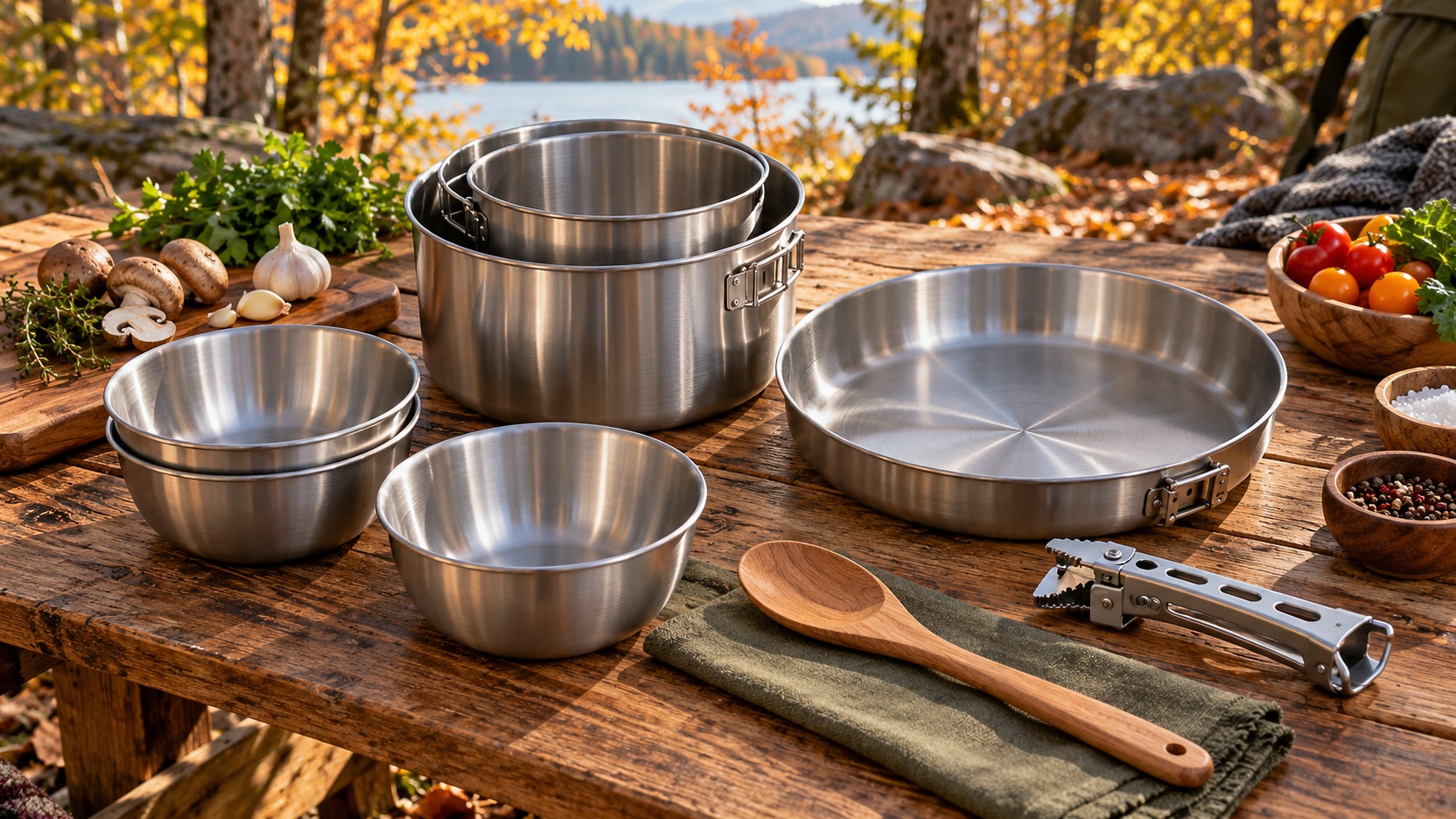
The MSR Alpine 2 Pot Set takes a simpler route: stainless-steel pots of 1.5 and 2 liters, one shared lid/plate, a PanHandler handle, and a sack. It is the more direct starting point for campers who already have eating gear and mainly need vessels for soups, boiling, or one-pot meals. It does not supply a dedicated frying pan, and sharing the lid constrains meals that need both pots covered. For either set, check the stove fit and follow the exact cookware care instructions; these are specification-based choices, not a hands-on cooking contest.
A family cooking pancakes and a large evening meal may be better served by a compatible broad pan plus one appropriately sized pot than by either two-person set. Start with the household cookware that already performs those jobs, then test the cold arrangement on the permitted stove supports. Check both handles and the space left for the second vessel. Add a purpose-made set only if nesting, carrying, or missing capacity solves a real problem. That gives three clear routes: coordinated tableware, a simple two-pot core, or a larger menu-led family kit.
Evaluate the Set After an Ordinary Weekend
Use the first trip to observe actual cooking rather than to justify the purchase. Record which pieces handled repeated tasks, which stayed unused, and where the arrangement felt cramped. Notice whether serving and cleaning caused more difficulty than cooking itself. A single change to pot size or utensil choice may solve the issue without replacing the set. Look for a specific cause before adding another vessel to the bag.
Before storing the kit, inspect cooking surfaces, handle attachments, and lids for wear or damage. Follow the care guidance and replace compromised components when necessary. Keep the useful core together and leave unnecessary duplicates at home on the next outing. A practical cookware set should become easier to use as you refine it around familiar meals. That dependable relationship between menu, cookware, stove, and cleanup is what produces better outdoor cooking.