The Layer Beneath Your Tent Has a Small, Specific Job
A tent footprint and a general-purpose tarp can look almost interchangeable when both are spread on the driveway, yet their differences become apparent at the corners of a pitched tent. One may fit neatly beneath the floor, while the other leaves a wide exposed border that catches rain. One rolls into a narrow bundle, while the other adds a bulky, stiff package to the camping load. Choosing between them is less about finding the toughest material available and more about matching a protective layer to the tent, the ground, and your packing routine. Both can reduce direct contact between the tent floor and dirty or abrasive surfaces. Neither replaces careful campsite selection, an intact waterproof floor, or proper tent setup. A useful groundsheet should quietly protect the equipment without creating a new drainage or handling problem.
A: No. It is an extra protective layer beneath the tent's own floor.
A: Exposed material can catch rainfall and direct it between the sheet and floor.
A: Confirm the listed compatibility because floor shapes and attachments can change between generations.
A: Yes, when its material and correctly fitted size suit the tent and you accept its packed bulk.
A: No. Sharp objects and concentrated pressure can still damage layered fabric.
A: Only use that arrangement when the exact tent system explicitly supports it.
A: Avoid exposed extensions that collect runoff unless the shelter instructions specifically provide for them.
A: No. Cutting can remove reinforcement or create edges needing appropriate finishing.
A: Inspect floor fabric, coating, seams, pitch, and drainage instead of assuming the groundsheet will fix it.
A: Keep its dirty underside away from clean shelter fabric, contain it separately when needed, and clean and dry it appropriately after returning.
Understand What Each Layer Can Actually Protect
The tent floor is part of the shelter’s weather protection. The groundsheet beneath it is an additional layer intended to take some dirt and wear that would otherwise reach that floor. Think of it as a replaceable contact surface rather than an independent guarantee of a dry sleeping area. Pressure from a sharp stone can still damage more than one thin layer, and pooling water remains a campsite problem even when a tarp sits underneath. This distinction prevents buying a groundsheet to solve damage that needs inspection and repair instead.
A fitted footprint is shaped and sized for a particular tent or a defined group of compatible tents. Its corners may have webbing, clips, or grommets that connect to the shelter’s setup system. Those details can make alignment easier, but only when the footprint matches the actual tent generation and dimensions. A familiar model name is not enough if the floor shape has changed over time. Read the compatibility list and compare the tent you own, including its size designation.
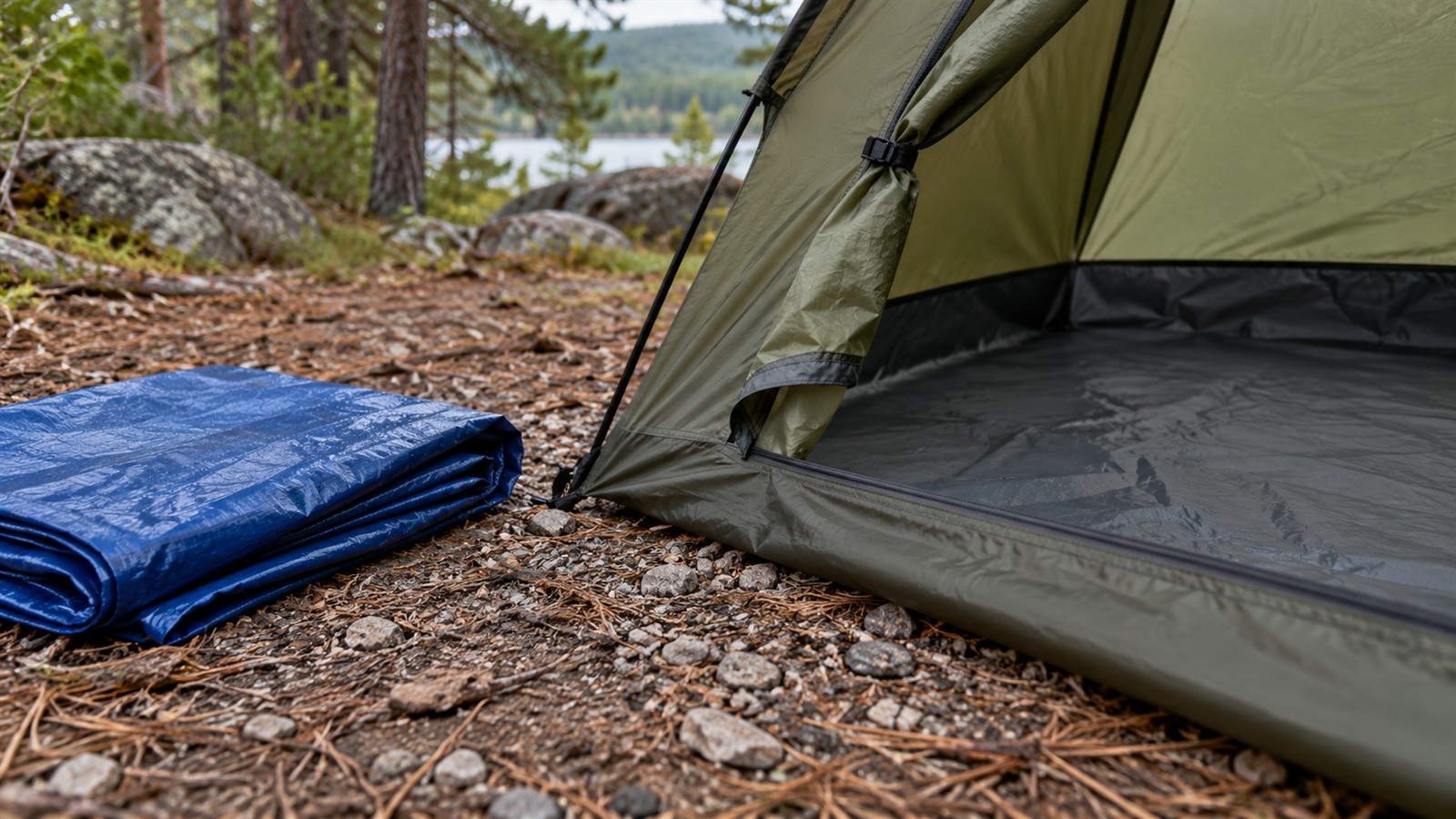
A utility tarp is a broader material category, with substantial variation in fabric, coating, weight, and construction. Some are convenient for car camping because they are inexpensive and easy to replace; others become awkwardly bulky after folding to fit. A tarp’s versatility is useful when you already have an appropriate one, but versatility does not establish correct groundsheet dimensions. Evaluate its finished size under the pitched tent, not its possible uses elsewhere at camp.
Keep Rain From Finding an Exposed Border
The critical fitting detail is the relationship between the sheet edge and the tent floor. A protective sheet that projects outside the shelter can catch water and direct it into the space underneath. Cascade Designs explains in its footprint sizing guidance that a slightly smaller footprint helps maintain drainage away from that interface. Follow the tent manufacturer’s recommendations rather than applying one invented measurement to every shelter. A shaped floor and a rectangular floor may require different checking at their corners.
Inspect the complete perimeter after pitching, because a sheet that looked centered before assembly can shift as poles and stakes tension the tent. Look particularly at tapered ends, vestibule openings, and areas obscured by a loose rainfly. If using a larger tarp, arrange it so excess material remains securely inside the required outline without bunching the floor. Do not leave an exposed strip as a convenient doorstep unless the shelter’s instructions explicitly provide for that arrangement. A separate entrance mat serves a different purpose and needs its own drainage consideration.
Compare Packed Weight With the Way You Travel
For backpacking, the weight and volume of a groundsheet are recurring costs carried on every mile. A dedicated lightweight footprint may justify its price by reducing both compared with a heavy utility tarp. Check the actual item weight, including its bag and any parts needed to attach it. Marketing photographs rarely convey the difference between a thin folded sheet and a stiff bundle. Put the candidate beside your existing tent package when judging how it will fit your pack.
Car campers have more freedom to prioritize replacement cost and easy cleaning. Even then, bulky folded tarps consume useful cargo space and can be difficult to handle when muddy. Think about where the dirty layer travels on the return journey, particularly if the tent and bedding share a small vehicle. A washable carrying arrangement can matter more than shaving a few ounces. Portability is the entire handling routine, including the unpleasant part at the end of a wet weekend.
Do not assume a thinner material is automatically inadequate or a heavier material automatically protects better in every situation. Construction, condition, ground characteristics, and correct use all contribute to practical durability. The manufacturer’s intended use is more informative than an isolated thickness number from a different product category. If you camp only on prepared pads, your needs may differ from someone repeatedly encountering coarse ground. Compare products within the conditions you can reasonably expect. For example, someone carrying a two-person shelter between camps each day may value a light, readily folded sheet more than a driver returning to the same prepared pad. A large family tent can create the opposite problem: an inexpensive rectangular tarp may need so much folding that its apparent simplicity disappears. Imagine handling the exact size with cold or wet hands rather than judging a small display sample. The scale of the shelter changes the practical comparison even when the basic protective purpose remains the same.
Let Site Selection Do the First Protective Work
Before laying out either option, choose an established, permitted tent location that fits the complete shelter and avoids obvious drainage channels. Examine the immediate surface for sharp debris without digging trenches or disturbing the site unnecessarily. A groundsheet should supplement a sensible pitch rather than persuade you to sleep in a depression that will collect runoff. Preserve vegetation and comply with campground rules about tent placement, because moving a few feet is not always allowed. If the available pad cannot support an appropriate setup, ask campground staff about alternatives. The best protective layer is still only a small part of the broader decision about where the tent belongs.
Check Corners, Attachments, and Special Pitch Modes
A dedicated footprint can provide convenience beyond its fabric outline. Some compatible shelters use its attachment points in a manufacturer-approved setup involving poles and rainfly. That arrangement is specific to the tent system and should not be inferred from the presence of grommets alone. Read the manual for the exact components required and the limitations of the resulting shelter. Leaving the inner tent behind changes the protection and living experience as well as the carrying weight.
For ordinary pitching, inspect how the footprint corners remain aligned while you work. A connection should fit without stretching the sheet in a way the instructions do not describe. Check that straps are routed as intended and do not interfere with the fly or tent stake points. If the corners appear wrong, stop and confirm compatibility before forcing them. An attachment that nearly fits can hide a size mismatch that becomes obvious only after the shelter is tensioned.
A utility tarp may have large metal grommets designed for different tasks. Those should not be treated as substitutes for the tent’s structural connectors or assumed to accept its pole tips. When the tarp simply lies beneath the floor, its useful job is already clear. Keep unnecessary cord and exposed corners from complicating the pitch. Simplicity is an advantage when the weather is deteriorating and the tent needs to be erected correctly on the first attempt.
Choose a Tarp With Manageable Folds and Edges
If a general tarp is your preferred option, rehearse the arrangement at home with the tent fully pitched. Find out whether it can fit without thick ridges under sleeping positions or loose edges that unfold as the floor moves. Folding may be reversible and useful for occasional use, but it can become frustrating when the same excess fabric has to be managed every trip. An appropriately sized sheet avoids that recurring work. Make the comparison using the finished arrangement you will actually sleep on.
Cutting a tarp is a separate decision from folding it. Some materials fray or lose useful reinforced edges, while others require specific finishing methods; follow material and tent guidance rather than assuming scissors create a durable custom footprint. Consider whether buying a correctly sized product is a better use of money and time. Inspect any modified layer before each trip and keep its edges away from the outside drainage line. A successful inexpensive solution should remain easy to inspect, fit, and maintain. Check the folded package again after its first real use, because a wet, gritty sheet may behave differently from clean material on a living-room floor. If the arrangement repeatedly unfolds or traps uncomfortable lumps, revise it before the next trip. Saving money is useful when the resulting setup remains dependable and uncomplicated.
Treat Dirt, Moisture, and Damage as Separate Problems
At breakdown, lift the tent and groundsheet in a way that keeps the dirty underside away from the tent’s clean interior. Shake or brush off loose material as permitted by the care instructions, and keep abrasive grit away from zippers and coated fabrics. Folding a filthy sheet into the tent body transfers the very material the layer was intended to intercept. A separate bag or deliberate fold can make the drive home more manageable. Clean handling is useful even when no rain has fallen.
A damp groundsheet and a damp tent need drying after the trip. Spread the equipment somewhere appropriate at home rather than leaving it compressed until the next outing. The MSR tent care manual emphasizes complete drying before storage and warns that extended damp storage can damage coated materials. Use the cleaning method specified for each item. A rugged-looking sheet may tolerate different treatment from the tent floor beside it.
Inspect wear while the fabric is clean and dry. Small holes in a replaceable groundsheet have a different significance from peeling waterproof coating or damaged floor seams in the tent. Follow the appropriate repair instructions and contact the manufacturer when the floor’s condition is unclear. Do not conceal an unresolved leak beneath a progressively heavier tarp. Maintenance is easier when you identify which layer is failing and address that specific problem.
Make the Choice With a Full Tent Rehearsal
A fitted footprint is a persuasive choice when you value quick alignment, compact packing, and verified tent compatibility. A suitable tarp can make sense when its price and available size suit vehicle-based trips and it can be arranged correctly. Some campers may reasonably omit an additional layer when their tent maker permits it and their expected surfaces do not justify the extra equipment. The decision should reflect the floor, destination, and ownership routine rather than a rule that every tent needs the same accessory.
Finish by pitching the tent over the chosen sheet, walking around its perimeter, and packing everything away again. Notice whether excess fabric shifts, corners bind, or the dirty side lacks a sensible storage destination. Compare that experience with the cost difference you were considering. If the sheet fits easily, stays within the required outline, and adds manageable weight, it is doing its job. A well-chosen footprint or tarp should make the tent easier to care for without demanding attention every time you set up camp.