Make the Menu Smaller Than the Adventure
Family camping meals are easiest when they ask less of the cook at exactly the moments when everyone else needs attention. Children return hungry, daylight fades during setup, and a small washing area makes every extra pan noticeable. A useful menu anticipates that rhythm. It combines familiar food, ingredients that can serve more than one meal, realistic cold storage, and a cleanup sequence that fits the campsite. The aim is not to prove how many recipes can be cooked outdoors; it is to feed the family comfortably without letting kitchen work occupy the trip. Start with the meals your household already enjoys, simplify their preparation, and decide which tasks can happen safely at home. Then choose a few flexible combinations that still work when arrival is late, appetites differ, or weather changes the evening plan.
A: Use a flexible base such as tortillas with different suitable fillings and toppings.
A: No. A familiar safely stored cold breakfast can simplify a departure morning.
A: It reduces searching and makes the plan easier for another adult to follow.
A: No. Prepared and opened ingredients still need handling and storage appropriate to the food.
A: Water supply, fuel, pot capacity, and safe draining may add work beyond the recipe itself.
A: Yes. Refrigeration requirements depend on the ingredients rather than whether you cook them.
A: Offer suitable components or toppings separately instead of cooking several unrelated meals.
A: Preparation vessels, serving tools, and limited washing facilities affect total meal effort.
A: Follow local disposal rules; biodegradable labeling does not permit disposal anywhere.
A: Provide suitable familiar food when the original cooking or timing plan becomes unusable.
Sketch the Weekend Before Buying Ingredients
Count the actual eating occasions between departure and homecoming. Include the meal during travel, the first campsite dinner, breakfasts, lunches, snacks, and any food needed after the tent is packed. Avoid planning a full recipe for a meal the family will probably eat on the road. Write down how much cooking time and adult attention each occasion can reasonably receive. The arrival evening and departure morning usually deserve especially uncomplicated choices.
Choose a small group of overlapping ingredients with different uses. Tortillas can support bean wraps, breakfast fillings, and a cold lunch; suitable vegetables can accompany a grain bowl and appear in another meal. Keep the overlap practical rather than forcing every dinner to taste identical. A familiar sauce or topping can change the experience without adding another large set of perishable ingredients. Think in combinations that family members can assemble to their preferences.
Scale quantities to the confirmed group and ordinary appetites. Children may be hungry after activity but still prefer smaller first servings, and adults do not need to cook a large surplus to show generosity. Account for snacks so dinner portions remain realistic. Plan a second serving from safely stored ingredients rather than putting all food out immediately. Buying with the whole weekend in view reduces both clutter in the cooler and the leftovers that need attention later.
Prepare Components That Actually Save Camp Work
At home, wash and prepare suitable produce, measure dry ingredients, and package what you need for individual meals. Check that prepared foods can be stored and transported appropriately. The useful question is whether a task becomes simpler and safer in the home kitchen, not whether every ingredient can be chopped days in advance. Some foods lose quality quickly or require continued refrigeration after preparation. Keep storage requirements attached to the plan instead of treating advance work as permission to ignore them.
Group each meal’s components so the campsite cook can retrieve them without a long search. Use containers that seal well and fit the available cold storage. Keep raw animal products contained separately from ready-to-eat items, and make the arrangement clear to everyone helping. Pack a short description of unfamiliar preparation steps if another adult may take over. A shared meal plan works best when the person who shopped is not the only person who understands it. Keep an opening sequence in mind when packing containers, placing the first meal where it can be reached without exposing everything else. A small container that fits a recipe can save space, but do not repackage food into unsuitable or confusing vessels. Preserve information needed for allergens and safe preparation. The extra minute spent organizing at home can prevent a long search while hungry children wait.
Use Breakfasts With a Gentle Start
Oatmeal is a useful hot breakfast when the family likes it and water heating is practical. Set out suitable toppings separately so each person can choose a modest amount. Follow the preparation directions for the oats you pack, because different types require different cooking times. A single pot can serve the group, but portioning into bowls promptly helps the cook clean it before food dries onto the surface. Keep children away from the hot-water handling area.
A cold breakfast can be even simpler for a busy departure morning. Whole fruit, suitable bread or wraps, and an appropriate shelf-stable spread can form a familiar combination, adjusted for allergies and individual needs. Yogurt or other refrigerated foods are an option only when the cooling arrangement supports them. Resist adding a hot dish merely because breakfast at camp is expected to involve a stove. The right breakfast is one everyone can eat without delaying a calm departure.
If eggs or another cooked protein are part of the plan, follow their storage and cooking requirements and pack the tools needed to handle them safely. A skillet breakfast may suit an unhurried morning with enough adult supervision. It is less attractive when one person is trying to cook while simultaneously collapsing the tent and watching children. Assign the timing and cleanup before committing to it. Breakfast complexity should follow the day ahead rather than a photograph of an ideal camping spread.
Build Lunches That Leave the Afternoon Free
Wraps, simple sandwiches, and assembled bowls are practical lunch formats because they can use familiar ingredients without requiring a second full cooking session. Offer suitable fillings separately and let family members build their portions with clean hands and utensils. Keep ingredients needing refrigeration cold until use and return suitable leftovers promptly. Consider a whole fruit and an uncomplicated crunchy side rather than preparing several additional dishes. If lunch will leave camp with you, pack and cool it for the full outing instead of assuming outdoor food becomes safe simply because it is eaten soon. Match the meal to the route, the weather, and the time before the next reliable cold source.
Choose Dinners With One Main Cooking Task
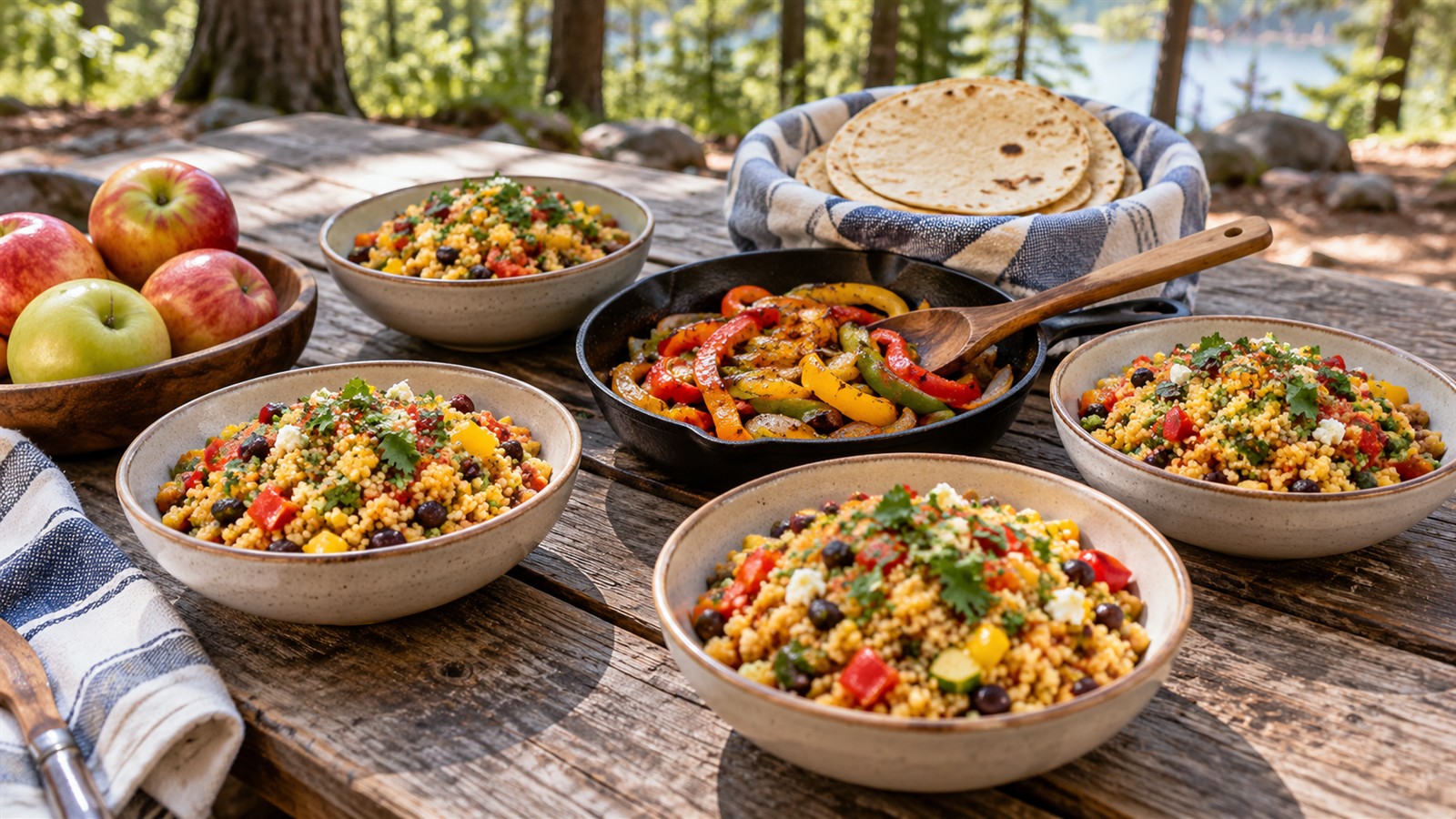
A bean-and-vegetable grain bowl can be a flexible family dinner. Pick a grain whose preparation suits your stove and pot, use appropriately stored vegetables, and add drained ready-to-eat beans as their packaging directs. Offer toppings after cooking so a child who prefers components separate can still eat the same core ingredients. Follow all package instructions, including any refrigeration required after opening. This arrangement can be filling without creating a pan for every family preference.
Pasta with a suitable prepared sauce is another straightforward option when you have enough water, fuel, and a safe draining method. Choose the pot size around the confirmed portions rather than filling the largest pan available. Add vegetables or a properly handled protein only when they fit the equipment and food-storage plan. Serving a simple side of whole fruit can be more practical than adding another cooked course. If the family enjoys pasta regularly, choose a familiar shape and sauce so the change is the setting rather than the entire meal. Consider whether the pot and utensil combination makes serving straightforward. A long noodle that is easy to manage in the home kitchen may be less convenient when balancing a bowl at a picnic table. Keep the dinner sequence manageable from the moment water goes on until the last bowl is washed.
Quesadillas or filled tortillas work well when the skillet and cooking method are suitable and fillings are safely stored. Cook small batches with a plan for keeping people fed without crowding the hot area. Let children choose fillings before cooking begins rather than leaning over the pan. A simple bean filling can reduce raw-meat preparation at camp, although opened ingredients still require appropriate handling. Familiar meal formats are useful because customization happens at assembly instead of through several separate recipes.
Make Food Safety Part of the Menu Design
A simple menu still needs reliable temperature control and clean handling. The USDA camping food-safety guidance advises keeping perishables below 40 degrees Fahrenheit and limiting unsafe-temperature exposure to two hours, or one hour above 90 degrees. Use an appropriate cooler and thermometer, and keep raw products separate from ready-to-eat foods. A no-cook meal can still require refrigeration. Choose shelf-stable alternatives when you cannot maintain the required conditions.
Follow current safe minimum internal temperatures for any animal products you cook and use a food thermometer rather than appearance alone. Keep a proper handwashing arrangement available and clean food-contact equipment appropriately. Treat leftover storage as a decision made before cooking extra portions. If you cannot cool and store excess food safely, prepare less rather than planning to improvise after dinner. The easiest cleanup often begins with a menu that produces fewer uncertain leftovers.
Let the Washing Plan Shape the Recipes
Trace the cleanup for each proposed meal. Count the pot, skillet, board, knife, serving tools, eating dishes, and containers that become dirty. A one-pan recipe can still create substantial washing if ingredients require several preparation vessels. Choose a serving arrangement that reduces unnecessary transfers and scrape suitable scraps into the destination’s required waste system before washing. Keep clean and dirty equipment in distinct places so the table does not become a pile of mixed utensils.
Confirm where washing is allowed and how wastewater must be handled. The presence of a bathroom sink does not mean dishwashing is permitted there. Bring the appropriate basin, soap, water, and drying supplies for the campground’s requirements, and follow local disposal rules. Do not assume a biodegradable product can be poured into a stream or scattered beside the picnic table. A workable washing station belongs in the packing plan as clearly as the stove.
Set it up before the meal whenever practical so dirty dishes have a destination immediately. Keep drying supplies protected from splashes and avoid stacking clean dishes where food scraps are being handled. Check the site before departure for dropped scraps and small packaging pieces. A clean table alone does not establish that the kitchen area has been fully cleared.
Give cleanup a role in the family routine. Adults should assign age-appropriate tasks and maintain supervision around hot water, sharp tools, and cooking equipment. One person can contain waste while another washes, with children helping only where suitable. Finish before everyone becomes too tired to handle food and equipment carefully. Returning to a clean, organized kitchen the next morning is one of the strongest arguments for a modest dinner menu.
Keep an Easy Meal in Reserve and Refine the Next Menu
Pack a straightforward backup that suits allergies and household preferences and can be stored safely without the cooking arrangement you may lose. Suitable unopened shelf-stable foods can be useful, but check labels and remember that storage requirements may change after opening. The USDA shelf-stable camping food guidance offers examples to help evaluate possibilities. Keep the backup reachable during travel and arrival. It is there to preserve flexibility when the main plan becomes inconvenient or unsuitable.
For a simple two-night stay, build the menu around a small set of familiar ingredients. Serve wraps with a household-approved filling on arrival, oatmeal with fruit the next morning, and the bean bowls described above for dinner. Reserve the pasta meal as an alternative if it uses ingredients your family already wants, rather than adding it automatically as another cooking project. Before departure, assign each meal its utensils, safe storage arrangement, and washing task; a menu that cannot pass that check needs simplifying. Afterward, adjust the quantities from what was actually eaten so the next trip starts with a better shopping list.