Give Every Campsite Surface a Clear Job
A folding table can become the busiest piece of furniture in camp: breakfast counter at sunrise, washing-up station after lunch, and the place where everyone gathers when the light fades. Trouble begins when the same small surface is expected to hold a stove, ingredients, dirty dishes, and four dinner plates at once. Folding camping tables for cooking, dining, and campsite life work best when you begin with the jobs they must perform and the space each job needs. Height affects whether preparation feels comfortable, leg placement determines whether diners can sit naturally, and the folded package decides whether the table travels at all. Instead of buying the largest tabletop you can find, picture a complete meal from unpacking ingredients to drying the last cup. That sequence reveals which dimensions and features will actually make camp easier.
A: You may only need a smaller preparation or cleanup surface, depending on the available space.
A: Sometimes, but different users may find separate working and seated heights more comfortable.
A: Check the gaps between slats because small objects can slip through.
A: Only when both the stove and table instructions permit the specific arrangement and clearances.
A: Uneven footing, incomplete deployment, or frame movement can affect stability independently of total load.
A: A heavy item such as a water container applies weight over a smaller area than distributed plates.
A: Follow their separate limits and keep contents from interfering with access or frame operation.
A: Measure your available gaps and cargo opening; flat panels and long bundles fit different spaces.
A: Assign separate locations for dirty equipment, washing, and drying before meals begin.
A: Review working height, seated clearance, setup effort, cleaning, and actual packing convenience.
Map the Work Before Choosing the Table
Begin with the facilities you usually find at camp. An established campground may provide a picnic table, leaving you to add a small preparation surface or a place for washing equipment. A dispersed site may offer no furniture, so the folding table has to support more of the day. List the activities that genuinely need a raised surface and note which happen simultaneously. If one person cooks while another sets places, separating those tasks can be more helpful than gaining a few inches of tabletop width.
Imagine the route ingredients take through camp. Food comes from a cooler or storage box, moves to a preparation area, reaches the cooking station, and finally arrives at the eating surface. A table placed thoughtfully along that route reduces unnecessary carrying and keeps people from crowding the stove. Do the same exercise for dirty dishes, rinse water, and drying items. You may discover that a smaller secondary table solves a bottleneck more effectively than one oversized central table.
Resist designing around an idealized empty campsite. Tent doors need clearance, chairs need room to slide back, and vehicle doors may sweep into the available workspace. Draw a simple arrangement using the approximate dimensions of your current equipment. Keep the main walking route open rather than filling every patch of ground with furniture. The most useful table is the one that supports activity without making everyone step around it all weekend. Look at the same arrangement from the seated diner’s perspective as well as the standing cook’s perspective. A table may appear to leave generous room until chairs are pulled out and someone needs to reach the cooler behind them. If you travel with children, consider which supplies they can collect independently without entering the preparation zone. Keep the plan flexible enough to rotate or relocate an unloaded table when the actual site differs from your drawing. A little open space can be more useful than an additional shelf.
Match Working Height to Standing and Seated Tasks
Preparation height changes how your back and shoulders feel during a meal. A low dining table can be awkward for extended chopping or assembling sandwiches, especially for a taller cook. Conversely, a high work surface can make children or seated adults reach upward for ordinary tasks. Adjustable legs can bridge these uses when the locking system is secure and easy to operate. Check the usable settings rather than assuming the full advertised adjustment range will feel practical for everyone.
For dining, pair the table with the chairs you already own. Seat height, armrests, and the distance between the tabletop and your thighs all influence comfort. A cross brace beneath the table may occupy the exact place your knees need to go. Try sitting close enough to eat without leaning over your lap, then stand and sit again. Good clearance matters more than a capacity claim based only on how many plates can fit across the top.
Make Stability a Setup Requirement
Put the open table on firm, reasonably level ground and check that every leg makes dependable contact before loading it. Follow the maker’s deployment sequence, engage required locks, and inspect any adjustable feet or leg extensions. A broad tabletop can still rock if a hinge is incompletely opened or one foot rests on loose gravel. Recheck after moving heavy items because a changing load may expose movement you did not notice while the table was empty. If the surface remains uncertain, relocate the table instead of building a precarious stack beneath a leg.
Choose the Top for the Mess You Expect
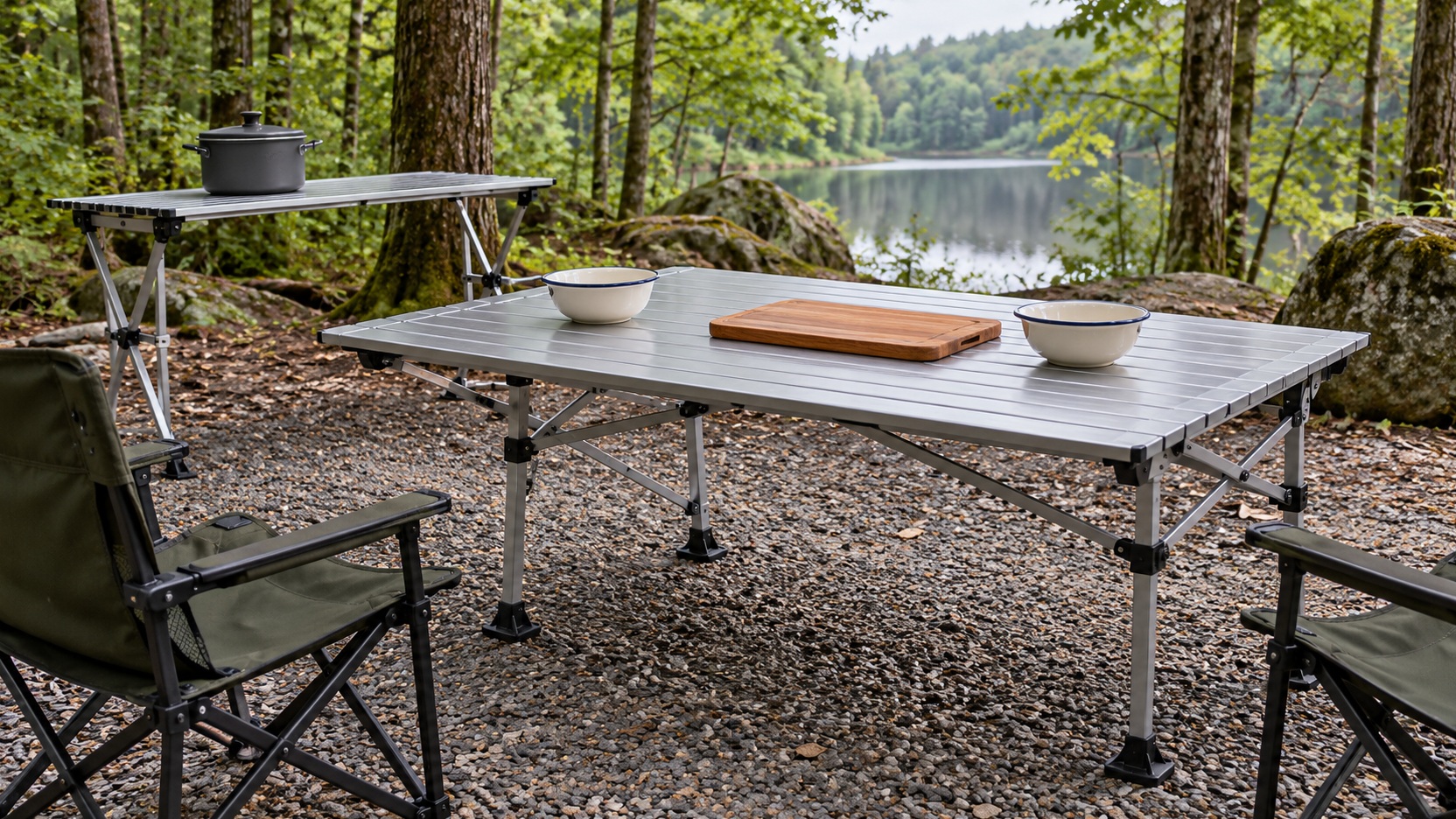
Aluminum slats can create a compact roll-up package and tolerate ordinary wiping, but the joints introduce gaps. Small utensils may settle between slats, and liquid can pass onto stored equipment below. Check whether the top feels smooth enough for your intended tasks and whether the connection system leaves pieces easy to misplace. Keep food preparation on an appropriate clean cutting board rather than assuming any outdoor tabletop is a food-contact surface. A washable board also makes cleanup more predictable across different table materials.
Solid folding tops provide a continuous work area, though their center seam and hinges deserve inspection. Follow stated limits for heat, water exposure, and cleaning products, especially with composite or coated surfaces. A finish that looks rugged may still be damaged by a hot pan or prolonged soaking. Before buying, read the care guidance for the specific material instead of relying on broad claims about outdoor use. Daily convenience depends partly on how quickly you can clean and dry the surface after an ordinary campsite spill.
Fabric-topped tables serve a different purpose. They may be useful for lightweight drinks, cards, or small personal items when the design provides suitable support. Their flexible surface can be inconvenient for slicing food or balancing narrow cookware. Evaluate the actual load and movement involved in the task, not just the maximum weight on the label. Choosing a surface that matches its job reduces the temptation to improvise around a weakness after arrival.
Keep Stove Compatibility Separate From Table Size
A table large enough to hold a stove is not automatically approved for operating that stove. Confirm that the stove instructions permit the supporting surface and that the table manufacturer allows the intended heat exposure and load. Account for pot handles, fuel connections, and required clearance around the entire appliance. The finished arrangement must remain stable while someone stirs or lifts a full pot. If any part of the setup conflicts with the equipment instructions, use a suitable alternative rather than adding an improvised heat shield.
Give the cooking position its own working margin. Keep cloths, packaging, and serving dishes away from burners, and arrange the fuel supply as the stove manufacturer directs. Never turn the tent, vehicle, or another enclosed area into a stove location when weather deteriorates. The CDC’s camping guidance explains that fuel-burning camping equipment can create dangerous carbon monoxide concentrations in enclosed shelters. Plan meals and equipment so bad weather does not force an unsafe change of location.
Understand Weight Ratings and Real Tabletop Loads
A stated load rating usually comes with conditions about proper setup and how weight is applied. Read those conditions for the exact model, including any separate limits for shelves or attached side surfaces. A heavy water container concentrates force differently from several dinner plates spread across the top. Keep large loads within the instructions and avoid treating a folding table as seating or a stepping platform. If you cannot confirm that the frame is suitable for a planned task, choose equipment designed for that task.
Stiffness affects day-to-day usability even when the total weight is comfortably below the limit. A tabletop that moves during ordinary chopping can make preparation frustrating, and an attached shelf can swing when someone retrieves a pot. Test realistic motions with the table properly opened, including reaching toward the far side. You are looking for confidence during normal use rather than a dramatic strength demonstration. Small movements become noticeable when the same table handles breakfast, dinner, and cleanup for several days.
Accessories deserve the same scrutiny. Hanging organizers may be convenient, but their contents can interfere with knees or the folding mechanism. Shelves beneath the top should keep essentials reachable without becoming a catch-all for heavy equipment. Make sure attached storage does not conceal a leg lock during setup. Choose a few functions you can use comfortably rather than an arrangement that requires unloading multiple compartments whenever the table moves.
Measure the Package You Will Carry Home
Compare packed length, width, thickness, and total weight with your vehicle’s remaining space after essential camping gear is loaded. A flat folding table may fit against a cargo wall, while a roll-top package might slide into a longer narrow gap. Include loose crossbars, carrying cases, and detachable shelves when assessing the complete package. Practice placing the table in the car before deciding its folded shape is convenient. The return trip is a useful mental test because bags rarely pack as neatly after several busy days outdoors.
Build a Cleanup Routine Around Limited Water
Begin cleanup by removing food scraps and containing rubbish appropriately rather than washing everything directly on the tabletop. Use your chosen washing system and follow local requirements for wastewater disposal. Keep cleaning supplies separate from food storage so damp cloths do not migrate into ingredient boxes. A dedicated place for washed utensils prevents the preparation area from becoming a mixture of clean and dirty equipment. The table should support that separation without needing to hold every dish at once.
Dry the surface and accessible joints before folding, following the material’s care instructions. Trapped moisture in a carrying bag can make the next unpacking unpleasant and complicate maintenance. Brush away grit from leg sections and hinges without forcing stubborn mechanisms. If a latch becomes difficult, inspect it according to the instructions instead of applying extra leverage. A few minutes of care after camp is easier than discovering a jammed table immediately before the next meal.
Choose a Setup That Still Works on a Busy Evening
The best evaluation happens when the campsite is occupied. Picture one person preparing food, another returning with water, and someone else trying to sit down with a plate. Can each person move without leaning across the cooking area or shifting a loaded table? If the arrangement feels crowded on paper, a bigger top may not solve it. Sometimes the better choice is a narrower preparation station beside an existing picnic table, with clear space between cooking and dining.
Consider who will do the opening and packing as well. A table that requires considerable hand strength or an awkward reach may become one person’s permanent responsibility. Let the usual users try each latch, removable bar, and bag opening before the trip. A slightly slower system can still be a good choice when it is intuitive and dependable. Count setup steps honestly rather than assuming a quick demonstration reflects the experience of arriving late in fading light.
After a weekend, assess the table against the original jobs you assigned it. Notice whether the height encouraged comfortable work, whether diners had knee room, and whether cleaning remained straightforward. Record any unused accessories and any recurring need for another surface before making additional purchases. A useful campsite table earns its place by supporting ordinary routines with little fuss. When the work area, eating area, and packed package all make sense together, the entire campsite becomes easier to live in.