A Camp Chair Should Fit the Way You Actually Sit
The difference between a chair you tolerate and one you reach for all weekend usually appears after the first few minutes. A soft seat can feel inviting while quietly pulling your hips too low, a tall back can miss your shoulders, and an impressively compact frame can leave your knees crowded beneath the dinner table. Camping chairs that balance comfort, support, and easy packing start with those ordinary details rather than an impressive accessory count. Think about where the chair will travel, how you will use it, and which movements need to feel effortless: settling in with a mug, leaning forward to eat, standing up at dusk, or carrying the folded chair across a parking area. The right compromise is personal, but it becomes much easier to recognize when you judge seated fit and packed practicality together.
A: Allow a longer trial than a quick perch, including leaning forward and standing several times.
A: No. Seat tension, back shape, and your proportions determine support alongside cushioning.
A: A deep or high seat can prevent your feet from resting naturally.
A: Yes, if its lower seat, fit, and setup steps suit your campsite routine.
A: Folded length often causes trouble at trunk openings or alongside rigid luggage.
A: They may reduce sinking, but uneven or shifting ground still requires better placement.
A: Individual chair sizes can provide a better fit than a matching set.
A: Confirm accessible controls, secure locking, and the clearance required by the instructions.
A: The rating is essential, but it does not establish comfortable fit or convenient packing.
A: Wait until fabric, padding, and concealed folds are fully dry.
Let Your Usual Campsite Set the Priorities
A chair for a campsite beside the car has a different job from one carried down a long access trail. For vehicle camping, a little additional frame weight may be an easy trade for firmer armrests and a more supportive back. For walk-in sites, every trip between the parking area and the tent makes that extra bulk more noticeable. Describe your most frequent trip before considering the unusual vacation you might take someday. A chair that suits most weekends will earn its storage space more reliably than one selected around an exception.
Also consider how long you remain seated and what happens around you. Reading beneath a tree calls for different posture than chopping vegetables at a table, and watching children may mean standing up repeatedly. A deep reclining seat can be pleasant during an uninterrupted afternoon but tiring when you need to rise every few minutes. There is no universal shape that handles all these situations equally well. Choose the activity you want the chair to support first, then decide which secondary uses can involve a small compromise.
Check Seat Height, Depth, and the Front Edge
Start a fit check with your feet, not the backrest. Place both feet comfortably on the floor and notice whether the front edge presses into the backs of your thighs. A seat that is too high can leave your feet searching for support, while an excessively deep seat may make you slide forward to reach the ground. Smaller campers often encounter this problem in chairs marketed as generously oversized. Extra fabric is useful only when your body can use the space without losing an easy seated position. Check the armrest spacing while wearing a light layer and again with your usual insulated jacket, since seasonal clothing can change how crowded the chair feels. If the model offers adjustable seat tension, compare a few permitted settings instead of judging the first position you encounter. Keep the frame fully opened throughout the trial and make only the adjustments described in its instructions. The purpose is to identify a comfortable everyday fit you can reproduce, rather than a pose that feels acceptable only while you are concentrating on it.
Seat height also affects standing. Try getting out of the chair without an exaggerated forward lurch, and repeat the movement more than once. Firm armrests may provide useful purchase, but they should not shift unexpectedly when you press down in normal use. Anyone who finds low seats difficult should prioritize a suitable height over the appeal of a tiny carry bag. Test the actual chair rather than assuming a height specification guarantees the same experience across different seat shapes.
The seat edge deserves a longer trial than a showroom perch. Read a few pages or sit through a conversation, then notice whether a support bar or fabric seam has become intrusive. Empty your back pockets during the test so a wallet does not distort the result. If possible, wear clothing similar to what you use at camp. A chair that feels good for ten attentive seconds can behave quite differently after you relax into it.
Recognize Support Beyond Thick Padding
Support comes from the relationship between the seat, backrest, and frame rather than cushioning alone. A taut seat may hold your hips more consistently than a plush sling that gathers beneath you, while a shaped back can feel supportive without much foam. Notice whether your shoulders settle naturally or curl forward, whether the lumbar area meets your back comfortably, and whether the armrests let your elbows rest without lifting your shoulders. Padding can improve contact comfort, but it cannot reliably correct a poor basic fit. Adjustable straps are worthwhile when they make a change you can actually feel, and a removable pillow is useful when its position suits your height instead of pushing your head forward.
Choose a Frame Style With Clear Tradeoffs
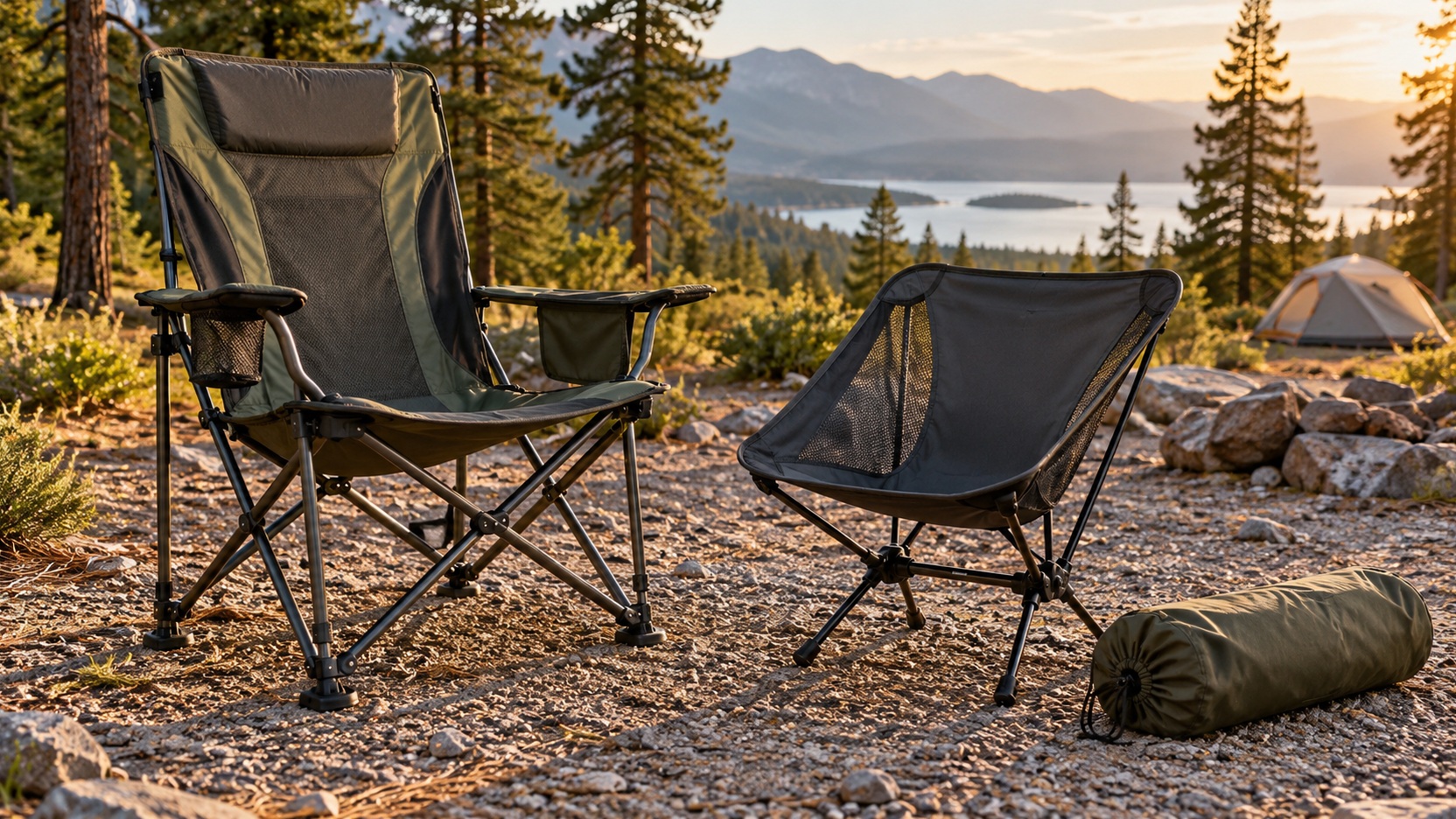
Classic folding chairs usually offer straightforward deployment and a familiar sitting position. Some fold into long bundles; others become broad, flat packages that fit neatly against a cargo wall but awkwardly across a narrow trunk. Director-style chairs often provide firmer armrests and a more defined seat, though their folded shape may demand careful packing. Do not judge portability from the product photograph alone. The geometry of the folded frame can matter more than a small difference on the scale.
Compact pole-and-fabric chairs can save considerable room, but assembly adds a step and the seat often sits lower. Rocking and reclining designs introduce movement that some campers enjoy and others find distracting. Their mechanisms can also increase packed bulk or impose specific ground requirements. Treat these features as preferences that deserve a trial, rather than automatic upgrades. The REI camp-chair guide provides a useful overview of chair styles; your own sit test should settle the final choice.
Think About Feet, Ground Contact, and Everyday Stability
A stable chair starts with appropriate placement. Look for a firm, reasonably level patch of ground and position every foot so the frame bears weight evenly. A wide stance can help, but it does not cancel the effects of a hole beneath one leg or loose material that shifts as you sit. Check stability again after moving the chair for shade. At camp, a new view often means a completely different footing situation.
Small feet may sink into soft soil or sand, particularly when your weight settles onto the frame. Manufacturer-compatible ground sheets or larger feet can address that specific problem when the chair supports them. Avoid improvised attachments that interfere with the legs or change how the frame opens. A low chair is not permission to rock backward on two legs. Keep normal use within the manufacturer’s instructions and move the chair if the surface makes it feel uncertain.
Capacity ratings deserve a careful reading, but they do not describe every part of comfort or stability. Confirm the stated limit for the exact model and follow any separate instructions about recliners, side tables, or accessories. A chair comfortably within its rating can still be a poor match for your proportions. Conversely, buying the largest advertised capacity does not guarantee the easiest chair to carry or stand from. Use the rating as a necessary specification alongside fit and proper setup.
Measure the Folded Chair Against Your Real Cargo Space
Packed length is easy to overlook until the chair refuses to fit between a cooler and the tailgate. Measure the storage space you actually have, including the opening through which the chair must pass. Consider whether several chairs will lie together, stand upright, or slide beside sleeping gear. A long narrow bundle can be easier to place than a shorter but much wider package. Draw the dimensions on paper or compare them with an object at home before ordering online.
Then evaluate the carry system as part of the purchase. A bag should accept the chair without wrestling, and its strap should remain comfortable during the walk you routinely make. Removable pockets, footrests, and pillows may become separate loose pieces after folding. Keep track of those pieces during a trial pack so the listed chair size does not hide a second bag of accessories. The simplest packing solution is often the one that remains manageable when you are tired and the fabric is slightly damp.
Select Fabric for Your Climate and Habits
Mesh panels encourage airflow and can be pleasant during hot evenings, while more enclosed fabric may feel comfortable when cool air moves through camp. Heavy padding adds a different drying problem after dew or rain, so consider where the chair will sit overnight and how you will dry it before storage. Inspect seams, reinforced corners, and contact points where fabric meets frame hardware. These areas experience concentrated wear as the chair opens and carries weight. Follow the care label for cleaning, allow every layer to dry fully, and avoid assuming that outdoor furniture can remain exposed indefinitely without affecting its service life.
Keep Useful Extras From Crowding the Main Decision
A cup holder seems universal until a wide mug or narrow bottle falls awkwardly into it. Try the containers you actually bring, and check whether the holder stays clear of the folding mechanism. A side pocket should be reachable without twisting so far that the chair shifts beneath you. Phone pockets are convenient only if their location keeps the device protected from dirt, spills, and unexpected rain. Small conveniences are most valuable when they make a familiar task easier without requiring constant attention.
Footrests and reclining backs deserve a separate fit check. Some raise your legs comfortably; others place pressure in a spot that becomes irritating after a while. Verify that adjustment controls are reachable and that the mechanism locks as instructed. More moving parts also mean more places for grit to collect. Choose these features because you enjoy using them, not because the model without them looks less elaborate on a comparison chart.
Shared seating introduces another consideration: people rarely fit the same chair identically. A matching campsite set can look tidy while leaving one person perched too high and another squeezed at the shoulders. Consider buying different chair styles for different users if that solves an obvious comfort problem. Before a family trip, let each person practice opening, carrying, and folding their own chair. That small rehearsal can reveal awkward latches or excessive carrying weight before anyone reaches the campground.
Buy for Repeat Use and Recheck After a Weekend
Price comparisons become clearer when you compare the same practical needs. A supportive chair that fits your cargo space and opens easily may provide more value than a heavily featured alternative that stays home. Look at warranty terms, availability of replacement feet or fabric where offered, and whether ordinary maintenance is clearly explained. Avoid treating a low price as the only measure of economy or a high price as proof of suitability. Your purchase should solve a specific comfort and transport problem you can describe.
After the first trip, review the chair in context rather than from memory alone. Did your feet rest naturally, could you reach the table, and did standing remain easy late in the evening? Note where the chair packed well and where the carry bag became frustrating. Clean away grit, check visible joints for damage, and dry the fabric before putting it away. A chair that balances fit, support, and packing convenience should make the campsite feel easier to use every time it comes out of the bag.