Choose Camping Power by the Work It Must Do
A portable power station can make camp more comfortable, but its usefulness is easier to judge from a list of real devices than from a large number printed on the case. Charging a phone and running a small lamp create a different workload from powering a refrigerator, laptop, and several accessories across multiple nights. Capacity, output limits, carrying weight, and recharge options all have to fit that workload. The best portable power stations for camping are therefore the ones that cover a defined routine without creating more transport and charging effort than you want. Start by recording what needs electricity, how long each device runs, and when the battery can recharge. That simple inventory gives you a sound basis for comparing models, useful extras, and the complete cost of taking power away from an outlet.
A: Watts describe output or consumption rate; watt-hours describe energy available or used over time.
A: No. The supported output must also meet the appliance's operating requirements.
A: Not necessarily; conversion losses and the station's own use affect delivered energy.
A: No. Port ratings, supported protocols, the device, and the cable all matter.
A: That depends on the approved input setup and available charging power, so check the actual arrangement.
A: No. Production depends on sunlight, orientation, weather, shading, and system limits.
A: Chargers, panels, cables, and expansion batteries all form part of the transported system.
A: It may add unnecessary cost and carrying work unless a recurring need justifies it.
A: Only use it within its documented environmental ratings and instructions.
A: Rehearse with the actual devices and approved connections before the trip, then refine the estimate.
Make a Device List Before a Product Shortlist
List the electrical devices you intend to use on an ordinary trip and separate necessities from conveniences. Include how they connect: USB, a supported direct-current output, or an alternating-current socket. A list of device names alone is not enough because two seemingly similar appliances can draw different amounts of power. Read their labels and instructions, and measure actual use where practical. This creates a workload you can compare with a power station’s documented capabilities.
Write down when each device operates. A lamp used for a few hours in the evening differs from an appliance cycling through the day and night. Decide whether devices run together or in sequence, since simultaneous demand affects required output. Count the entire planned trip rather than only one comfortable evening. If everyone shares the station, include their charging needs before assuming one person’s estimate covers the group.
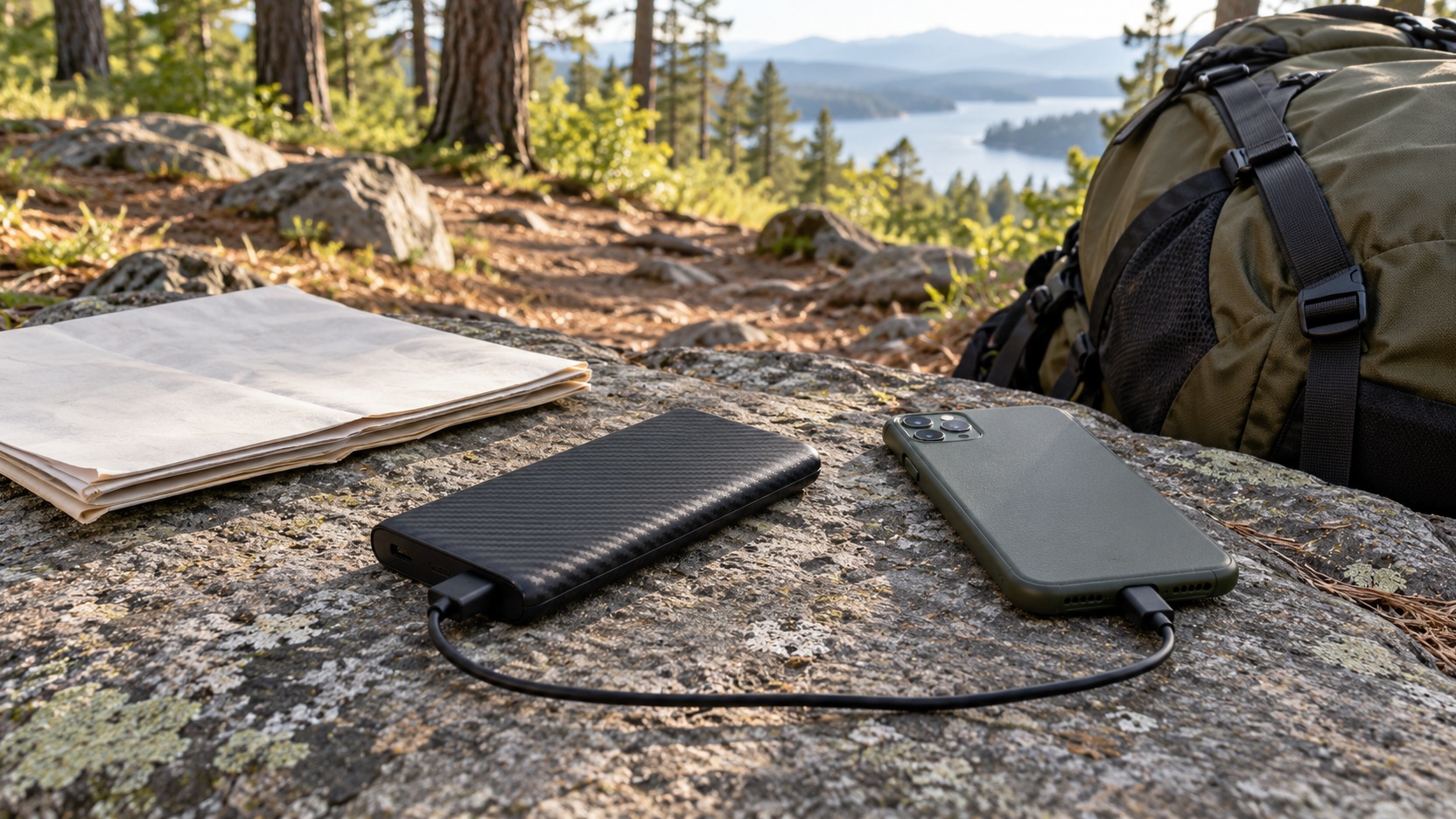
Consider what could be charged at home or supplied by a smaller power bank. A vehicle-camping station may be useful for certain loads without being necessary for every phone top-up. Reducing unnecessary devices can simplify the trip more than buying a much larger battery. Keep the decision focused on the experience you want at camp. Portable power should support that experience rather than create a new collection of equipment to manage.
Separate Watts From Watt-Hours
Watts describe the rate of power use, while watt-hours describe an amount of energy. A device drawing 20 watts for five hours uses 100 watt-hours in a simplified calculation. That arithmetic helps estimate a workload, but a battery’s labeled capacity is not the same as guaranteed energy delivered to every appliance. Conversion losses, operating conditions, and the station’s own consumption affect the result. Use the calculation as a starting point with appropriate practical margin.
Output power is a separate requirement. A station can have enough stored energy for a task yet lack the approved continuous output to run the appliance. Some devices also have starting demands that differ from their ongoing use. Check the station’s documented continuous and supported surge limits alongside the appliance requirements. Do not rely on an attractive capacity figure while overlooking whether the device can operate at all.
Build an Energy Budget You Can Revisit
Write each load as watts multiplied by operating hours, then add the results before choosing a battery. As a simple hypothetical example, a 40-watt fan used for four hours consumes 160 watt-hours, while a 5-watt lamp used for three hours adds 15 watt-hours. Their combined appliance demand is 175 watt-hours; it is not a promise that 175 watt-hours of advertised battery capacity will deliver the whole evening. Conversion losses, the station’s own consumption, and other devices require additional allowance. Measure changing loads such as a refrigerator over a representative period instead of assuming its compressor runs continuously at the label wattage. This calculation makes it easier to see whether the trip needs a small charging supply or a much larger appliance battery.
Use Model Examples to Compare Specific Tradeoffs
The Jackery Explorer 1000 v2 lists 1,070 watt-hours, 1,500 watts of rated AC output, and approximately 23.8 pounds for the specified US model. The EcoFlow DELTA 3 Plus lists 1,024 watt-hours, 1,800 watts of total rated AC output, and approximately 27.6 pounds. Those are the same three comparison fields for both stations. Use rated output here rather than treating a surge or boosted-appliance figure as interchangeable with continuous AC capability.
The Jackery is about 3.8 pounds lighter and has 46 more nominal watt-hours in these listings. The EcoFlow provides 300 more watts of rated AC output, which matters when a compatible appliance exceeds the Jackery’s supported running output. That extra output does not imply a longer runtime: the batteries occupy nearly the same storage class, and delivered energy depends on the load and connection. For a camper carrying the station frequently to run modest devices, the lower lifting weight can be the more useful distinction. For an owner with a verified higher-power appliance, the output limit can decide the shortlist before price enters it.
Compare the current delivered cost of these exact base stations before adding panels or expansion equipment. If both comfortably support the measured load, pay attention to the price difference, carrying route, and charging opportunity rather than buying unused output. If neither supplies the energy needed between dependable charging stops, a different capacity class or a smaller electrical workload is the relevant next comparison. These conclusions come from manufacturer specifications, not a measured efficiency or endurance test. Check the regional model and supported connections before applying them to your own devices.
Check Every Port You Expect to Use
Inspect the documented limits of individual ports as well as the total output. A station may offer several sockets without permitting all of them to deliver their maximum ratings simultaneously. USB charging also depends on supported protocols, the connected device, and appropriate cables. Verify the combination you need instead of assuming a familiar connector shape establishes full compatibility. The useful output is the one your actual device can receive.
Direct-current operation can be convenient when both the station and appliance support the arrangement, but compatibility still needs checking. Follow voltage, polarity, connector, and current requirements exactly as specified. Do not improvise adapters because two plugs appear close in size. Use supported accessories and consult the manufacturer when a connection is unclear. A dependable campsite setup should be repeatable without experimental wiring.
Plan Recharging Around the Itinerary
Charging speed matters when it matches an opportunity you actually have. Fast mains charging is useful before departure or during a stop with suitable electrical access, but it does not help a stationary campsite without that supply. Check input requirements and any configurable charging settings in the manual. Include the required charging equipment in your packing plan. A station’s headline recharge time may depend on a particular input arrangement you do not intend to use.
Vehicle charging deserves its own calculation. Available power depends on the supported charger, vehicle connection, and installation, so do not assume a short drive will replace an entire day’s use. Follow both vehicle and power-equipment instructions and avoid unsupported wiring changes. Think about how much driving is actually planned rather than counting on an extra trip solely to charge the battery. A recharge method should fit the itinerary rather than quietly control it.
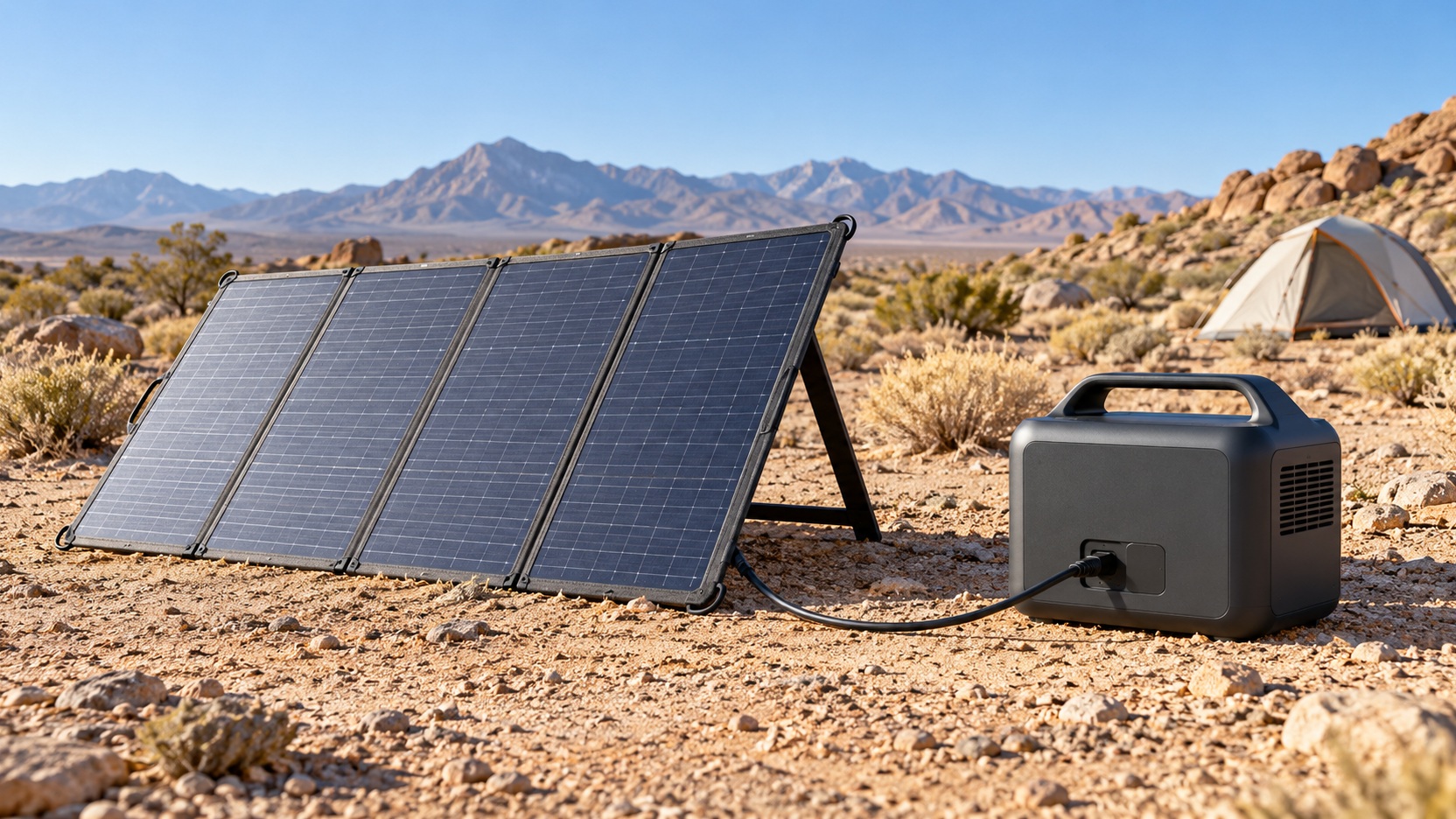
Solar panels add another set of conditions. Panel rating is not a promise of constant output through the day; shade, orientation, weather, and available daylight affect production. Verify electrical compatibility and the station’s input limits before choosing panels or combining them. Account for panel packed size, cables, and the effort of moving equipment as light changes. Solar can support a suitable camping routine, but it does not remove the need for an energy budget and a cloudy-day plan.
Carry the Whole System in Your Head Before Lifting It
Battery weight is only part of what travels. Add charging equipment, solar panels if selected, extension accessories permitted by the manuals, and any expansion battery. Consider where the equipment sits in the vehicle and who moves it at camp. A compact station with a comfortable handle may be easier to live with than a higher-capacity unit that is difficult to reach or lift. Judge portability through your complete loading routine, including packing up after a tiring weekend.
Give the Battery an Appropriate Campsite Location
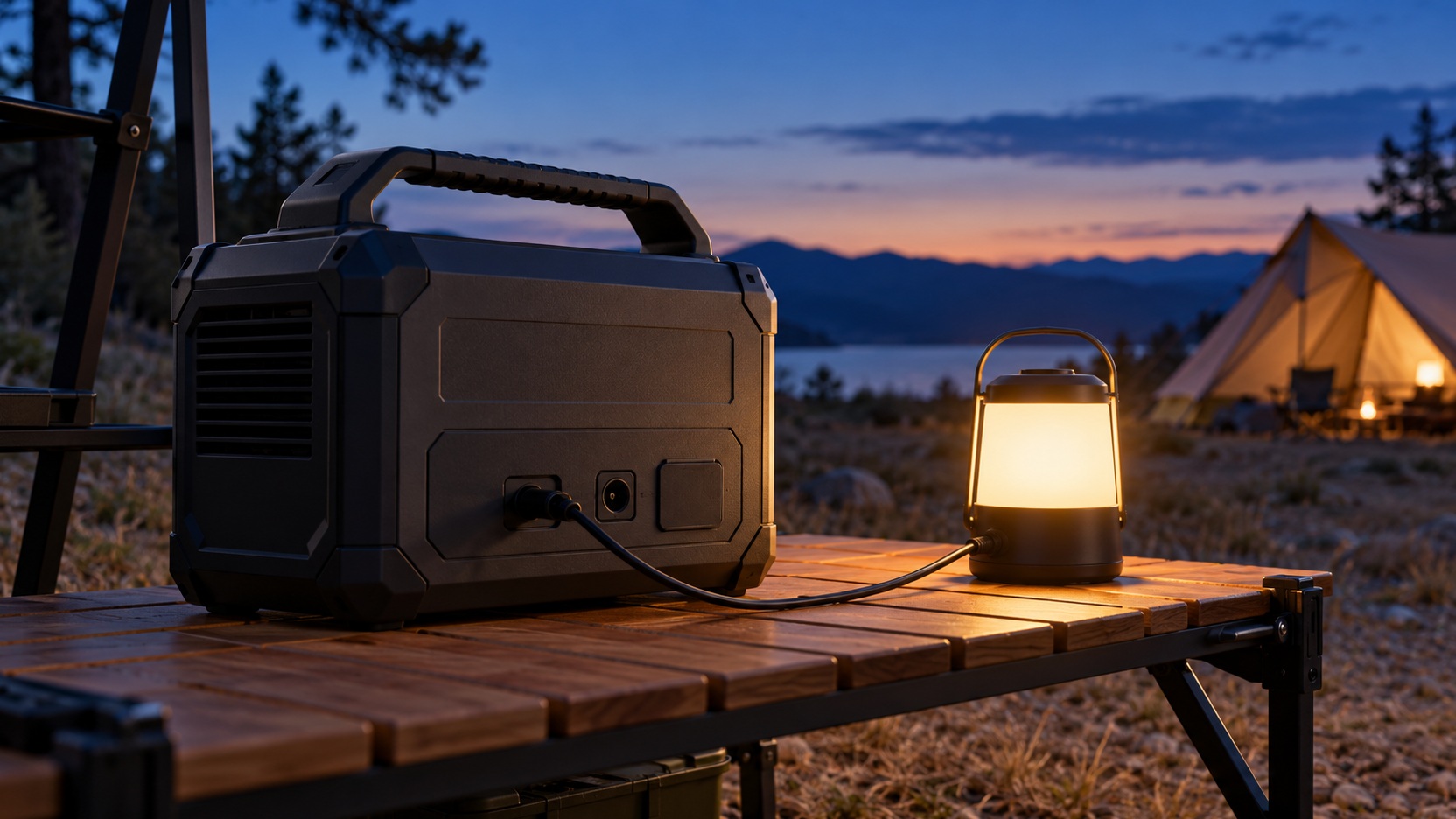
Follow the manufacturer’s environmental limits for storage, charging, and operation. Keep required ventilation clear and protect equipment from moisture and conditions for which it is not rated. Outdoor use does not mean every station can sit in rain or on wet ground. Choose a stable placement where cables remain manageable and controls can be checked. Read the manual before deciding where the station will live beside the tent.
Temperature can affect both permitted use and practical performance. Check the documented charging and discharge ranges rather than assuming the same rules apply in every season. Avoid enclosing equipment in a way that blocks cooling merely to protect it from weather. Plan an appropriate dry location that also respects ventilation requirements. If conditions fall outside the equipment’s limits, change the power plan instead of trying to make the station operate through an unsupported arrangement.
Distinguish Useful Features From Shopping Distractions
Remote controls, displays, extra sockets, and expansion options can be valuable when they solve a defined task. A phone application may help with monitoring, but confirm what can be managed directly on the unit as well. Consider whether a feature requires connectivity or another accessory during your intended trip. Equipment should remain understandable to the people using it. A capability that looks impressive in a product demonstration may have little role in an ordinary campsite evening.
Battery chemistry and cycle-life claims deserve context. Read the specified test conditions and retained-capacity threshold rather than treating a large cycle number as a guaranteed lifespan for every owner. Storage habits, temperature, and use patterns matter to practical ownership. Follow the manufacturer’s guidance for maintaining the station between trips. The useful comparison combines supported care, appropriate capacity, warranty terms, and the work you expect the product to perform.
Consider noise and placement in a shared campsite. Cooling fans may operate under some charging or output conditions, and a conveniently placed station can still be awkward if cables cross a walkway. Test the real devices before departure so those effects are apparent while changes are easy. Keep the setup simple enough that companions can switch off unused outputs correctly. Small operating habits can make the equipment easier to share.
Calculate Value as a Complete Supported Package
Compare the current delivered price of the station with the accessories needed for your chosen charging and output methods. A discounted battery may still require panels, cables, or compatible equipment that changes the total significantly. Check warranty, return conditions, and regional support for the exact model. Avoid mixing specifications from one generation with a price from another. A fair comparison describes a complete usable setup rather than an incomplete box at an attractive sale price.
Do not buy expansion solely because it is available. If the base unit covers your trips comfortably, additional batteries may add cost and transport work without a recurring benefit. If you genuinely need longer operation, compare a supported expansion package with other complete options. Keep the estimate tied to actual devices and recharge opportunities. Value comes from appropriate capability that you can use, carry, and maintain.
Validate the Plan With a Home Rehearsal
Charge the station as instructed and run your intended devices under appropriate conditions before leaving. Record the duration, remaining capacity indication, and any limitations or unexpected behavior. Practice the complete recharge and packing sequence so required cables do not stay behind. Use the results to refine your estimate rather than assuming a generic runtime chart predicts your exact setup. The best camping power station is the one that supports a tested routine with manageable weight, suitable output, enough energy, and a realistic way to recharge.