Choose a Hammock for the Whole Night
An afternoon hammock can feel wonderful for twenty minutes and still be the wrong starting point for a full night outside. Overnight comfort depends on how the fabric fits your body, how you arrange insulation, whether insects are excluded, and how easily you manage the shelter when conditions change. The best camping hammocks for comfortable nights outdoors make those parts work together without turning bedtime into a complicated adjustment session. Think about where you will hang, what weather you expect, and how you normally sleep before focusing on a packed weight or an attractive fabric color. A useful hammock is one component of a complete sleeping setup. When that setup fits the camper and the campsite, the relaxed feeling of an afternoon break has a much better chance of carrying through the night.
A: No. Assess full-night fit, bedding, protection, and the complete permitted setup.
A: It can simplify insect protection, while entry, headroom, and compatibility still need checking.
A: No. Plan suitable insulation beneath the sleeper as part of the complete system.
A: It can when supported by the equipment and conditions, but test fit and movement before relying on it.
A: Pads, quilts, clothing, and net position can change how the occupied setup feels.
A: Use only permitted locations with suitable supports and the required protective suspension.
A: Check permissions, support suitability, overhead hazards, the landing area, and the whole shelter arrangement.
A: Include suspension, suitable bedding, insect protection, weather coverage, and other required components.
A: Use appropriate reachable storage rather than placing them beneath your body.
A: It reveals fit and setup issues while changing shelter or plans remains straightforward.
Decide Whether You Need a Sleeping Hammock or a Lounging Spot
Begin with the purpose of the purchase. A hammock intended mainly for reading beside a vehicle can have different priorities from one you will rely on as your overnight shelter. The sleeping arrangement needs appropriate coverage, insect management, insulation, and a practical way to enter and leave in darkness. Those components may be sold separately. Price and compare the complete arrangement rather than judging an inexpensive bare hammock against a fully equipped sleep system.
Consider how you like to rest. Some people enjoy the supported shape and gentle movement, while others find that a suspended surface does not suit their usual position. A short daytime trial cannot establish how a full night will feel. Try an appropriate setup before committing to a long trip, ideally where returning to familiar shelter is straightforward. Personal fit deserves more influence than an enthusiastic description of someone else’s favorite hammock.
Also decide whether the hammock is the only sleeping option or part of a flexible campsite plan. If suitable hanging is prohibited or unavailable, a bare hammock does not solve the shelter problem. Check the destination’s rules and realistic campsite conditions before choosing equipment. A complete plan should identify where the system can legally and properly be used. That practical question comes before choosing accessories for an idealized photograph of two perfectly spaced trees.
Look at Usable Length, Width, and Fabric Behavior
Sleeping comfort depends on how the hammock supports your body, not simply whether your height fits inside its overall length. Read the maker’s fit guidance and consider whether the design permits the intended sleeping position. Extra width can be useful in some designs but does not automatically produce a better fit for every person. Fabric stretch, cut, and suspension geometry also affect the experience. Compare a real lying position rather than measuring the empty hammock alone.
Try the hammock with your normal sleep clothing and intended bedding. Notice whether shoulders feel crowded, whether fabric gathers in an uncomfortable place, and whether the net interferes with your face. Make only adjustments the manufacturer supports and follow the setup instructions for that model. A good trial lets you relax into the system instead of continually shifting to avoid one pressure point. If the fit remains awkward, a different design may be more useful than another accessory.
Compare Open, Netted, and Purpose-Built Designs
An open hammock can offer a flexible starting point when compatible weather and insect protection are added as needed. This modular approach lets you choose the separate components, but it also creates more compatibility decisions. Check the weight and packed size of the complete combination rather than comparing the bare hammock alone. Think about the number of attachment points and the order in which everything is deployed. Flexibility has value when you are comfortable managing it.
A hammock with integrated insect protection can simplify one part of the sleeping arrangement. Look at entry access, zipper operation, headroom, and how the net is supported. A removable net may offer versatility when conditions permit, while a permanently attached design can reduce separate pieces. Neither feature guarantees comfort by itself. The details should match the way you use bedding, reach small essentials, and enter or leave the hammock.
The Warbonnet Blackbird XLC Gen3 is a documented example of a purpose-built overnight design. Its manufacturer lists an eleven-foot body, an asymmetric layout, and a removable insect-net top, among other model-specific features. Those details make it a useful product to investigate for supported fit and complete-system requirements. They are not a promise that it will suit every sleeper or a claim of a hands-on comparison here. Evaluate its current options and instructions against your own needs.
Plan Insulation Below as Well as Above
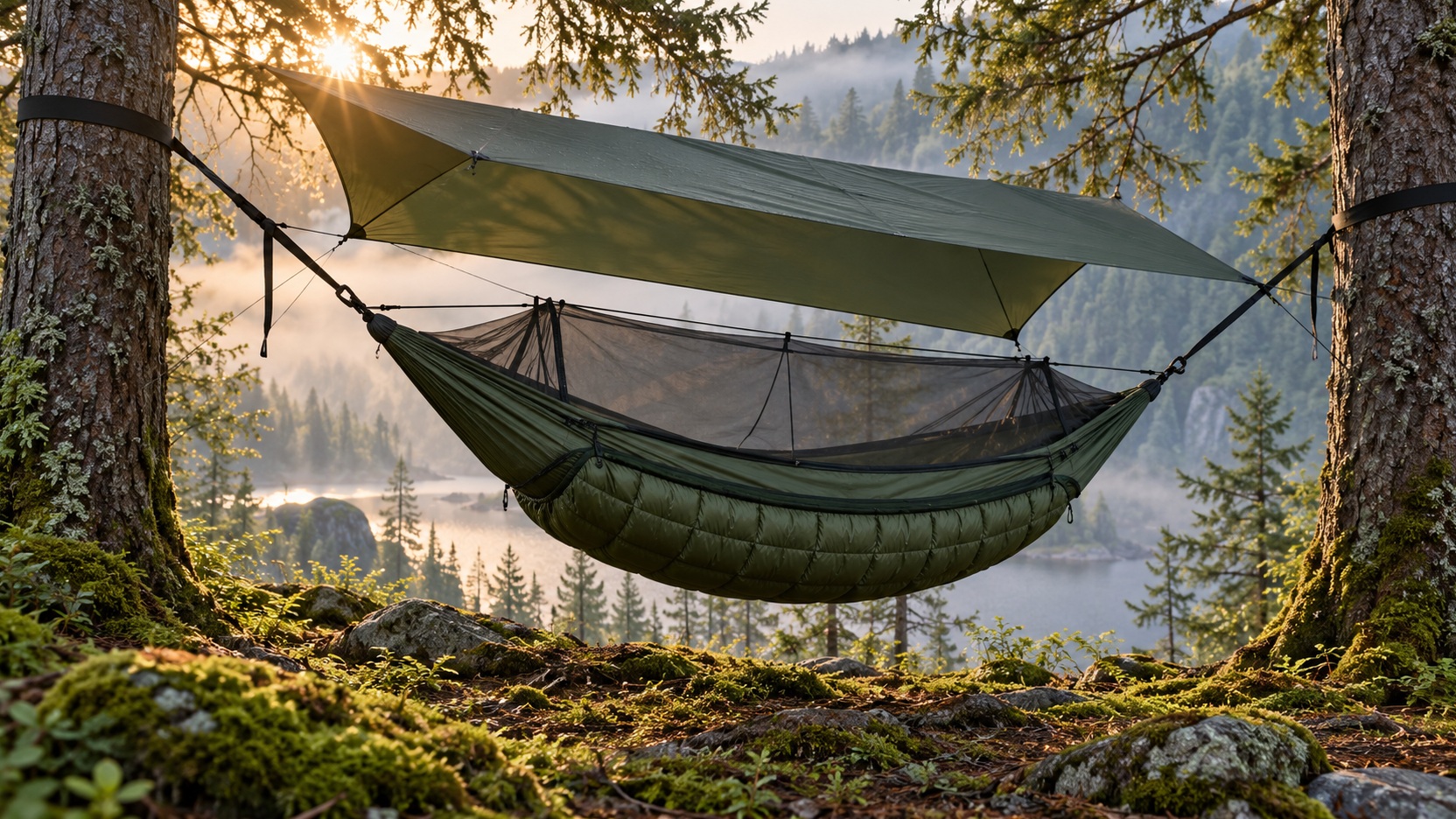
A sleeping bag or top quilt does not eliminate the need to consider warmth beneath the sleeper. Hammock systems commonly use an appropriate underquilt or a compatible sleeping-pad arrangement, with suitability depending on conditions and personal experience. The REI hammock-camping overview describes these as parts of the overnight kit rather than accessories that can be assumed unnecessary. Check fit, expected conditions, and the manufacturers’ guidance for the exact insulation. Plan the full bedding combination before the first night away from a backup shelter.
Make the Insulation Arrangement Easy to Repeat
An underquilt must suit the hammock and be arranged according to the relevant instructions. Look for a practical way to adjust it without creating gaps or compressing insulation unnecessarily. Test the arrangement during a meaningful trial rather than assuming the correct settings are obvious from appearance. Keep track of which adjustments improve the fit so setup is repeatable. A comfortable night should not depend on rediscovering the same arrangement after dark.
A sleeping pad can be a useful option when the design and its instructions support it, especially if you already own suitable equipment. Check whether the pad stays in place as you turn and whether its shape creates an awkward edge. A pad that works well on a tent floor can behave differently on suspended fabric. Try the full system before deciding that either a pad or an underquilt is the automatic winner. The better choice is the one that provides suitable warmth and manageable use for your trip.
Check Hanging Rules and Tree Protection First
Use the hammock only in permitted locations and follow both land-manager requirements and the equipment maker’s instructions. Choose suitable healthy supports and an appropriate broad suspension system rather than improvising attachments that damage trees or conflict with the design. Inspect the area above and below the proposed hang for hazards and keep the setup low as directed. ENO’s safety and instruction resources are an example of manufacturer guidance that should be read for the exact equipment being used. A comfortable hammock is worthwhile only within a suitable hanging arrangement.
Give Weather Protection Its Own Fit Check
A tarp needs to cover the occupied sleeping setup appropriately and work with the conditions expected on the trip. Compare actual coverage, supported pitching options, packed size, and the space needed around the hammock. Rain protection is not established by placing any small sheet somewhere overhead. Follow the relevant instructions and practice the complete pitch before relying on it. The arrangement should leave useful access while protecting the parts of the system that need to remain dry.
Consider how you will deploy shelter if rain begins during arrival. Having the weather protection accessible can be more helpful than saving a small amount of packed volume through a complicated storage sequence. Keep the insulation protected while assembling the rest of the system. Place bags and other equipment where they can be reached without blocking the entrance. A sensible order reduces the number of wet or loose items competing for attention at bedtime.
Wind changes the feel of an overnight setup even when rain is absent. Check the design’s intended use and whether your chosen protection can be arranged within its instructions. Avoid assuming that a calm backyard test establishes performance at an exposed site. Choose destinations and conditions appropriate to your equipment and experience. The best comfort upgrade may be a more suitable campsite or trip plan rather than another specialized piece of fabric.
Think Through Entry, Storage, and the Nighttime Routine
Practice entering and leaving with the hammock properly assembled, following its intended method and load limits. Clothing, bedding, and a bug-net zipper can make the movement feel different from stepping into an empty lounging hammock. Keep the landing area clear and place footwear somewhere appropriate and reachable. Try the process with the light you will use after dark. An arrangement that feels fussy in daylight deserves attention before it becomes your only sleeping option on a remote trip.
Small belongings need predictable locations. A compatible pocket or shelf can keep a headlamp and glasses accessible without putting hard objects beneath your body. Check what the storage feature is designed to carry and avoid overloading or altering the suspension with improvised attachments. Keep loose straps and cords out of the way. Simple organization protects sleep because ordinary tasks do not require searching through bedding or climbing out repeatedly.
Compare Complete Cost and Packed Size
Add the hammock, approved suspension, suitable insect protection, weather coverage, bedding, and required accessories to the comparison. A low bare-hammock price can grow substantially when the overnight system is completed. Packed weight also changes when every necessary component is counted. Compare like-for-like arrangements for the same conditions, not an equipped system against a minimal fair-weather setup. Include current purchase terms and the parts you already own so the final cost reflects your actual starting point.
Write the comparison as an equipment inventory rather than a single hammock price. Mark which items are already suitable, which need replacing, and which remain untested with the proposed system. This makes an apparently inexpensive change easier to assess. You may find that a compatible piece of existing bedding lowers the real cost, or that a new insulation arrangement occupies more space than expected. Both discoveries are useful before the order is placed.
Consider the work of maintaining the full collection as well. Separate fabric pieces need appropriate drying, suspension needs inspection, and small connectors need consistent storage. Choose a set of components you can care for through repeated weekends rather than a configuration that feels impressive only when brand new. Read support and return terms for the actual products, especially where comfort is difficult to judge without a trial. A complete purchase should remain practical after its first outing.
Let a Nearby Overnight Guide the Final Choice
Begin with a manageable trial in a permitted location where changing plans is straightforward. Use the actual suspension, protection, and bedding intended for later trips. Notice comfort after several hours, not only the pleasure of the first lie-down. Record whether difficulties came from fit, insulation, access, weather coverage, or unfamiliar setup. Those categories lead to different solutions and help prevent buying unrelated accessories in response to a vague sense that the night was awkward.
After the trial, inspect and dry the equipment according to its care instructions. Keep the useful adjustments documented and make one deliberate change before the next outing. A sleeping hammock should become simpler to use as your familiarity grows. The best choice supports an appropriate complete system and gives you a sleeping position you actually enjoy. When those pieces come together, comfortable outdoor nights depend less on luck and more on a routine you can repeat.